
Kewpie Mayonnaise is a staple in Japanese cooking, and it’s surprisingly easy to make at home. This homemade recipe is rich, creamy, tangy, slightly sweet, with the signature umami flavor that makes Japanese mayonnaise so good!
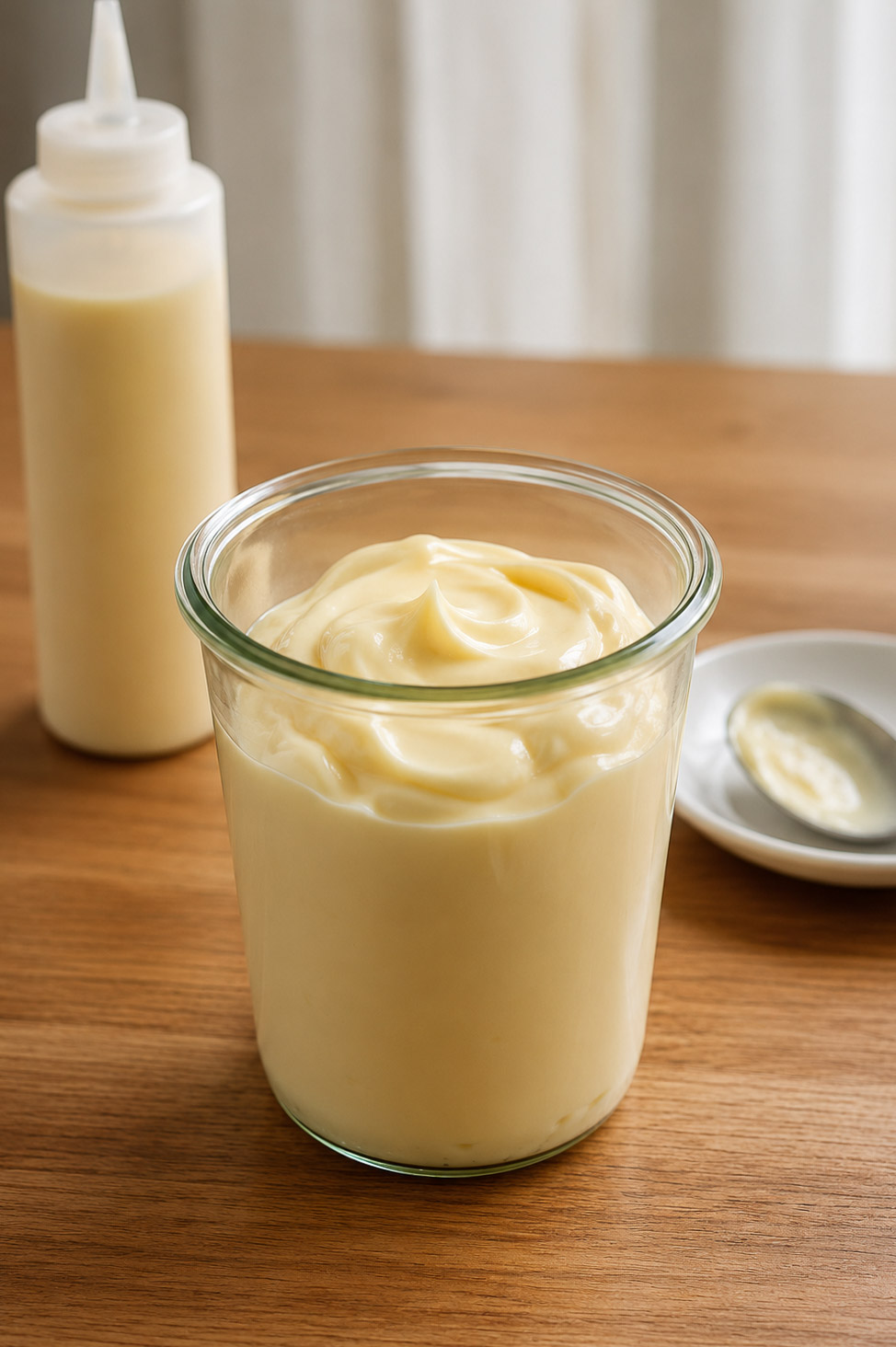
Table of Contents
Kewpie mayonnaise is one of those ingredients that’s always in my fridge. A staple in Japan and many households across Asia, it’s a condiment I reach for almost every day. Unfortunately, Kewpie mayo has become much more expensive in recent years, especially in North America… and it’s not always easy to find depending on where you live. That’s exactly why I wanted to create a homemade Kewpie mayonnaise recipe that’s affordable, accessible, and as close to the original as possible.
Over the last few months, I tested this Japanese mayonnaise recipe over and over, making small adjustments until it closely matched the real thing. Because Kewpie is loved for its signature flavor, I intentionally kept the ingredient list simple and avoided adding anything that would change its classic taste. If you’ve been wondering how to make Japanese Kewpie mayonnaise at home, after months of testing, I’m excited to finally share the version that I think comes closest to the original.
What is Kewpie Mayo?
Kewpie mayonnaise (キユーピーマヨネーズ) is a Japanese-style mayonnaise known for its rich, creamy texture and signature umami flavor. Made with egg yolks instead of whole eggs and seasoned with rice vinegar, it has a tangier, slightly sweeter, and more savory taste than regular mayonnaise. It’s instantly recognizable by its soft squeeze bottle with a red cap and the iconic Kewpie baby logo, a design that has remained largely unchanged since the product was first introduced in Japan in 1925. Today, Kewpie is a staple in Japanese kitchens and is used on everything from sandwiches and salads to sushi, okonomiyaki, and takoyaki.
Why This Recipe
- Tested to taste like the original: I tested batch after batch, adjusting the ratios until I landed on a homemade Kewpie mayonnaise recipe that comes incredibly close to the flavor and texture of the original Japanese mayo.
- Budget-friendly: Making Kewpie mayo at home costs a fraction of buying bottled Kewpie, especially if you use it often.
- Made with simple ingredients: All you need are a handful of pantry staples to make rich, creamy Japanese mayonnaise from scratch.
- Easy to customize: Adjust the tanginess, sweetness, salt, or thickness to suit your taste while keeping that signature Kewpie flavor.
- So versatile: Use homemade Kewpie mayo on sandwiches, burgers, sushi, egg salad, potato salad, okonomiyaki, takoyaki, karaage, and countless other dishes.
Ingredients and Substitutions
You only need a few everyday ingredients for this Kewpie mayonnaise recipe. Each one plays an important role in creating the rich texture and signature flavor of Japanese mayo.
- Egg yolks: Use pasteurized room temperature yolks to ensure the smoothest emulsion.
- Dijon mustard: Helps stabilize the emulsion while adding a subtle depth of flavor.
- Rice vinegar: Gives Kewpie mayonnaise its signature mild tang.
- Lemon juice: Brightens the flavor.
- Granulated sugar: Adds the slight sweetness Kewpie is known for.
- Kosher salt
- MSG (Ajinomoto): The key ingredient that gives Japanese mayo its signature savory umami flavor. You can also use dashi granules as a substitute.
- Neutral oil: Canola, grapeseed, or avocado oil all work well. Do not use strongly flavored oils like extra virgin olive oil.
How to Make Kewpie Mayo
Making homemade Kewpie mayonnaise is easier than you might think! Whether you use an immersion blender, whisk, or food processor, the key is creating a stable emulsion by gradually incorporating the oil. I find the immersion blender to be the quickest and easiest method, and it’s never failed me, but I’ve also included whisk and food processor instructions in the recipe card below so you can use whichever method you prefer.
- Add the ingredients: Combine the egg yolks, Dijon mustard, rice vinegar, lemon juice, sugar, salt, MSG, and oil in a tall jar (or the bowl of a food processor if using that method).
- Emulsify the mayonnaise: Blend, whisk, or process until the oil and egg mixture emulsify into a thick, smooth, and creamy mayonnaise.
- Adjust and store: Taste and adjust the seasoning if needed, then transfer the mayonnaise to a clean jar and refrigerate until ready to use.
VIDEO: Watch How to Make It
Lisa’s Recipe Tips
- Use pasteurized egg yolks: Since this homemade Kewpie mayonnaise is made with raw egg yolks, I recommend using pasteurized eggs. If you can’t find them at the store, you can easily pasteurize whole eggs at home using a sous vide machine before separating the yolks.
- Bring your egg yolks to room temperature: This is one of the most important steps for making a stable mayonnaise. The lecithin and proteins in egg yolks act as natural emulsifiers, and they work more efficiently at room temperature, making it easier for the oil and liquid to stay emulsified.
- Don’t skip the MSG: If you’re trying to recreate the flavor of Japanese Kewpie mayonnaise, MSG makes a huge difference. It gives the mayonnaise the signature savory, umami-rich flavor that sets Kewpie apart from regular American mayonnaise.
- Use the right batch size: An immersion blender can easily handle half a batch because the blade sits close to the ingredients. Food processors and countertop blenders need enough volume for the blade to properly catch and emulsify the mixture, so I recommend making the full recipe.
- Add the oil slowly: If you’re making Kewpie mayonnaise with a whisk, blender, or food processor, don’t rush this step. Start by adding just a few drops at a time until the mixture begins to thicken, then slowly drizzle in the remaining oil while mixing continuously.
- Don’t over-blend: Once your mayonnaise is thick and smooth, stop blending. Over-blending can warm the mayonnaise, which may cause it to become thinner and, in some cases, weaken the emulsion.
Variations
This homemade Kewpie mayonnaise is a great base for all kinds of flavored mayo. Mix in sriracha for a quick spicy mayo, stir in some furikake for an easy furikake mayo, or add ingredients like miso, soy sauce, wasabi, grated garlic, chili oil, yuzu kosho, or fresh herbs to make it your own!
Shortcut Version
If you’re in a pinch, mix 1/2 cup American mayonnaise, 1 tablespoon rice vinegar, 1 teaspoon sugar, and 1/4 teaspoon MSG (Ajinomoto). It won’t taste exactly like homemade Kewpie mayonnaise, but it’s a quick and easy substitute with a similar tangy, savory flavor.
How to Store Kewpie Mayo
Transfer your homemade Kewpie mayonnaise to a clean, airtight jar, container or squeeze bottle and refrigerate immediately. Because it’s made with fresh egg yolks, it’s best enjoyed within 3-5 days. Give it a quick stir before using if any separation occurs.
Recipe FAQ
Kewpie mayonnaise is made with egg yolks instead of whole eggs, giving it a richer, creamier texture. It’s also seasoned with rice vinegar and MSG, creating its signature tangy, slightly sweet, umami-rich flavor.
This usually happens if the oil is added too quickly or the ingredients are too cold. Starting with room temperature ingredients and adding the oil gradually helps create a stable emulsion.
Usually it’s because the oil was added too quickly or your ingredients were too cold. If you’re using an immersion blender, it can also happen if you lift the blender before the mayonnaise has started to emulsify.
Yes, if your homemade Kewpie mayonnaise breaks or doesn’t emulsify, don’t throw it away. It can usually be rescued by starting with a fresh egg yolk and slowly incorporating the broken mayonnaise until it comes back together.
No. Freezing breaks the emulsion, causing the mayonnaise to separate and become grainy once thawed.
This recipe uses eggs but you can try my vegan kewpie mayonnaise recipe and tofu based mayonnaise.
I don’t recommend altering or substituting the oils in this recipe. However, you can try my tofu based Japanese mayo recipe that doesn’t use oil!
Yes. You can halve this recipe if using an immersion blender or whisking by hand. An immersion blender works well with smaller batches because the blade stays fully submerged, allowing the mayonnaise to emulsify properly. A food processor isn’t recommended for a half batch, as there usually isn’t enough volume for the blade to circulate the ingredients effectively, making the mayonnaise more likely to split.
Recipes to Use Kewpie Mayo
Once you’ve made a batch of homemade Kewpie mayonnaise, you’ll find endless ways to use it. Try it in:
- Sandwiches: Japanese Egg Salad Sandwich (Tamago Sando), Katsu Sando (Pork Cutlet Sandwich)
- Burgers: Fish Katsu Burger
- Salads: Japanese Macaroni Salad, Japanese Potato Salad and Japanese Coleslaw
- Noodes: Japanese Spaghetti Salad, Corn Mayo Udon
- Sushi Rolls
- Onigiri: Tuna mayo onigiri
- As a topping: Takoyaki, Okonmiyaki, Tonkepiyaki and Poke Bowls
- Dips: Karaage (Japanese Fried Chicken), Miso Mayo
Enjoy! If you make this Kewpie Mayonnaise recipe, I’d love to hear what you think! Leave a comment and rating below, and if you share it on social media, tag me on Instagram @Okonomikitchen. I can’t wait to see your creations!
Print
Kewpie Mayonnaise Recipe (Japanese Mayo)
- Total Time: 5 minutes
- Yield: 1 1/2 cup
- Diet: Dairy-Free, Gluten-Free, Low-Carb, Vegetarian
Description
Kewpie Mayonnaise is a staple in Japanese cooking, and it’s surprisingly easy to make at home. This homemade recipe is rich, creamy, tangy, slightly sweet, with the signature umami flavor that makes Japanese mayonnaise so good!
Ingredients
- 3 large (51 g) egg yolks, room temperature
- 1/2 tbsp (7 g) Dijon mustard
- 2 tbsp (30 ml) rice vinegar
- 1 tbsp (15 ml) lemon juice
- 1 tbsp (12 g) granulated sugar
- 1 tsp (5 g) kosher salt, to taste
- 1/2 tsp (3 g) MSG (Ajinomoto)
- 1 1/4 cup (300 ml) neutral oil (canola, grapeseed, or avocado oil)*
Instructions
Immersion Blender Method
- Add the egg yolks, Dijon mustard, rice vinegar, lemon juice, sugar, salt and MSG to a tall jar just slightly wider than the head of your immersion blender.
- Pour the oil over top.
- Place the immersion blender at the very bottom of the jar.
- Blend without moving the blender for 10–15 seconds, until a thick white mayonnaise forms around the blade.
- Slowly lift the blender to incorporate the remaining oil.
- Continue blending until smooth, thick, and creamy.
- Taste and adjust seasoning to your liking.
Whisk Method
- In a medium bowl, whisk together the egg yolks, Dijon mustard, salt, sugar, MSG, and rice vinegar until smooth.
- While whisking constantly, add the oil a few drops at a time until the mixture begins to thicken and emulsify.
- Once emulsified, slowly drizzle in the remaining oil in a thin, steady stream while whisking continuously.
- Continue whisking until all of the oil has been incorporated and the mayonnaise is thick, smooth, and glossy.
- Taste and adjust seasoning as needed.
Food Processor Method
- Add the egg yolks, Dijon mustard, rice vinegar, lemon juice, sugar, salt, and MSG to the bowl of a food processor. Process for 10-15 seconds until smooth and well combined.
- With the food processor running, very slowly drizzle in the oil through the feed tube. Start with just a few drops at a time until the mixture begins to emulsify.
- Once the mayonnaise starts to thicken, gradually increase the oil to a thin, steady stream while continuing to process.
- Continue processing until all of the oil has been incorporated and the mayonnaise is thick, smooth, and creamy.
- Taste and adjust the seasoning if needed.
Notes
- I find 300 ml of oil to give the best consistency (closest to original kewpie). It’s silky, smooth and holds swirls but not as thick as American style mayo. If you prefer something more thick, you can increase to 325 ml of oil. If you prefer something slightly looser, you can reduce to 280 ml oil.
- Shortcut recipe: Mix 1/2 cup American-style mayonnaise, 1 tablespoon rice vinegar, 1 teaspoon sugar, and 1/4 teaspoon MSG (Ajinomoto). It won’t taste exactly like homemade Kewpie mayonnaise, but it’s a quick and easy substitute with a similar tangy, savory flavor.
- Prep Time: 5 minutes
- Category: Condiments, sauces
- Method: No cook
- Cuisine: Japanese
Nutrition
- Serving Size: 1 tbsp
- Calories: 100
- Sugar: 0.5 g
- Sodium: 105 mg
- Fat: 10.9 g
- Saturated Fat: 0.8 g
- Unsaturated Fat: 10.1 g
- Trans Fat: 0
- Carbohydrates: 0.6 g
- Fiber: 0 g
- Protein: 0.2 g
- Cholesterol: 17 mg



made this as soon as you posted it and wow, it really tastes like kewpie. I adjusted the seasonings a little bit but the consistency is SPOT ON. We’ve tried many and this one is the best, I don’t think we need to buy it anymore! thank you for the recipe