
Learn how to make Japanese Egg Sandwich (tamago sando) with two delicious variations: classic creamy egg salad and runny soft-boiled eggs. This easy tamago sando recipe uses fluffy Japanese milk bread (shokupan) for the perfect texture and taste. A quick, satisfying snack or lunch just like the ones found in Japanese convenience stores!

Table of Contents
- What is Tamago Sando?
- Difference Between American and Japanese Egg Sandwich
- Key Components of Japanese Egg Sandwich
- Ingredients and Substitutions
- How to Make Tamago Sando
- How to Make Hard Boiled and Soft Boiled Eggs with Less Water (Quick!)
- VIDEO: Watch How to Make It
- Lisa’s Tips & Secret Recipe
- Types of Japanese Egg Sandwiches
- How to Store Leftovers
- Recipe FAQ
- More Japanese Sandwich Recipes
- Japanese Egg Sandwich (Tamago Sando) Recipe
I grew up eating Japanese egg sandwiches, but they were always the homemade kind—soft, comforting, and familiar. I didn’t try a konbini tamago sando until I was 27, and honestly, it tasted almost exactly like the ones my mom made. The only differences were subtle—maybe a different mayo brand or a touch more or less seasoning. Still, I get why visitors to Japan go wild for them. It’s minimal, but incredibly well executed. The standard recipe is simple: eggs, mayo, shokupan. But the magic is in the details—how soft the bread is, how finely the egg whites are chopped, the richness of the yolks, what brand of mayo you use, and whether you add any seasonings at all.
My version adds three hidden ingredients (known as kakushi aji in Japanese): nutmeg, ketchup, and a pinch of MSG. Together, they enhance the richness of the eggs, add a subtle tang and sweetness, and deliver deep umami flavor without being obvious.
What is Tamago Sando?
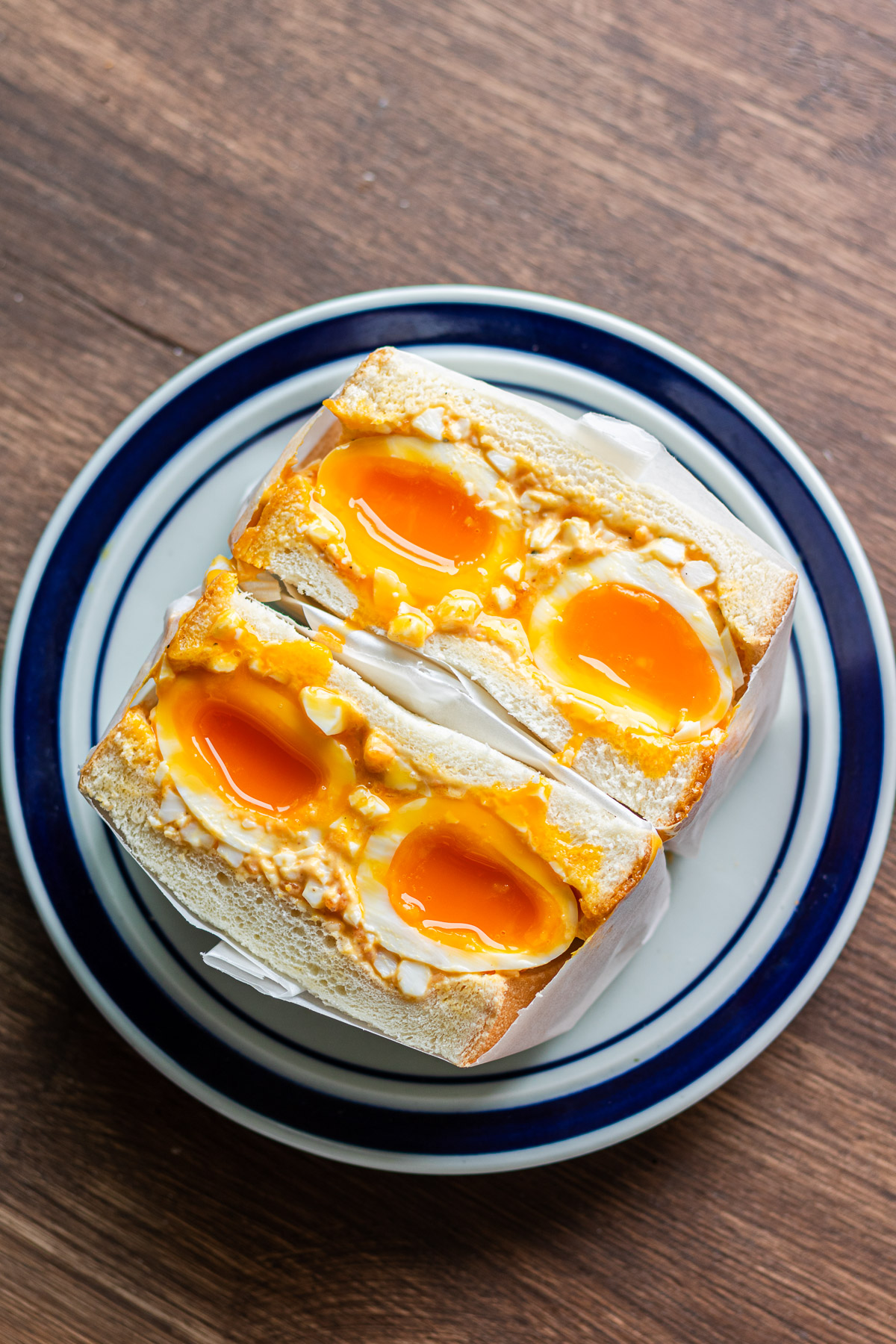
Tamago sando is a Japanese-style egg sandwich made with shokupan, a soft, fluffy milk bread. The filling typically consists of a rich and creamy egg salad made with Japanese mayonnaise. Some variations also feature soft-boiled eggs layered inside for additional texture and visual appeal. It’s a staple in convenience stores, cafes, and bakeries throughout Japan, appreciated for its clean flavors and satisfying texture.
Difference Between American and Japanese Egg Sandwich
While both share the core ingredients of eggs and bread, the approach and outcome differ significantly. Japanese egg sandwiches focus on refined textures and subtle flavors. Shokupan is light, tender, and slightly sweet, creating a gentle backdrop for the filling. The egg salad is typically smoother and more cohesive, without bold add-ins like pickles or celery commonly found in Western-style versions. The result is a sandwich that highlights the delicate flavor of eggs in a more understated, refined way.
Key Components of Japanese Egg Sandwich
Eggs
Eggs are the heart of this sandwich, so quality matters. In Japan, eggs tend to be richer in color and flavor, often with deeper orange yolks thanks to the hens’ diet. While you don’t need fancy eggs, using fresh, good-quality ones with vibrant yolks makes a big difference in both taste and texture.
Kewpie Mayo (Japanese Mayonnaise)
Kewpie is non-negotiable here. It’s made with egg yolks (not whole eggs like Western mayo), giving it a richer, creamier texture and a subtle tang from rice vinegar. It blends seamlessly into the yolks for that signature smooth, almost custardy egg salad. Just make sure you’re using the one produced in Japan—the U.S.-made version has slightly different ingredients and doesn’t taste quite the same.
Shokupan (Japanese Milk Bread)
Shokupan is the go-to bread for tamago sando in Japan. Soft, fluffy, and slightly sweet, it’s designed to complement delicate fillings without overpowering them. One of the most popular brands is Pasco, but any good-quality milk bread will work.
In Japan, shokupan is sold pre-sliced in varying thicknesses, labeled by how many slices are cut from a standard square loaf. You’ll typically find:
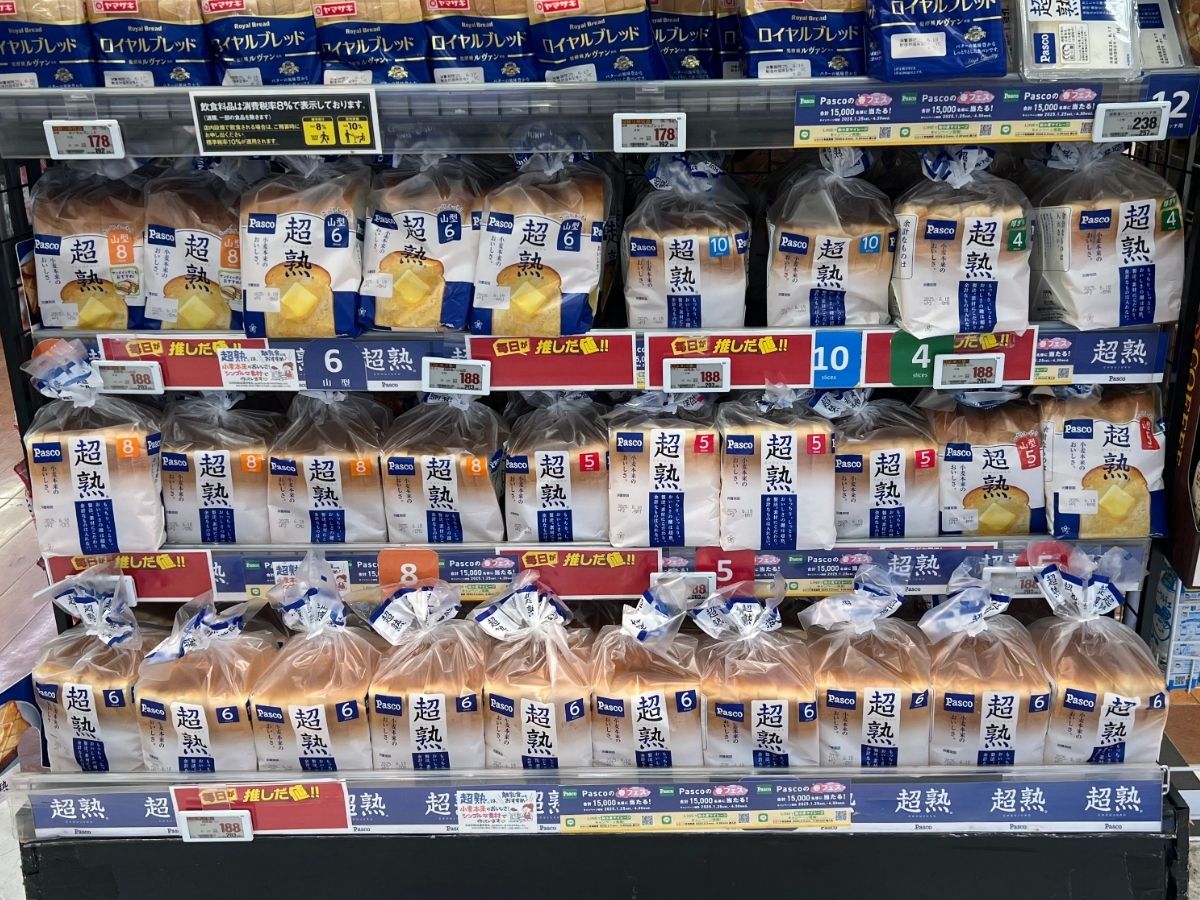
- 4 slices (3.1 cm): thick and pillowy
- 6 slices (2 cm): common for toast and thick sandwiches
- 8 slices (1.5 cm): ideal for sandwiches
- 10 slices (1.2 cm): great for dainty tea-style sandwiches
- 12 slices (1 cm): ultra-thin and delicate
Because Japanese bread is so soft and airy, thinner slices can sometimes squish under moist fillings like egg salad. For tamago sando, slices from 8–10-slice packs are the sweet spot—they’re soft enough for that signature bite-through, but still hold the filling well.
Unlike Western breads, which are often denser and meant to be toasted, Japanese shokupan has a cloud-like texture that shines even when thick-cut. You can experiment with slice thickness depending on how much filling you like—go thinner for a more delicate presentation or thicker for that plush konbini-style sandwich.
Ingredients and Substitutions
Here’s what you need to make tamago sando. Choose quality ingredients for the best flavor and texture.

- Eggs
- Kewpie Mayonnaise
- Sugar – Just a pinch to balance flavors.
- Ketchup (optional) – Adds a slight sweetness and acidity.
- Nutmeg (optional) – A dash brings subtle warmth.
- MSG (optional) – Enhances umami and depth.
- Salt & Pepper
- Shokupan – Japanese milk bread, preferably thick-sliced.
- Butter – Salted or unsalted! Just be sure to adjust for the seasonings in the egg salad. Used for spreading, adds richness.
How to Make Tamago Sando
This sandwich is quick to make once the eggs are prepped. Here’s a general overview:
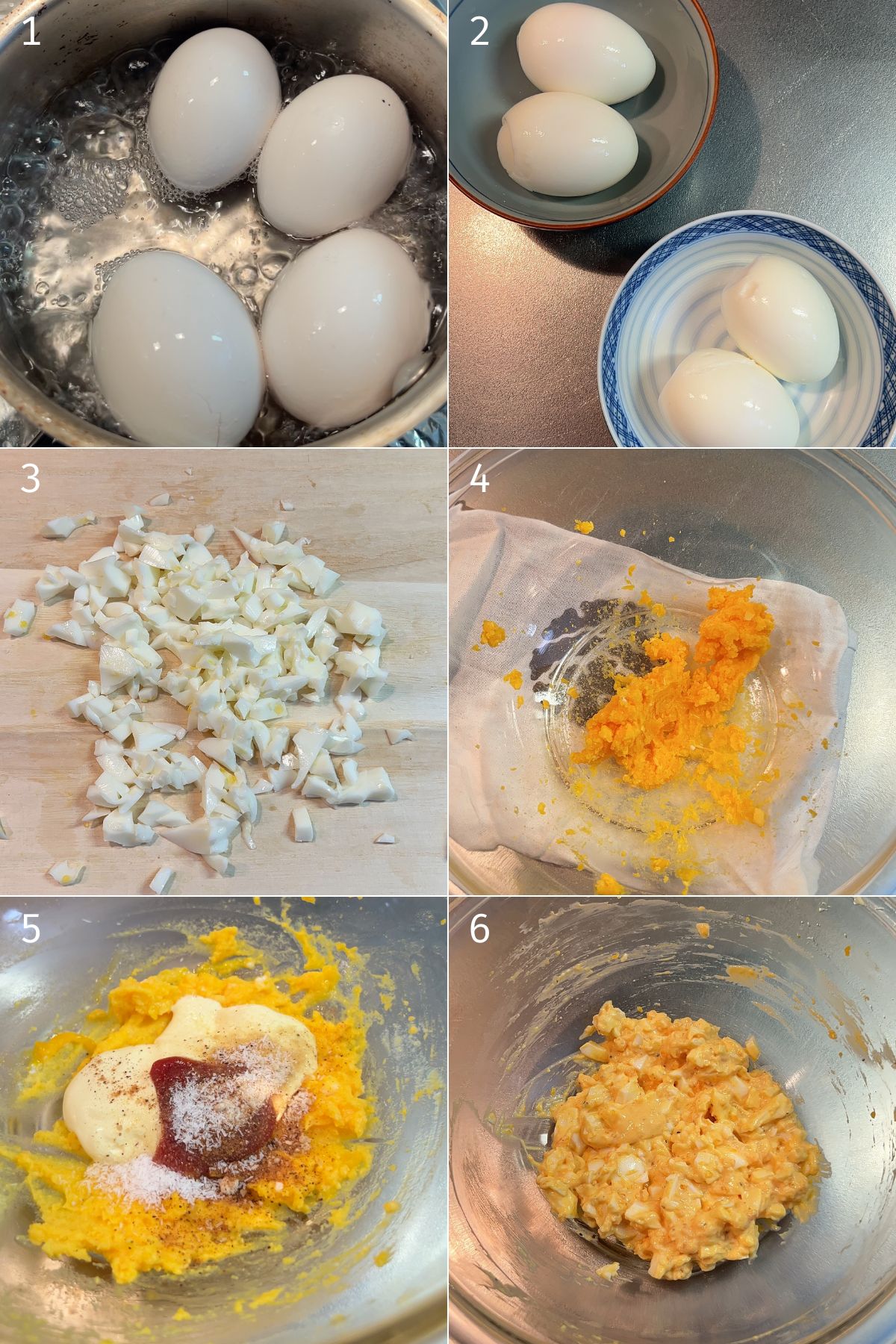

- Boil the Eggs: Use your preferred method to make soft and/or hard boiled eggs (see below for my energy saving method).
- Make the Egg Salad: Separate the hard boiled egg yolks from the whites. Chop the egg whites to your desired size. In a bowl, mash the yolks with Kewpie mayonnaise, sugar, ketchup, nutmeg, MSG, salt, and pepper until smooth. Fold egg whites into the yolk mixture to create a creamy but textured filling.
- Assemble the Sandwich: Trim the crusts off your shokupan slices if desired. Lightly butter one side of each slice. Spoon the egg salad onto one slice, spreading it evenly and slightly mounding more in the center for a plump, rounded look once sliced. Place the other slice of buttered bread on top.
- For soft boiled egg sandwich: Keep the crust on, add a little more than half of the egg mixture in the middle, add soft boiled eggs and remaining egg salad on top.
- Wrap and Rest: Tightly wrap the sandwich in plastic wrap or parchment paper to help it set. Let it rest for 5 minutes to firm up the shape.
- For soft boiled egg sandwich: Wrap tightly in parchment paper, aligning it so you’ll cut through the eggs when slicing. Place a flat, light plate or object on top and let rest for 5 minutes to help the sandwich hold its shape.
- Slice and Serve: Using a very sharp knife, slice the sandwich in half for a clean cross-section. Remove the plastic wrap and serve.
How to Make Hard Boiled and Soft Boiled Eggs with Less Water (Quick!)
This is my go-to method for perfect soft and hard-boiled eggs:
- Tap the rounded bottom of each egg with a spoon—you should hear a slight hollow sound (don’t crack it all the way).
- Place eggs in a pot and add water just 1 cm high from the base of the eggs.
- Heat on medium. Once the water starts bubbling, cover with a lid.
- Cook for 4 minutes.
- Turn off the heat and keep covered:
- Soft-Boiled (Runny Yolk): Rest for 3 minutes
- Soft Boiled (Jammy Yolk): Rest 4-5 minutes
- Hard-boiled: Rest for 7-8 minutes
- Transfer to an ice bath for 5 minutes before peeling.
Note: Depending on the size of your eggs, the amount of time may vary +/- 30 seconds to 1 minute.
VIDEO: Watch How to Make It
Lisa’s Tips & Secret Recipe
- Use slightly under hard boiled eggs: For that smooth and creamy texture, boil the eggs just under the classic hard-boiled stage. The yolks should still be fully cooked but soft and golden—not chalky. This helps add richness without relying on extra mayo.
- Add ‘hidden’ ingredients: This is what differentiates the taste between egg sandwiches! My secret ingredients that are more specific are nutmeg, ketchup and MSG. More common ingredients include condensed milk, cream, mustard and vinegar. Add these ingredients in small increments, tasting as you go. You shouldn’t be able to taste the ingredient, but it should enhance the taste of the egg salad.
- Choose the right thickness of bread: Balance is everything. If you’re using 8–10 slice shokupan, it gives you just enough structure without overpowering the creamy filling. For thicker, café-style sandwiches, go for 6-slice shokupan and pile the filling high.
- Butter both sides of the bread: This step helps keep the bread from getting soggy—especially if you’re packing this for later. Use a thin layer of softened butter on both sides before adding the egg salad.

Types of Japanese Egg Sandwiches
When people say “tamago sando,” they’re usually talking about the soft and creamy kind found in konbinis (convenience stores). But there are actually several versions you’ll see across Japan, especially at bakeries, cafés, and kissaten (old-school Japanese coffee shops).
- Classic Tamago Sando: Mashed boiled eggs mixed with Japanese mayo, sandwiched between fluffy milk bread. It’s minimalist but deeply satisfying—slightly sweet, creamy, and ultra soft.
- Soft Boiled Tamago Sando: This version features a jammy, soft-boiled egg in the center, surrounded by egg salad. It’s trendy and often seen in gourmet bakeries. When you bite in, the yolk is gooey and golden.
- Soft-Boiled Scrambled Egg Sando: This café-style sandwich features ultra-soft, silky scrambled eggs cooked low and slow, then layered thick between slices of shokupan. It’s buttery, luxurious, and melts in your mouth—almost like a savory custard.
- Dashimaki Tamago Sando: Instead of egg salad, this uses a thick Japanese-style omelet (dashi-maki tamago) layered between slices of shokupan. Savory and juicy, with a stronger egg-forward flavor.
- Tamagoyaki Tamago Sando: Similar to dashimaki, but sweeter. Tamagoyaki is a rolled Japanese omelet with a delicate, custardy texture. It’s sometimes paired with a touch of mayo or even mustard.
How to Store Leftovers
Tamago sando is best enjoyed fresh, but you can store leftovers if needed. Wrap the sandwich tightly in plastic wrap and refrigerate for up to 1 day. For longer storage, Japanese egg sandwiches can be frozen — just make sure to finely chop the egg whites before mixing. This helps avoid noticeable texture changes once thawed. Thanks to the mayo and creamy yolks, the filling stays smooth and rich.
To serve, let it thaw in the fridge overnight or for a few hours at room temperature. Great for bento boxes, meal prep, or enjoying later in the week.
Tip: If you’re meal prepping, keep the egg salad and bread separate. Assemble just before eating to keep the texture and flavor fresh.
Recipe FAQ
Wrap the sandwich tightly in plastic wrap and chill it in the fridge for 5-10 minutes before slicing. Use a sharp knife and wipe it clean between cuts for that perfect cross-section.
Yes, you can use other types of bread for Japanese egg sandwiches, but it won’t taste quite the same. Tamago sando is traditionally made with shokupan, a soft and fluffy Japanese milk bread that gives it its signature texture. If you don’t have shokupan, other soft breads like brioche sandwich rolls, milk bread, or even hot dog buns (coppe pan) will work.

More Japanese Sandwich Recipes
- Katsu Sando (Pork Cutlet Sandwich), coming soon
- Tofu Katsu Sando
- Japanese Fruit Sandwich, coming soon
Enjoy! If you make this Japanese Egg Sandwich recipe, I’d love to hear what you think! Leave a comment and rating below, and if you share it on social media, tag me on Instagram @Okonomikitchen. I can’t wait to see your creations!
Print
Japanese Egg Sandwich (Tamago Sando)
- Total Time: 24 minutes
- Yield: 1 sandwich
- Diet: Vegetarian
Description
Learn how to make Japanese Egg Sandwich (tamago sando) with two delicious variations: classic creamy egg salad and runny soft-boiled eggs. This easy tamago sando recipe uses fluffy Japanese milk bread (shokupan) for the perfect texture and taste. A quick, satisfying snack or lunch just like the ones found in Japanese convenience stores!
Ingredients
Classic Egg Sandwich
- 2 large eggs
- 1 tbsp + 1 tsp Kewpie mayonnaise
- 1/8 tsp sugar
- 1 tsp ketchup, optional
- 1/8 tsp of nutmeg, optional
- 1/8 tsp MSG, optional
- 1/8 tsp salt
- 1/8 tsp freshly cracked black pepper
- 2 slices of shokupan (8-slice count preferred)
- butter, for spreading
Soft Boiled Egg Sandwich
- 4 large eggs
- 1 tbsp + 1 tsp (20 g) Kewpie mayonnaise
- 1/8 tsp (1.6 g) sugar
- 1 tsp (2.5 g) ketchup, optional
- 1/8 tsp nutmeg, optional
- 1/8 tsp MSG, optional
- 1/8 tsp salt
- 1/8 tsp freshly cracked black pepper
- 2 slices of shokupan (6-slice count preferred)
- butter, for spreading
Instructions
Classic Egg Sandwich
- Boil the Eggs: Hard boil the eggs, cool in ice water, and peel.
- Prepare the Egg Salad: Separate yolks and whites. Mash the yolks with mayo, sugar, ketchup, nutmeg, MSG, salt, and pepper. Finely chop the whites and fold them into the yolk mixture.
- Assemble the Sandwich: Remove crusts from the bread. Butter one side of each slice. Spread the egg salad on top of the bread, focusing slightly more on the middle for a nice cross section.
- Wrap & Rest: Wrap in plastic wrap tightly and let it rest for 5 minutes.
- Slice & Serve: Cut in half with a very sharp knife. Remove the plastic wrap and enjoy!
Soft Boiled Egg Sandwich
- Cook the Eggs: Soft boil 2 eggs and hard boil the remaining 2 eggs. Chill in ice water, then peel.
- Make the Egg Salad: Separate the yolks and whites of the hard-boiled eggs. In a bowl, mash the yolks with Kewpie mayo, sugar, ketchup, nutmeg, MSG, salt, and pepper until smooth. Chop the whites finely and fold into the yolk mixture.
- Assemble: Leave the crusts on. Butter one side of each slice of bread. Add a generous amount of egg salad to one slice, concentrating more in the center. Place the two soft-boiled eggs horizontally in the middle. Spoon more egg salad between the eggs, around and on top of the eggs to hold them in place. Top with the second slice of bread butter side down.
- Wrap & Rest: Wrap the sandwich tightly in parchment paper. Be sure to wrap it so that the eggs will be sliced in half when cutting the sandwich. Place a light plate (or something flat and light) on top and let rest for 5 minutes to help it hold its shape.
- Slice & Serve: Slice through the center (the tallest part) for the best cross-section. Serve immediately and enjoy!
- Prep Time: 20 minutes
- Cook Time: 4 minutes
- Category: Entree
- Method: Stove Top
- Cuisine: Japanese
Nutrition
- Serving Size: 1 sandwich
- Calories: 451
- Sugar: 8 g
- Sodium: 730 mg
- Fat: 27 g
- Saturated Fat: 8 g
- Unsaturated Fat: 18.8 g
- Trans Fat: 0.2 b
- Carbohydrates: 32.5 g
- Fiber: 1 g
- Protein: 17 g
- Cholesterol: 390 mg
Photography contribution by Uchikoshi Yusuke.




Me and yummy egg sandwiches go way back to my childhood. They’re actually my first go to comfort food. Nowwwwww this one here, chefs kiss! This creamy egg salad is delicious and with the added soft center egg takes it NEXT LEVEL. I feel an addiction brewing 😋 Thank you for sharing
I’ve made a lot of egg sandos and this is truly the best. The nutmeg makes a huge different I recommend everyone to try this! It tastes just like, if not better than the convenience stores in Japan.