
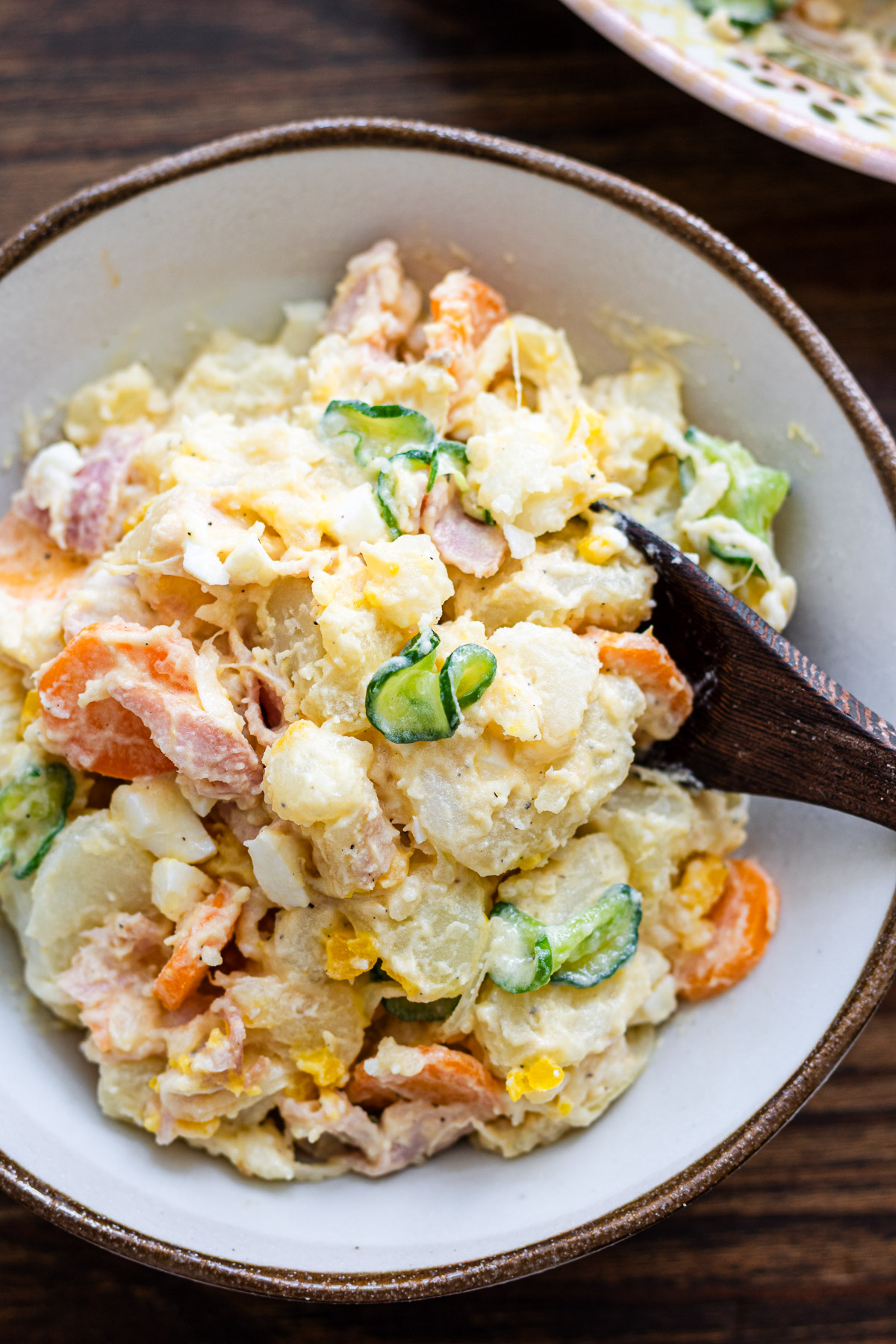
Japanese Potato Salad is a creamy, tangy, and slightly sweet side dish made with fluffy mashed potatoes, crisp vegetables, and Kewpie mayo. This popular Japanese comfort food is perfect for bento boxes, picnics, or as a refreshing side to any meal.
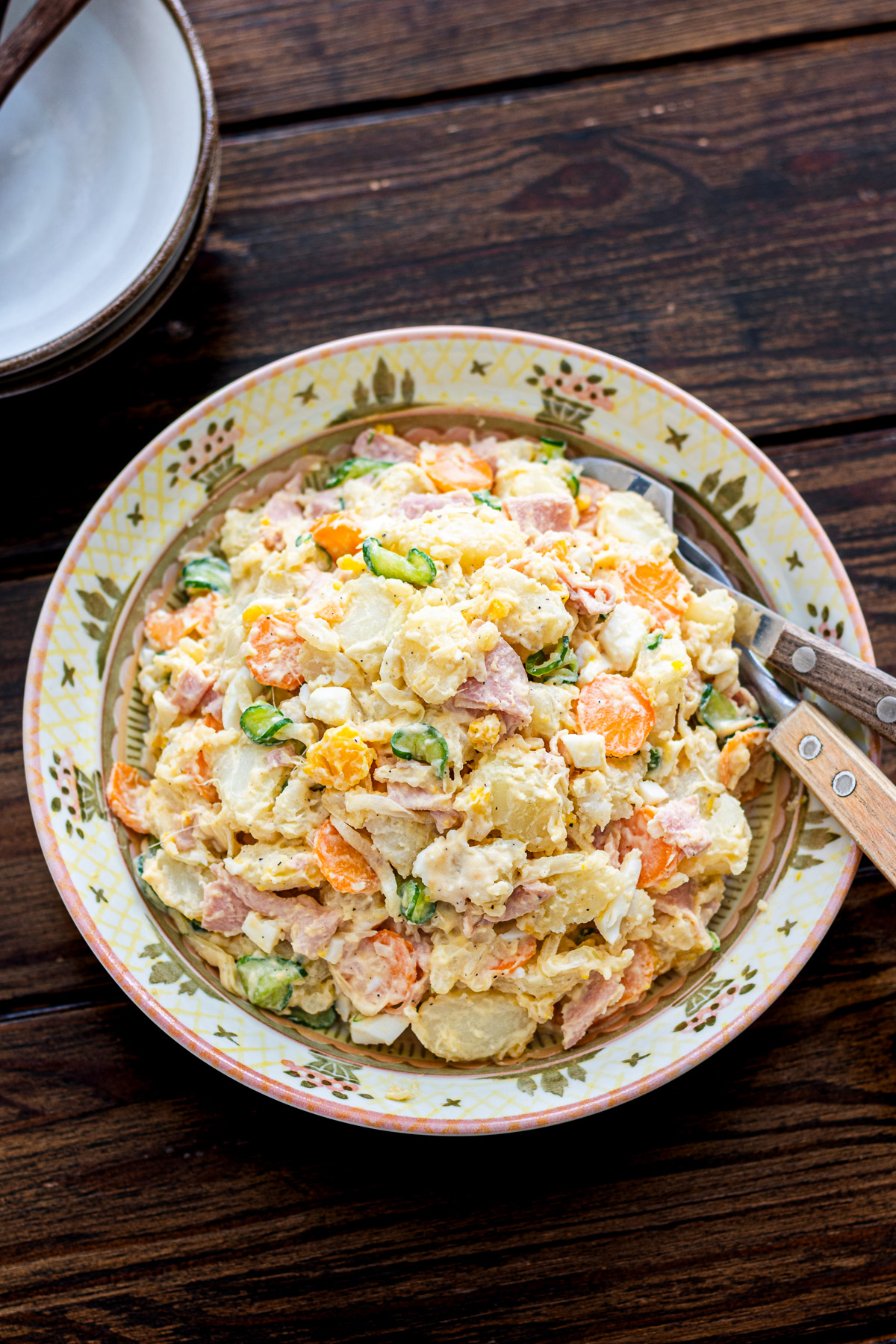
Table of Contents
- What is Japanese Potato Salad?
- Difference Between Japanese Potato Salad and American Potato Salad
- Ingredients and Substitutions
- How to Make Japanese Potato Salad
- VIDEO: Watch How to Make It
- Lisa’s Recipe Tips
- Variations
- Serving Suggestions
- How to Store and Reheat Leftovers
- Recipe FAQ
- More Japanese Salad Recipes
- Japanese Potato Salad Recipe
What is Japanese Potato Salad?
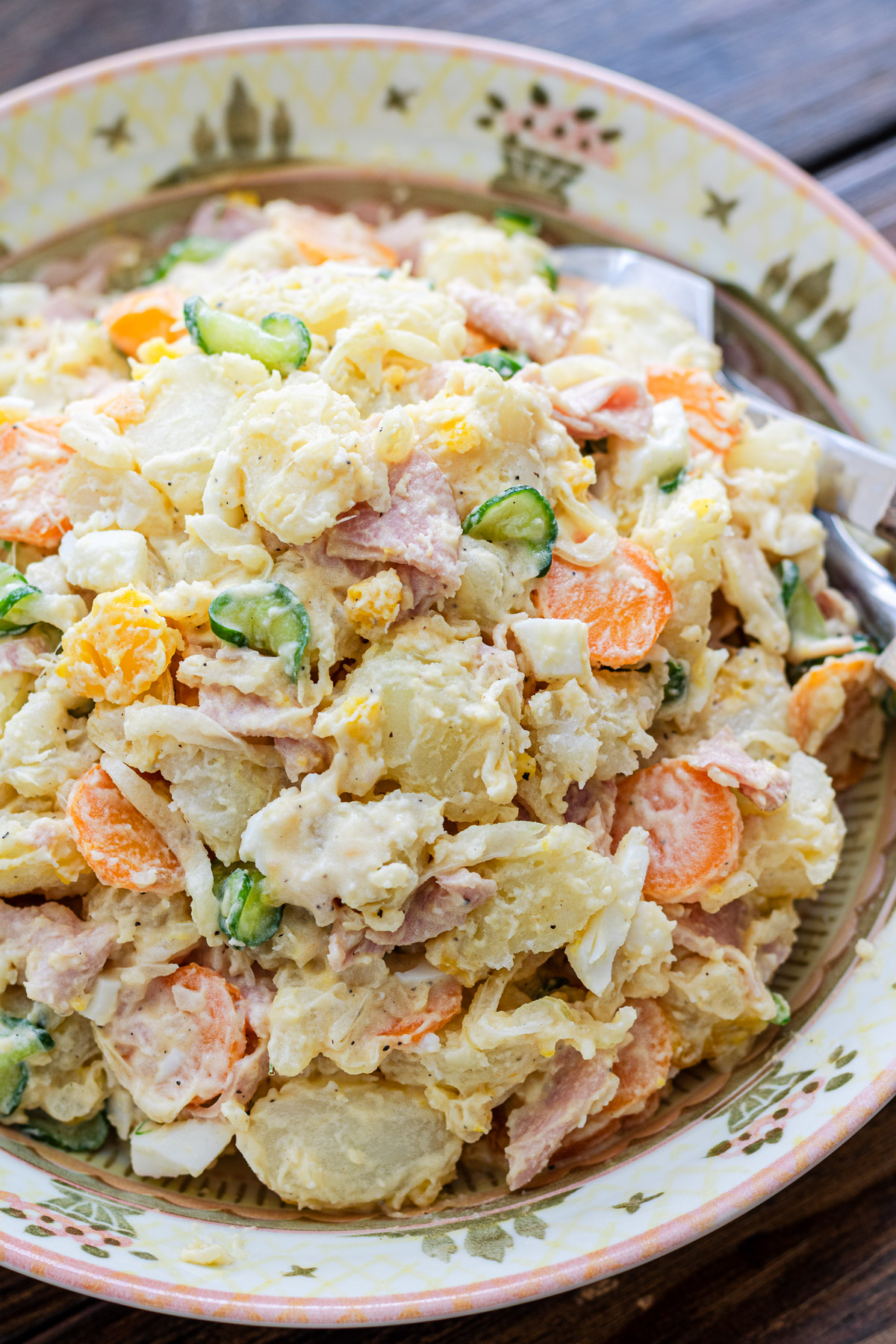
In Japan, potato salad (ポテトサラダ) is a common side dish you’ll find everywhere — from home-cooked meals to convenience stores, supermarkets, and izakaya pubs. It’s served as part of a larger spread, tucked into bento boxes, or as a snack alongside beer. Compared to Western potato salad, the Japanese version has a softer, fluffier texture with some potatoes lightly mashed, giving it a creamy consistency that’s balanced by crunchy vegetables. The dressing is made with Japanese mayonnaise (like Kewpie) for a rich umami flavor and a hint of tang from rice vinegar.
If you’ve ever ordered it at an izakaya, you’ll know it’s a must-have with other small plates like karaage, yakitori, or tamagoyaki. It’s simple, comforting, and full of nostalgic flavor for many people in Japan.
Difference Between Japanese Potato Salad and American Potato Salad
While both versions share a comforting, creamy potato base, Japanese potato salad has a lighter texture and a brighter, more refreshing flavor profile compared to its American counterpart. Here are the main differences between the two:
- Texture: Japanese potato salad is partially mashed, giving it a creamier base with some chunks for texture.
- Flavor: Uses Kewpie mayo (egg yolk-based with rice vinegar) for a richer, slightly sweet tang.
- Vegetables: Commonly includes thinly sliced cucumber, carrot, onion, and sometimes ham or corn.
- Seasoning: Lightly seasoned with rice vinegar, sugar, and sometimes mustard — instead of heavy spices or relish.
- Serving style: Often served chilled as a side dish in small portions, not as a main picnic salad.
Ingredients and Substitutions
Before you start cooking, it’s helpful to prepare all your ingredients so the process is smooth and quick. Choosing the right ingredients makes all the difference in texture and flavor.
- Russet potatoes – Dry, starchy potatoes like russets are ideal because they mash into a fluffy texture without becoming gummy. Waxy potatoes (like Yukon Golds) hold their shape better but won’t give you that signature creamy base of Japanese potato salad.
- Egg – Adds richness and extra protein. The chopped egg also gives a nice soft texture that blends into the salad.
- Ham or bacon – A savory element that contrasts with the sweetness of the potatoes and vegetables. Ham is more common in Japanese potato salad, but bacon adds a smoky depth.
- Onion – Scallions or red onions can be used as a substitute.
- Japanese cucumber or Persian cucumber – These cucumbers have a thin skin and small seeds, so they stay crisp without adding excess water to the salad. If using English cucumber, peel off the thick skin and remove the seeds with a spoon to avoid toughness and excess moisture.
- Carrot – Adds sweetness and some color.
- Rice vinegar – Brings a gentle tang that balances the creaminess of the mayo. Rice vinegar is milder and slightly sweeter than white vinegar, making it perfect for Japanese-style salads.
- Kewpie mayonnaise – Egg yolk-based with rice vinegar for a richer, umami-forward flavor than regular mayo. For the authentic Japanese version, it should be Japanese mayo, as it’s the predominant flavor in the salad. You can also make your own homemade Japanese mayonnaise, or in a pinch, whip up a quick version using American mayo with a touch of rice vinegar and sugar.
- Ketchup & Japanese Mustard: My recipe calls for these two ingredients, which aren’t commonly added but help bring out the flavor of the mayo. Ketchup adds a slight sweetness and acidity that tastes different from sugar alone, while Japanese mustard gives a very subtle kick. If you don’t have them, you can substitute with a pinch of sugar and Dijon mustard to round out the flavor.
How to Make Japanese Potato Salad
This salad is quick to put together once the vegetables and potatoes are prepped.
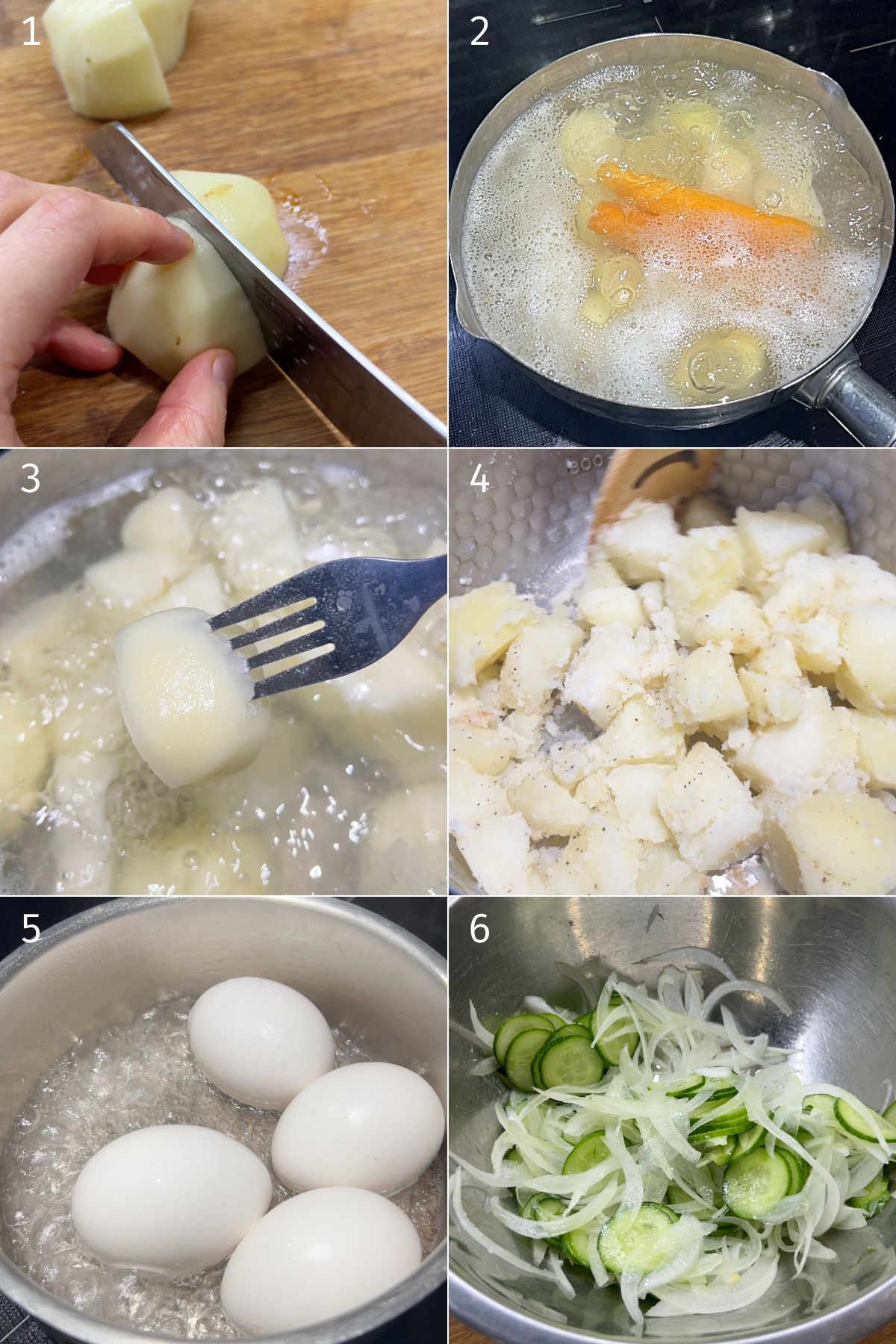
- Boil potatoes and carrot until tender, then drain and dry over low heat to remove excess moisture.
- Season potatoes while hot with vinegar, salt, pepper, and sugar, then lightly mash.
- Prepare vegetables by salting cucumber and onion to draw out moisture, then rinsing and squeezing dry.
- Cook the egg until hard boiled, peel, and chop.
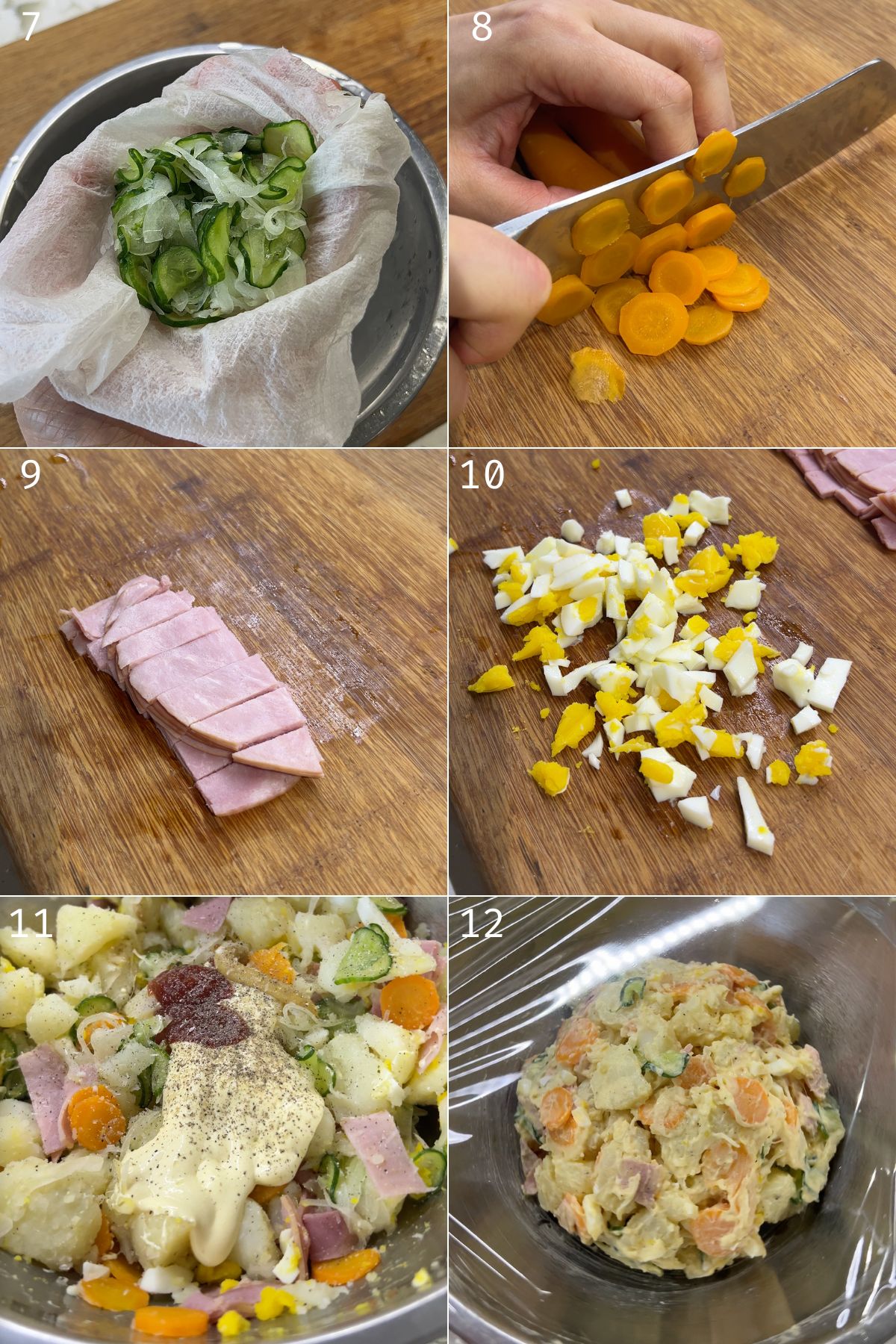
- Slice carrot and ham, then combine all ingredients in a large bowl.
- Add dressing (mayo, ketchup, mustard) once potatoes are cool, mix, and chill before serving.
VIDEO: Watch How to Make It
Lisa’s Recipe Tips
- Choose the right potato – Russets or other starchy varieties give you a light, fluffy texture that absorbs seasonings well.
- Season while hot – Potatoes absorb vinegar, salt, and sugar best when they’re still warm, allowing the flavor to penetrate instead of sitting on the surface.
- Cool completely before adding mayo – Mixing mayo into hot potatoes can cause the dressing to split and turn oily.
- Salt cucumbers and onions – This draws out excess moisture, preventing the salad from becoming watery.
- Don’t over-mash – The amount you mash is completely up to you but leaving some chunks adds texture.
- Cut vegetables thinly and evenly – Thin slices blend better with the potatoes and make the salad easier to eat, especially in bento boxes.
- Let it rest – Chilling for at least 30 minutes allows the flavors to meld. Overnight in the fridge is even better.
- Adjust creaminess – Add a little more Kewpie mayo or a splash of milk for a creamier version.

Variations
While this recipe is a classic, there’s plenty of room to make it your own:
- Seafood – Swap ham for canned tuna, crab sticks, or small shrimp for a lighter flavor.
- Vegetarian or vegan version – Leave out the ham and add more vegetables like corn, peas, or edamame.
- Fruit – Some home recipes include diced apple or raisins for a pop of sweetness.
- Spicy – Mix in a little wasabi, karashi (Japanese mustard), or shichimi togarashi for heat.
- Wafu Japanese Style – Add a sprinkle of shio kombu, furikake, nori or katsuobushi (bonito flakes) before serving.
- Add Umami – Mix the mayo with some miso paste, chick stock powder, shio koji, dashi granules or mentsuyu (noodle soup base) for different umami flavour.
Serving Suggestions
Japanese potato salad is versatile and pairs beautifully with a variety of dishes:
- As a side dish – Serve alongside tonkatsu, karaage, or grilled salmon for a complete Japanese-style meal.
- In bento boxes – Portion into small silicone cups to keep it separate from other foods.
- With izakaya dishes – Pair with yakitori, gyoza, or agedashi tofu for a pub-style spread at home.
- At picnics or potlucks – Japanese potato salad holds up well for a good amount of time and easy to pack in a cooler.
How to Store and Reheat Leftovers
- Refrigerator: Store in an airtight container in the fridge for up to 3 days.
- Freezer: You can freeze Japanese potato salad. Wrap individual portions tightly in plastic wrap, removing as much air as possible, and store in a freezer-safe bag or container for up to 3 months. The texture may change slightly once thawed, but it remains tasty and enjoyable.
- Thawing: Thaw in the fridge overnight. Once thawed, gently mix before serving to recombine any separated ingredients.
Recipe FAQ
Yes, but it will change the texture. Russet or other starchy potatoes are best for a fluffy, creamy Japanese potato salad. Waxy potatoes like Yukon Gold hold their shape more, so the salad will be firmer and less creamy.
Starting potatoes in cold water ensures they cook evenly. If you add them to boiling water, the outside cooks faster than the inside, which can result in uneven texture or mushy edges.
Yes, you can microwave potatoes, but the texture may be slightly different than boiling. Pierce the potatoes with a fork, cover loosely with a wet paper towel, and microwave on high until tender. Make sure to cool them slightly before mixing with mayo to prevent splitting.
More Japanese Salad Recipes
- Japanese Macaroni Salad
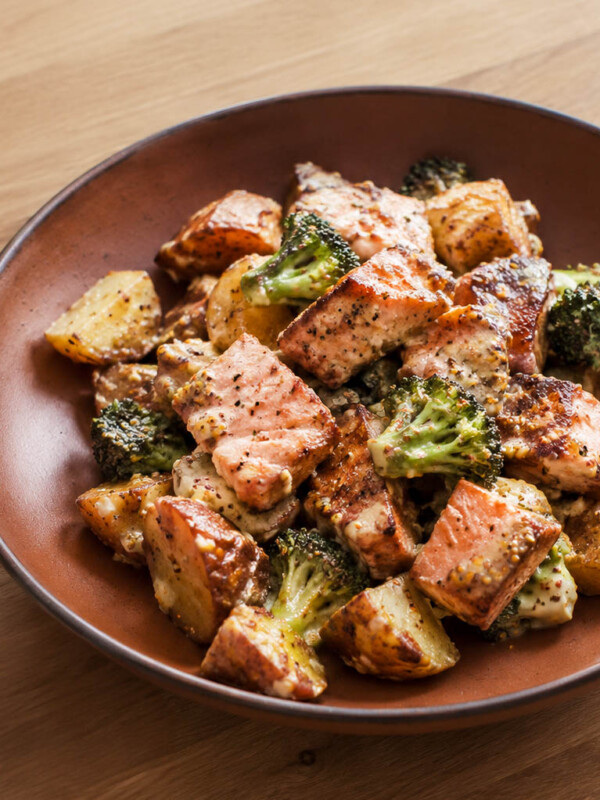
- Fried Egg Potato Salad
- Natto Salad
- Sunomono (Japanese Cucumber Salad)
- Japanese Smashed Cucumber Salad
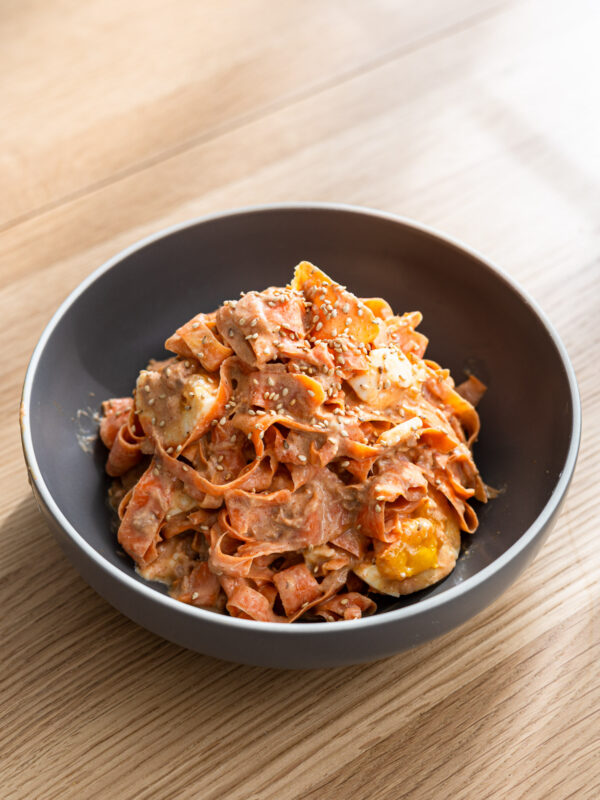
- Sesame Miso Noodle Salad
Enjoy! If you make this Japanese Potato Salad recipe, I’d love to hear what you think! Leave a comment and rating below, and if you share it on social media, tag me on Instagram @Okonomikitchen. I can’t wait to see your creations!
Print
Japanese Potato Salad
- Total Time: 30 minutes
- Yield: 4 servings
Description
Japanese Potato Salad is a creamy, tangy, and slightly sweet side dish made with fluffy mashed potatoes, crisp vegetables, and Kewpie mayo. This popular Japanese comfort food is perfect for bento boxes, picnics, or as a refreshing side to any meal.
Ingredients
Main Ingredients:
- 1 lb (400-450 g) russet potatoes, peeled
- 1/2 (50 g) carrot, peeled
- 1 large (57 g) egg
- 3 slices (60 g) ham or bacon, sliced into 2 cm strips
- 1/4 onion (50 g), thinly sliced
- 1 Persian or 1/2 Japanese (70 g) cucumber, thinly sliced
Seasoning (for potatoes):
- 1/4 tsp salt
- 1/4 tsp MSG, optional
- 1/4 tsp black pepper
- 1/4 tsp sugar
- 2–3 tsp rice vinegar
Dressing:
- 4–5 tbsp Kewpie mayo*
- 2–3 tsp ketchup or 1/2 tsp sugar, optional
- 1 tsp karashi (Japanese mustard) or Dijon mustard, optional
- MSG, to taste, optional
- freshly ground salt, to taste
- freshly ground black pepper, to taste
Instructions
- Cook the Potatoes & Carrot: Peel the potatoes and chop into quarters or about 2 inch chunks. Aim for same sizes so they cook evenly. Place potatoes and whole carrot in a pot and cover with water about 1 cm above the potatoes. Add 1/2 tbsp salt and bring to a boil over high heat. Reduce to medium heat and cook until carrots for 6 minutes or until you can pierce it with a fork with slight resistance. Cook the potatoes until fork-tender, about 12-15 minutes.
- Dry & Season the Potatoes: Drain completely and return to the pot over medium-low heat. Stir with a wooden spatula to evaporate excess moisture. While still hot, season with sugar, salt, MSG, pepper, and rice vinegar. Lightly mash, leaving some chunks for texture (to your liking). Transfer to a large mixing bowl to cool completely.
- Prepare the Egg: Place eggs into a saucepan and add water 1 cm high. Bring to a boil over high heat and then reduce to medium heat. Cover with a lid and cook for 4 minutes. Turn off the heat and keep covered for 7-8 more minutes. Run under cold water, peel the shell and then roughly chop.
- Prepare the Vegetables: Thinly slice the cucumber and onion (root to tip) using a knife of mandolin. Massage sliced cucumber and onion with a pinch of salt. Let sit 5–10 minutes. Rinse and squeeze out excess water, then pat dry with a paper towel. Slice the cooked carrot into thin rounds or half-moons (if large). Alternatively, you can julienne the carrots.
- Prepare the Ham or Bacon: If using bacon, place bacon on a cold pan and cook over low heat. Wipe away excess oil as it cooks and continue cooking until crispy to your liking. Transfer bacon onto paper towel to remove excess oil. Chop the ham or bacon into strips, about 1/3 inch wide and 1 inch tall.
- Combine: Add chopped egg, cucumber, onion, carrot, and ham or bacon to the cooled potatoes. Toss until ingredients are roughly scattered.
- Dress the Salad: Add mayo, optional ketchup or sugar, Japanese mustard (if using), and season with MSG, salt, and pepper. Mix until combined and everything is evenly coated in the mayo. Taste and adjust seasoning and consistency to your liking. Cover and refrigerate for at least 30 minutes before serving.
Notes
- *You can also add 1 tbsp of whole milk for a slightly looser mash.
- Prep Time: 15 minutes
- Cook Time: 15 minutes
- Category: Side Dish
- Method: Stove Top
- Cuisine: Japanese
Nutrition
- Serving Size: 1 serving
- Calories: 240
- Sugar: 3.2 g
- Sodium: 984 mg
- Fat: 13.5 g
- Saturated Fat: 2.2 g
- Unsaturated Fat: 10.9 g
- Trans Fat: 0.23 g
- Carbohydrates: 23.1 g
- Fiber: 2.9 g
- Protein: 7.2 g
- Cholesterol: 56.5 mg



This recipe is spot on! The instructions are super clear, and the tips for getting the perfect texture are helpful. I love how versatile it is with suggestions for different variations. Definitely trying the seafood swap next time!
Made this for a picnic and everyone loved it!