
Gyudon, a popular Japanese beef bowl, combines tender slices of beef simmered in a rich broth of soy sauce, mirin, and dashi, served over fluffy rice. This easy and flavorful dish is ready in minutes, making it a perfect choice for a quick weeknight meal. With its comforting flavors and simple preparation, gyudon is a favorite in Japanese home cooking.

Table of Contents
Growing up, Japanese Beef Bowls were a weekly staple in our household because it was quick, easy, and perfect for feeding a family of five. The simplicity of simmering beef and onions in a savory soy-based sauce made it a go-to meal for busy nights, and it was always a hit. We often had enough leftovers to pack for lunch the next day, and sometimes my mom would get creative by stuffing the leftover beef and rice into onigiri, which made for an easy and delicious snack. It was one of those meals that brought comfort and convenience all in one bowl.
What is Gyudon?
Gyudon is a popular Japanese dish consisting of thinly sliced beef simmered with onions in a sweet and savory sauce made from soy sauce, mirin, and dashi, served over a bowl of steamed rice. It’s a quick, comforting meal often enjoyed as fast food in Japan. The name “gyudon” comes from the Japanese words “gyu” (牛), meaning beef, and “don” (丼), short for donburi, which refers to a rice bowl. Together, it translates to “beef bowl.”
History of Gyudon
Gyudon, or “beef bowl,” is a popular Japanese comfort food that dates back to the late 19th century during the Meiji era when Western-style cooking began influencing Japanese cuisine. It is believed to have originated from a dish called “gyumeshi,” a beef and rice dish served in restaurants. Gyudon consists of thinly sliced beef and onions simmered in a sweet-savory sauce made of soy sauce, mirin, and dashi, then served over a bowl of steamed rice. Its simplicity, affordability, and hearty flavor quickly made it a staple in Japanese fast food culture, with chains like Yoshinoya and Sukiya popularizing it worldwide. Today, gyudon remains a beloved and iconic dish in Japan and beyond, with many regional variations and toppings like raw egg or pickled ginger.
Ingredients & Substituions
This easy homemade gyudon recipe requires just a few pantry staple ingredients:

- Onion: Adds a sweet and savory depth to the dish. The thin slices cook quickly, becoming tender and absorbing the flavors of the sauce.
- Ginger: Added to remove any unwanted odour from the beef.
- Thinly sliced beef: Typically ribeye or beef blade chuck , these tender cuts cook quickly and absorb the seasoning beautifully, resulting in juicy, flavorful beef slices.
- Sake: A Japanese rice wine that adds a mild sweetness and depth of flavor to the dish.
- Mirin: A sweet rice wine that complements the savory elements, adding a smooth and slightly sweet taste to balance the dish.
- Soy sauce: Soy sauce adds a savory, umami flavour. The first portion is added during cooking, while the second portion is added at the end for a burst of flavor without losing complexity.
- Sugar: Sweetens the dish slightly to balance the saltiness of the soy sauce and enhance the overall harmony of flavors.
- Dashi: A Japanese stock made from kombu and bonito flakes, adding a light, savory base to the dish.
- Red miso (optional): This is my secret ingredients to what I think, makes it the best gyudon recipe! It adds a deeper umami flavor and richness. Alternatively, red wine can be used as a substitute for a slightly different layer of complexity.
Traditional gyudon is simply topped with beni shoga (pickled ginger) and green onions. You can also add sesame seeds and togarashi.
How to Make Japanese Beef and Rice Bowl
Theres a reason why this beef and rice bowl meal is considered Japanese fast food at home. This easy beef bowl recipe is so quick to make, we’re talking under 20 minutes! Here’s how to make it:

- Stir-fry the onion and ginger (optional): Heat 1 tbsp oil, stir-fry sliced onions and ginger until translucent (2-3 mins). Note that this step does make the onions very tender, so if you prefer some crunch to your onions or for a quicker version, skip this step.
- Prepare the seasoning: Combine dashi, sugar, soy sauce, mirin and sake in the pot. Stir to mix.
- Cook the onion and ginger: Add onions and ginger to the pot, bring to a boil, then simmer for 2-3 minutes.
- Cook the beef: Add thinly sliced beef, skim off scum, add soy sauce and miso, and cook until 90-95% cooked. Turn off heat and let residual heat finish cooking. Rest for 30 minutes or overnight (optional).
- Serve: Serve the beef and broth over rice, garnished with green onions, optional egg, and pickled ginger or chili for extra flavor. Enjoy!
Lisa’s Recipe Tips
- Stir fry the onions: I don’t always do this but charring the onions beforehand will add more overall depth of flavour.
- Add soy sauce and miso at the end: Adding soy sauce and miso at the end preserves its rich umami flavor and prevents it from losing its complexity when exposed to prolonged heat. It also helps control the seasoning, ensuring the dish doesn’t become overly salty.
- Use thinly sliced beef: It cooks quickly and evenly, making it tender and easy to eat. The thin slices also absorb the flavors of the sauce better, resulting in a more flavorful dish. Ribeye is recommended for it fattiness and tender texture. If using a less fatty cut of beef, add some beef tallow to bring back some flavour and fattiness.
- Do not overcook the beef: Stop cooking the beef when it’s 90-95% done to prevent it from becoming too chewy.
- Let it rest and make extra: Just like Japanese curry, this dish tastes even better when its rested! The day or two after is when it’s the most flavourful because all the flavour has a chance to mingle and the beef will soak it all up. What I like to do is double or triple the recipe and eat a portion the time its made and have leftovers for the next day or two!
Variations
There are many variations of beef bowls across Japan, especially with more modern variations that you’ll see at places like Sukiya or Yoshinoya. Here are some popular variations:
- Onsen Tamago Gyudon (温泉卵牛丼): Japanese beef bowl topped with a runny onsen tamago.
- Tsukimi Gyudon (月見牛丼): Beef bowl topped with a raw egg yolk in the middle.
- Tanindon (他人丼): Beef and rice bowl with eggs! Beaten egg are drizzled at the end of cooking, similar to oyakodon.
- Shirataki Gyudon (しらたき牛丼): Gyudon with shirataki noodles adds more volume and texture.
- Grated Daikon Gyudon (おろしポン酢牛丼): Beef bowl topped with grated daikon and sometimes extra ponzu sauce.
- Cheese Gyudon (チーズ牛丼): Beef and rice topped with cheese, a more modern take.
Yoshinoya Style Gyudon
Speaking of Yoshinoya, I also have a copycat Yoshinoya beef bowl recipe! The main difference is that Yoshinoya’s sauce contains white wine, beef stock and kombucha (seaweed tea).
How to Store Leftovers
Allow it to cool completely before transferring it to an airtight container. Refrigerate for up to 2-3 days. For freezing, place the beef and broth in a freezer-safe container and freeze for up to 1 month. When ready to eat, thaw overnight in the fridge and reheat in the microwave or on the stove, adding a bit of water if needed to loosen the sauce.
Recipe FAQ
While traditional gyudon uses thinly sliced brisket, rib eye or flank beef, you can substitute with other tender cuts like sirloin. Ensure you slice the beef thinly so it cooks quickly and absorbs the flavors of the sauce.
Yes, it can be made ahead of time and stored in the refrigerator for up to 2-3 days or freeze for 2-3 months. When reheating, the beef may become a bit firmer, but the flavors will still be delicious. If frozen, allow it to thaw in the fridge overnight and reheat gently on the stove or in the microwave. You can also add all the ingredients into a freezer safe bag and freeze it as is. Thaw it overnight in the fridge, then cook it in a pot over the stove until the meat cooks through. Freezing breaks down the onions, so you can heat them with the beef, and they will still turn out tender.
To make gyudon gluten-free, substitute regular soy sauce with tamari or a gluten-free soy sauce. Check the mirin as well, since some brands may contain gluten; opt for a gluten-free mirin or use rice vinegar with a touch of sugar instead.
Oyakodon features chicken and egg simmered together in a soy-based sauce, served over rice, with “oyako” meaning “parent and child” in reference to the chicken and egg. Gyudon, in contrast, consists of thinly sliced beef and onions simmered in a similar sauce, creating a heartier, beef-focused rice bowl.
Some really great vegan or vegetarian substitutes for beef are tofu, soy curls or a plant based beef of your choice.

Serving Suggestions
Donburi, or rice bowls are typically always served with miso soup and pickled vegetables or a side of vegetables. Here are some options:
More Delicious Donburi Recipes
If you enjoyed this traditional Japanese beef bowl, here are some more delicious and popular Japanese rice bowls to try:
- Oyakodon (Chicken and Rice Bowl)
- Katsudon (Pork Cutlet and Rice Bowl)
- Teriyaki Tofu Donburi
- Tamagoyaki Scramble (Tamagoyaki Soft Scramble Rice Bowl)
- Natto Donburi (Natto Rice Bowl)
Enjoy!! If you make this Gyudon recipe, let me know! Leave a comment, rating and if you decide to share it on socials, tag me on instagram @Okonomikitchen. I’d love to hear from you!
Print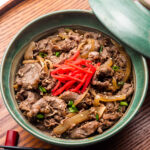
Gyudon (Japanese Beef and Rice Bowl)
- Total Time: 13 minutes
- Yield: 2 servings
Description
Gyudon, a popular Japanese beef bowl, combines tender slices of beef simmered in a rich broth of soy sauce, mirin, and dashi, served over fluffy rice. This easy and flavorful dish is ready in minutes, making it a perfect choice for a quick weeknight meal.
Ingredients
- 1/2 medium (120 g) onion, sliced
- 1 inch (5 g) ginger, thinly sliced
- 1/2 lbs (250 g) thinly sliced beef (ribeye or chuck)
Seasoning
- 3 tbsp (30 ml) sake
- 3 tbsp (30 ml) mirin
- 2 tbsp + 1 tbsp Japanese light soy sauce, divided
- 1–2 tbsp sugar, to taste
- 2/3 cup (160 ml) dashi*
- 1 tsp red miso, optional
For serving
- 2 servings (500 g) Japanese cooked rice
- 2 servings raw egg, onsen tamago or soft boiled egg, optional
- scallion, thinly sliced
- beni shoga (red pickled ginger)
Instructions
- Stir fry the Onion and Ginger (optional): Add 1 tbsp of oil, sliced onions and shredded ginger to the pot and stir fry until onions become translucent. This step is optional, but brings more flavour to the dish. Follow step 2-3 for a ‘quicker’ version. Once translucent, add the seasonings to the pot. Bring it to a boil and then reduce to a simmer over medium heat. Simmer for 2-3 minutes.
- Prepare the seasoning: In a pot, combine dashi, sugar, 2 tbsp soy sauce, mirin and sake. Stir to mix.
- Cook the Onion and Ginger: Add the sliced onions and shredded ginger to the pot and bring it to a boil and then reduce to a simmer over medium heat. Simmer for 2-3 minutes.
- Cook the Beef: Once the onions are softened, add the thinly sliced beef to the simmering broth. As the beef cooks, skim off any scum that rises to the surface. Dissolve in miso paste and 1 tbsp of soy sauce and cook for about 5 minutes, uncovered. Once the beef is 95% cooked, turn off the heat and cover. Allow the residual heat to finish cooking the meat.
- From here, you can either serve immediately or let it sit for 30 minutes or overnight. The longer it rests the more flavour is developed and the more delicious it is. If you let it rest, reheat it over medium until heated through (don’t let it come to a boil).
- Serve: Place the cooked beef, onions, and broth over a bowl of steamed rice. Garnish with beni shoga, green onion and an optional raw or poached egg. Add togarashi or sesame seeds to taste for extra flavor. Serve and enjoy!
Notes
- *or use 3/4 cup water + 1 tsp dashi granules
- Nutritional information is a rough estimate and based off 250 grams of cooked rice.
- Prep Time: 5 minutes
- Cook Time: 8 minutes
- Category: donburi, Main dish
- Method: Stove Top
- Cuisine: Japanese
Nutrition
- Serving Size: 1 serving
- Calories: 741
- Sugar: 16 g
- Sodium: 1271 mg
- Fat: 22 g
- Saturated Fat: 9 g
- Unsaturated Fat: 9 g
- Trans Fat: 0.9 g
- Carbohydrates: 94 g
- Fiber: 2 g
- Protein: 34 g
- Cholesterol: 83 mg
Okonomi Kitchen is a participant in the Amazon Services LLC Associates Program. When you purchase something through my amazon affiliate links, I earn a small commission that helps me produce consistent content at no cost to you. Thank you for your support!



I love how quick and easy the recipe is but still so flavourful! Great meal that’s quite filling too.