Recreate the iconic Yoshinoya Beef Bowl (Gyudon) at home with this easy, authentic recipe! Featuring tender beef simmered in a savory-sweet soy sauce broth, this Japanese comfort classic delivers the signature Yoshinoya flavor you crave. Perfect for a quick weeknight dinner or a nostalgic taste of Japan.
Table of Contents

Yoshinoya gyudon holds a special place in my heart—it’s one of the go-to spots my family and I would visit for a quick, satisfying meal after a long day of shopping or exploring. Affordable, delicious, and fast, their signature beef bowl always hit the spot. While the foundation of gyudon recipes is similar for home cooks, there’s something unique about Yoshinoya’s flavor that sets it apart. After countless attempts and breaking down the ingredients during my trip to Japan this March, I’ve finally created the closest Yoshinoya-style gyudon copycat recipe. This version captures the tender beef, sweet-savory sauce, and comforting taste that make it the iconic dish we all love.
What is Yoshinoya Beef Bowl?
The Yoshinoya Beef Bowl, or gyudon, is a classic Japanese dish featuring thinly sliced beef and onions simmered in a savory-sweet sauce made from soy sauce, mirin, sake, and sugar. Served over a steaming bowl of white rice, this comforting meal is known for its rich umami flavor and simplicity. The tender beef, combined with the slightly sweet broth, creates a delicious balance that has made gyudon a staple in Japanese cuisine and a favorite worldwide.
Yoshinoya began its journey in 1899, when founder Eikichi Matsuda opened a small food stall in Tokyo’s Nihonbashi district. With its motto, “Tasty, Low-Priced, and Quick” (“旨い、安い、早い”), Yoshinoya quickly became popular among workers seeking affordable, hearty meals. The brand’s consistent quality and authentic flavors fueled its growth, leading to global expansion. Today, Yoshinoya is synonymous with gyudon, serving its iconic beef bowls in countries across Asia, North America, and beyond, offering a nostalgic taste of Japan to people everywhere.
Yoshinoya vs. Homemade Gyudon
Yoshinoya gyudon and a homemade gyudon both showcase the classic Japanese dish, but they differ in flavor and preparation. Yoshinoya’s version uses thinly sliced American short-plate beef and onions simmered in a savory-sweet sauce made with soy sauce, mirin, and sugar, with added ingredients like beef stock (dashida), kombucha, and white wine to enhance the richness. Additionally, the onions are sliced slightly thicker. While it’s a quick and reliable meal, Yoshinoya also allows for some customization, such as adding soft-boiled eggs or pickled ginger. On the other hand, homemade gyudon is typically made with a dashi base, offering a lighter, more delicate flavor and greater flexibility to adjust sweetness or experiment with different beef cuts and toppings.
Yoshinoya Beef Bowl Ingredients
Here are the main ingredients you’ll need to make Yoshinoya style beef bowls:

- Thinly Sliced Beef: For a perfect Yoshinoya beef bowl, it’s best to use a marbled, tender cut of beef like boneless short ribs or ribeye, which are great alternatives to the short-plate beef used by Yoshinoya. I use pre-sliced thinly sliced beef but if slicing your own, the key is to slice the beef thinly against the grain to ensure it cooks quickly and stays tender. If needed, ask your butcher to slice it for you or freeze the beef slightly to cut it yourself into very thin slices.
- Sweet White Wine: Adds a subtle acidity and depth to the broth, enhancing the savory flavor profile of the dish.
- Mirin
- Sugar
- Dashida: A Korean beef stock powder that provides a rich, umami-packed foundation to the broth, giving the dish its characteristic savory depth. If you don’t have access to dashida, you can substitute the water with beef stock or use beef stock bouillon (note that it will taste different, though).
- Japanese Soy Sauce: Choose a light soy sauce if you can if you are particular about appearance, yoshinoya beef bowls are typically lighter in colour. It’s also more mild in flavour so if using dark soy sauce, you may need to reduce it a little.
- Kombu: A type of seaweed that imparts a delicate umami flavor to the broth, creating a base for the dashi (Japanese stock).
- Onion: Sliced onions add sweetness and depth to the broth as they soften during cooking, infusing the dish with a natural sweetness.
- Beni shoga: Japanese pickled ginger is typically served with gyudon. It cuts through the richness of the beef and makes the dish even more flavourful.
As far as toppings go typically we add egg yolks, onsen tamago, scallions, sesame seeds and togarashi! Feel free to customize it to your liking.
How to Make Yoshinoya Beef Bowl
Making Yoshinoya gyudon is relatively similar to homemade gyudon but slightly differ due to the addition of kombu:

- Prepare the broth: In a pot, combine water, white wine, mirin, sugar, and dashida. Bring to a boil, then turn off the heat. Stir in soy sauce and add kombu. Let sit for 1 hour (optional).
- Simmer aromatics: Add sliced onion, ginger, and garlic to the pot. Bring to a boil, reduce heat, and simmer, covered, for about 3 minutes. Remove the kombu.
- Cook the beef: Add thinly sliced beef and white pepper, cooking until 90% cooked. Turn off heat and skim off any scum or fat.
- Develop flavors: Let the mixture cool to room temperature, then refrigerate or serve immediately. Refrigerating enhances the flavor and makes it easier to remove excess fat.
- Serve: Reheat, remove garlic and ginger slices, and serve the beef and broth over rice, topped with fresh ginger and scallions.
Lisa’s Recipe Tips
- Don’t overcook the meat: Turn off the heat just before the meat is fully cooked, leaving a slight pink hue. The residual heat will continue cooking the beef, and since you’ll be reheating it, it will be perfectly cooked by the time you eat without becoming overdone.
- Remove scum and fat: Scum can impart an unpleasant taste, so be sure to remove it thoroughly. Straining out the fat will also result in a cleaner, more refined flavor for the sauce.
- Let it soak overnight: Letting the flavors mingle overnight makes a noticeable difference in the final taste. I often make a larger batch, enjoy a portion for dinner, and savor the leftovers over the next day or two!

Serving Suggestions
Yoshinoya beef bowls typically come as a set with miso soup and pickled vegetables. Here are some miso soup and side dish options:
- Vegan miso soup
- Eggplant miso soup
- Shimeji miso soup
- Pickled Japanese Spiral Cucumbers
- Soy Pickled Cucumbers
- Natto Salad
How to Store Cooked Beef Bowls
- Cool: Allow the gyudon to cool to room temperature before storing to prevent condensation and sogginess.
- Refrigerate: Transfer the beef and broth mixture into an airtight container. Store in the refrigerator for up to 2-3 days.
- Freeze (optional): If you want to store gyudon for longer, you can freeze it. Place the beef and broth in a freezer-safe container or zip-top bag. It can be frozen for up to 1-2 months. When ready to eat, thaw in the refrigerator overnight and reheat.
- Reheat: Reheat on the stove or in the microwave until hot. Add freshly cooked rice when serving, and enjoy!
Recipe FAQ
To make beef bowls ahead of time, you can either store the cooked dish or freeze it at different stages. For the cooked version, prepare the beef, broth, and aromatics, then let it cool to room temperature before storing it in an airtight container in the refrigerator for up to 2-3 days. You can also freeze the fully cooked beef and broth mixture for up to 1-2 months. When you’re ready to eat, thaw overnight in the refrigerator and reheat on the stove. Alternatively, for freezing before cooking, heat the savory broth and then let it cool. Pour it into a bag with the onions and beef. Freeze for up to 1-2 months, then thaw overnight and simmer everything together until hot, serving over freshly cooked rice.
Sukiyaki is a hot pot dish where thinly sliced beef and vegetables are simmered in a sweet-savory soy sauce-based broth, often enjoyed with dipping sauces. Gyudon, on the other hand, is a rice bowl topped with simmered beef and onions cooked in a similar, slightly lighter sauce, making it a quick and casual meal.

Enjoy!! If you make this Yoshinaya Beef Bowl recipe, let me know! Leave a comment, rating and if you decide to share it on socials, tag me on instagram @Okonomikitchen. I’d love to hear from you!
Print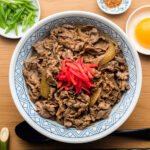
Yoshinaya Beef Bowl
- Total Time: 15 minutes
- Yield: 2 servings
Description
Recreate the iconic Yoshinoya Beef Bowl (Gyudon) at home with this easy, authentic recipe! Featuring tender beef simmered in a savory-sweet soy sauce broth, this Japanese comfort classic delivers the signature Yoshinoya flavor you crave. Perfect for a quick weeknight dinner or a nostalgic taste of Japan.
Ingredients
- 1/2 – 2/3 cup water
- 1 1/2 tbsp white wine
- 1 tbsp mirin
- 1 tbsp sugar
- 2 tsp dashida
- 1 1/2 tbsp Japanese light soy sauce
- 1 3×3 cm kombu or 1 tsp kombu dashi
- 1/2 medium (100 g) onion
- 2 slices of ginger, smashed
- 1 garlic, smashed
- 1/2 lbs (260 g) thinly sliced beef
- 2–3 pinches of white pepper
Instructions
- Prepare the broth: In a pot, combine water, white wine, mirin, sugar, and dashida. Bring to a boil, then turn off the heat. Stir in the soy sauce and add the kombu. Let it sit for 1 hour (optional but recommended).
- Simmer the onions and aromatics: Slice the onion into 1 cm thick pieces, root to tip. Add the sliced onion, ginger, and garlic to the pot. Bring it back to a boil, then reduce the heat and simmer, covered, until the onions and ginger soften, about 3 minutes. Remove the kombu.
- Cook the beef: Add the thinly sliced beef and white pepper, and simmer. Be sure to skim off any scum or fat that rises to the surface as it cooks. Once the beef is 90% cooked, turn off the heat and cover the pot for a few minutes to allow the residual heat to finish cooking. From here, serve immediately or follow step 4.
- Let the flavors develop: Let it cool to room temperature covered to allow the beef and onions to soak up the flavours. You can reheat it after 30 minutes or refrigerate overnight. The longer it sits, the more the flavors will develop. If refrigerated, the fat will harden on the surface. Remove the fat for a more refined taste.
- Serve: Before serving, reheat over the stove and remove the garlic and ginger slices. Serve the beef and broth mixture over rice, and top with fresh ginger slices and chopped scallions.
Notes
- Prep time does not include resting time.
- Prep Time: 5 minutes
- Cook Time: 10 minutes
- Category: Main dish
- Method: Stove Top
- Cuisine: Japanese
Nutrition
- Serving Size: 1 serving
- Calories: 707
- Sugar: 13 g
- Sodium: 832 mg
- Fat: 22 g
- Saturated Fat: 9 g
- Unsaturated Fat: 9 g
- Trans Fat: 0.9 g
- Carbohydrates: 89 g
- Fiber: 1 g
- Protein: 33 g
- Cholesterol: 83 mg
Okonomi Kitchen is a participant in the Amazon Services LLC Associates Program. When you purchase something through my amazon affiliate links, I earn a small commission that helps me produce consistent content at no cost to you. Thank you for your support!