
This crispy tofu katsu recipe transforms simple tofu into a deliciously satisfying dish. Coated in golden panko breadcrumbs, it delivers the classic flavors of Japanese katsu in a plant-based version. Pair it with tangy tonkatsu sauce or serve it over rice for a satisfying, high-protein meal. Whether baked, air-fried, or deep fried, this easy recipe brings a tasty Japanese twist to your table, perfect for any night of the week!
(Ultimate Guide for Crispy Tofu Katsu)
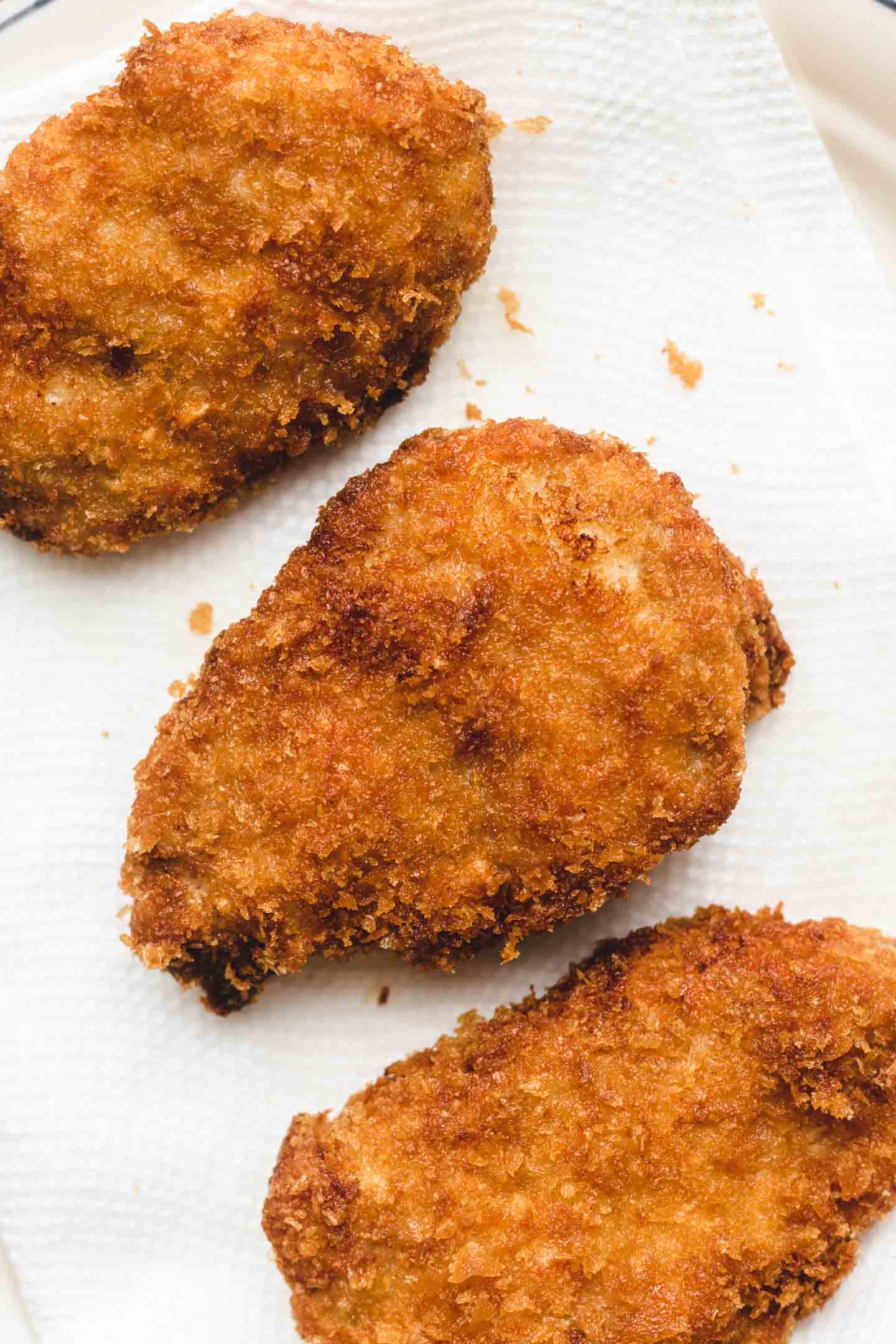
Table of Contents
Crispy Vegan Tofu Katsu
This vegan tofu katsu was a staple dish for me throughout highschool and university. Tofu is cheap, high in protein and always makes for a satisfying meal! I think it’s safe to say I’ve made this tofu katsu over a hundred times so I can guarantee it’s perfectly crispy, the panko breading stays on the tofu and is perfect for vegan katsu sando, vegan katsu curry, vegan tonkatsu ramen and vegan katsudon!
Ingredients for Vegan Tofu Katsu
You only need a handful of ingredients to make this crispy tofu katsu recipe:

- Tofu: Either medium firm, firm or extra firm are great choices of tofu katsu. These three types holds its shape when cooked, providing a satisfying texture that mimics traditional katsu. It serves as a high-protein base for this plant-based version. Most recipes call for firm but I find medium firm after freezing has the best meaty texture.
- Panko Breadcrumbs: These light, crispy Japanese breadcrumbs create the perfect crunchy coating for the tofu. They give the katsu its signature crispiness and golden color when fried or baked.
- Potato Starch or All-Purpose Flour: Used to lightly coat the tofu before dipping in egg or a vegan alternative, the flour helps the breadcrumbs adhere to the tofu and creates a crispier texture.
- Yogurt or Aquafaba: Yogurt or thickened aquafaba helps bind the panko breadcrumbs to the tofu, much like an egg would. Its creamy consistency provides moisture while allowing the breadcrumbs to adhere well. For a plant-based option, use a non-dairy yogurt such as soy, coconut, or almond milk yogurt. You can also use an egg if not vegan.
- Cooking Oil: For frying the tofu katsu to perfection. You can use vegetable, sunflower, canola, or any neutral oil that works for frying.
Types of Panko

Even within panko, there are different types. The two brands shown above are my preferred brands that look like the bottom left. The bottom right is the Kikkoman brand.
- Shape: Authentic panko have a long and sharp shape vs. panko that are round in shape.
- Size: Authentic panko are very random in size and range from large to medium size vs. the round panko that are mostly similar in size. Variation of sizes also provide a nicer appearance after being fried.
- Taste: Japanese brand panko tend to have a ever so slight sweetness and salted cracker-like flavour vs. the taste of regular breadcrumbs (bread-y flavour).
- Texture: Authentic panko have a lighter and airy texture vs. a hard-crunchy texture.
Panko breadcrumbs should never be hard or dense. Only a truly authentic Japanese Panko will give your menu items a delicate, light and crispy texture without a heavy oily taste.
In addition to the light delicate texture, an Authentic Japanese Panko also meets the popular demand for clean and GMO free ingredients your customers want. No preservatives, dough conditioners or any flavor enhancers.
How to Make Crispy Tofu Katsu
Making tofu katsu it is really straight forward, so it’s perfect for a easy vegan dinner. Here’s an in depth guide on how to prepare tofu, make really meaty tofu, cutting the tofu, dredging the tofu and frying the tofu for the perfect, most crispy tofu katsu:
Prepare the Tofu
It’s important to draw excess moisture out of the tofu before frying to prevent it from exploding. There are several ways to prepare and press tofu:
- Press the tofu: using a tofu press or balancing a heavy object on top of the tofu with a towel wrapped around it.
- Soak in salted water: pour salted water over the tofu and let it sit for 8-10 minutes. The salted water will draw the moisture out of the tofu.
- Freeze & Boil: Place a block of frozen tofu in boiling salted water over a simmer for 10 minutes.
- Microwave: If using fresh tofu, microwave on medium (600 W) with a paper towel wrapped around it for 1-2 minutes. If using frozen, microwave on medium for 4 minutes until defrosted.
How to Make Meaty Tofu
If you prefer katsu tofu with a meat-like texture, there are two ways to do this:
- Double Freezing #1: Works best with traditional soft or medium firm tofu, as mentioned in my air fryer tofu recipe. Simply freeze the entire block of tofu, thaw and press. Then freeze again, thaw and press. If you want to go beyond that, a third freeze makes extra tight flakey layers.
- Double freezing #2: You may also press, freeze, thaw, press, freeze, thaw and press.
Cutting the Tofu for Katsu

- Basic cutlet: Slice the tofu 1/2 inch in thickness per piece. Depending on the block of tofu, slice that in half to make about 4-6 pieces.
- Realistic Cutlet: Slice the tofu into widths of 1/2 an inch. It doesn’t have to be completely flat, having a bit of grooves makes it looks more realistic if you’re going for that look. Then cut the corners off. For a true cutlet like appearance, round out the corners with a pair of scissors. No need to be perfect with the cuts! The less perfect it is, the more it looks like a real cutlet.
- Nuggets: Slice the tofu into 4 squares. You can use the tofu as is or cut them into irregular shapes like (kinda like larger nuggets). Then season the tofu pieces with salt and pepper on both sides.
Dredging Tofu

Have three shallow dishes or prep pans out. Add potato starch or flour to one, egg replacer (yogurt or aquafaba) in another and panko in the third. Additionally, you can have one more on the side to place the breaded tofu.
How to Cook Tofu Katsu
There are three methods of making tofu katsu: deep fry, air fryer and oven baked.
Dredge the tofu in flour and shake off any excess flour. Dip into the yogurt or aquafaba (egg replacement). Then dredge into the panko making sure you have an even coating all around.
Deep frying / pan frying
- Add oil to a heavy bottom pot about 1 1/2 inches in height. Heat over medium-high. I like to start frying at 320 F because it makes for a more even and golden exterior. If you want to pan shallow fry, add enough oil to cover the pan and then fry each side over
- Place 1-2 pieces of the katsu (do not over-crowd) into the oil and deep fry for 1-2 minutes without moving it. Once golden, carefully flip and cook for another 2-3 minutes until golden.
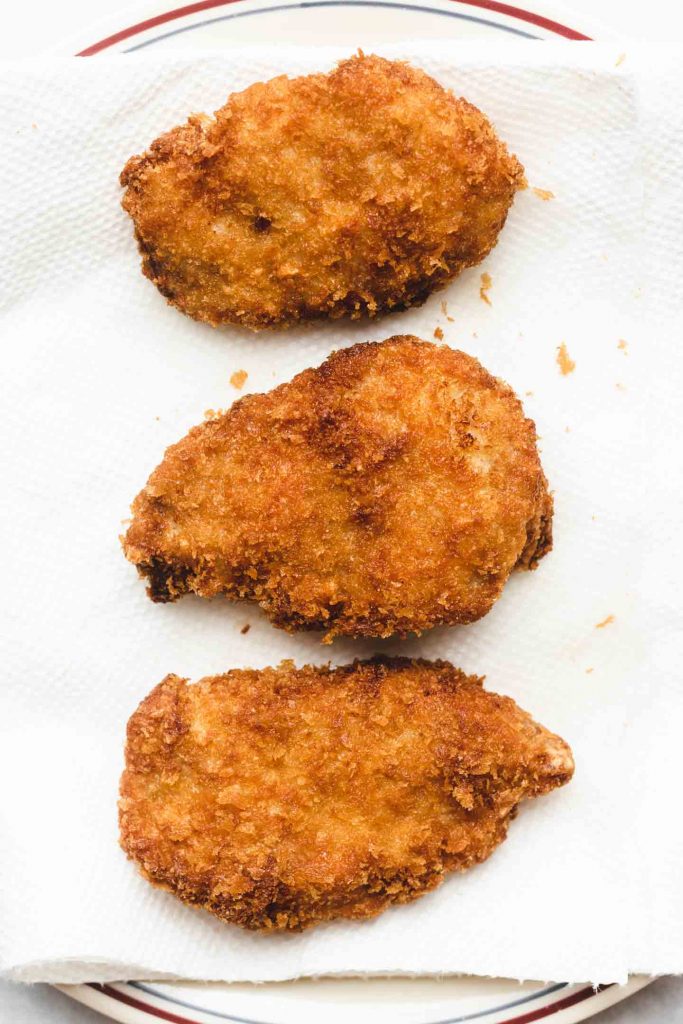
- Carefully remove the katsu with tongs or chopsticks and place onto a wire rack or paper towel lined plate to remove excess oil.
Air frying
- Follow the steps from above but instead of deep frying, air fry at 375 F. I highly recommend spraying the air fryer basket and tofu katsu with oil to get a more ‘fried’ texture. Air fry for about 6-8 minutes or until light golden brown. Flip and air fry for another 5 minutes or until golden brown.
Baking
- Follow steps 1-3 from above.
- We are also going to be pre-toasting the panko for a better crunchy crust. Add the panko to a pan over medium heat and spray with oil. Cook until lightly golden brown and then remove to the third bowl. Then do the dredge, dip and dredge.
- Place the katsu pieces on a prepare oven safe wire rack or baking sheet and bake at 400 F for 10-12 minutes on each side or until golden brown.
Tofu Katsu Recipe Tips
- Freeze the tofu: Freezing the tofu will make for a meatier tofu katsu! I find it more satisfying to eat.
- Fry with Correct Temperature: I highly recommend using a thermometer, especially if you’re new to frying. Since tofu doesn’t need to be cooked all the way through like meats, its better to err on frying at a higher temperature because if too low, it can absorb a lot of oil and become greasy.
- Let the oil drain: Tilt the katsu tofu on the side before laying it flat to allow excess oil to drip off. This will help keep it crispy and not oily!
Serving Suggestions
This tofu katsu is delicious served with rice and cabbage, just like traditional tonkatsu. It’s also perfect for making:
- Vegan Katsu Curry
- Vegan Katsudon
- Vegan Katsu sando
How to Store Tofu Katsu
- Refrigerator: Leftover tofu katsu can be stored in an airtight container in the fridge for up to 5 days.
- Freezer: For longer storage, tofu katsu can be frozen wrapped tightly in cling wrap and then stored in an airtight ziplock bag or container for up to 1 month. To defrost, place it in the fridge overnight or let it sit at room temperature for a few hours. I highly recommend freezing and defrosting prior to making the tofu katsu if you plan on freezing because it will change in texture and release liquid.
- Reheating: To restore its crispy texture, reheat leftover tofu katsu in the oven or air fryer. Simply heat at 350°F for about 8-10 minutes. Avoid using the microwave, as it will make the breading soggy.
Recipe FAQ
Yes! Just like our air fryer chicken katsu, after coating it in panko, spray with oil and then air fry at 400 F (200 C) for 10-12 minutes flipping half way until golden brown.
While you can bake it, I find it does tend to dry out and be more ‘crunchy’ than crispy. You can toast the panko prior in a pan with some oil. Let the panko cool before coating the tofu and then bake it at 400 F (200 C) for 15-20 minutes, flipping halfway until crispy.
Yes! Opt to use starches or gluten free all purpose flour and gluten free bread crumbs.
This really depends on what kind of texture you’re going for. If you like the texture of tofu as it is, choose between yuba, traditional soft, medium firm, firm or extra firm. I don’t recommend using silken or soft (unless double frozen and thawed) because they are much more fragile to work with.
There are three ways to know when the oil is ready for frying. Using a thermometer the easiest and most accurate. For the chopstick method, place chopsticks into the oil and if you see small bubbles on the tip, then you’re ready to fry. For the panko method, add a piece of panko to the fryer. If it sinks and pops back up, then it’s ready to go.
Enjoy!! If you make this Tofu Katsu recipe, let me know! Leave a comment, rating and if you decide to share it on socials, tag me on instagram @Okonomikitchen. I’d love to hear from you!
Print
Tofu Katsu
- Total Time: 1 hour
- Yield: 4 servings
- Diet: Vegan
Description
This crispy tofu katsu recipe transforms simple tofu into a deliciously satisfying dish. Coated in golden panko breadcrumbs, it delivers the classic flavors of Japanese katsu in a plant-based version. Pair it with tangy tonkatsu sauce or serve it over rice for a satisfying, high-protein meal. Whether baked, air-fried, or pan-fried, this easy recipe brings a tasty Japanese twist to your table, perfect for any night of the week!
Ingredients
- 14 oz package of medium firm, firm or extra firm tofu
- salt
- pepper
- 1/4 cup potato starch or all purpose flour
- 3 tbsp yogurt*
- 1/2 cup (70 g) panko
- oil for frying
Instructions
Make the Tofu Cutlet
- Prepare the Tofu (Optional, but highly recommended): Choose method of preparing and pressing the tofu (see blogpost for details). I’m using traditional / medium firm tofu and have froze, thawed and pressed it twice. If using firm or extra firm, freeze overnight and thaw in the fridge. Press any excess moisture out. If pressed for time, you may press firm or extra firm tofu for a minimum of 20 minutes to remove any excess moisture. You can do this with a tofu press or by placing a flat object (like a cutting board) on top with a heavy object on top of that.
- Cut the tofu: For one regular sized cutlet, slice the block of tofu into 1/2 inch width pieces (I’m able to get 3 per block of tofu). Then cut off the corners and shape as desired. For mini cutlets, slice the block of tofu into 4. You can use the tofu as is or cut them into irregular shapes to make them look more like nuggets.
- Set Up the Breading Station: Line up 3 shallow bowls. Add the potato starch to one, yogurt to the next and panko to the third. Add the oil to the yogurt or aquafaba bowl and stir (if using- this helps prevent the panko from detaching when frying). If using a thick yogurt, add a little water to thin it out a bit.
- Coat the tofu: Pat the tofu dry with a lint free towel or paper towel. Sprinkle a bit of salt and pepper to each side. Coat in potato starch and then the yogurt on both sides and all the edges. I find using a fork makes this process much easier and less messy. Then press it into the panko, ensuring you get a nice even coat on each side and around the edges. Gently shake off any excess panko. Repeat for remaining pieces.
Deep Fry
- Add oil to a heavy bottom pot about 1 1/2 – 2 inches in height. Heat the oil over medium high heat and wait until the oil is heated to 180 C / 350 F. If you don’t have a thermometer, add a piece of panko to the oil, if it floats up then it’s ready to start frying.
- Place 1-2 pieces of the katsu into the oil and deep fry for a few minutes (about 1 – 1/2 minutes) without moving it around. When it gets golden brown, carefully flip it over and cook for another 2-3 minutes until golden brown.
- Remove the katsu with tongs or chopsticks and then place on a paper-lined wire rack or plate. Repeat until all of them are fried
Air Fry
- Follow steps 1-4 from above. Pre-heat air fryer to 375 F. Spray the air fryer basket and katsu with oil (optional, but will make them more crispy and ‘fried’). Place the tofu katsu into the basket and air fry for about 6-8 minutes or until light golden brown. Flip and air fry for another 5 minutes or until golden brown.
Baked
- Follow steps 1-3 from above. Pre-heat oven to 400 F. Place a oven-safe wire rack onto a baking sheet (or parchment paper).
- In a pan over medium heat, add the panko and spray with oil. Cook until golden brown. Remove from heat and add to the third bowl. Then follow step 4 from above.
- Place the tofu katsu onto the wire rack and bake for 10-12 minutes on each side or until golden brown.
To Serve
- Serve the tofu katsu over rice and cabbage or use it for katsu curry, tofu katsu sando or vegan tofu katsudon!
Notes
- Yogurt can be substituted with an egg or a combination of 3 tbsp flour + 1 tbsp potato or corn starch + 5 tbsp water.
- Prep Time: 30 minutes
- Cook Time: 30 minutes
- Category: Main dish
- Method: Frying
- Cuisine: Japanese
Nutrition
- Serving Size: 1 serving
Okonomi Kitchen is a participant in the Amazon Services LLC Associates Program. When you purchase something through my amazon affiliate links, I earn a small commission that helps me produce consistent content at no cost to you. Thank you for your support!



I was looking for a good tofu recipe and this is it. Super crispy and surprisingly flavourful! the texture of the tofu is really meaty like too
Hi, Is it possible to double dredge the yogurt/aquafaba and potato starch and fry at 160c like you suggest in your katsudon recipe to make it crispier and evenly golden brown?
most of the time it works well but sometimes it comes out darker in some areas and not very crispy, I only have access to basic cheap dried panko so maybe that’s the reason.
Yes! I think that would make a thicker exterior to help it adhere to the panko better 🙂