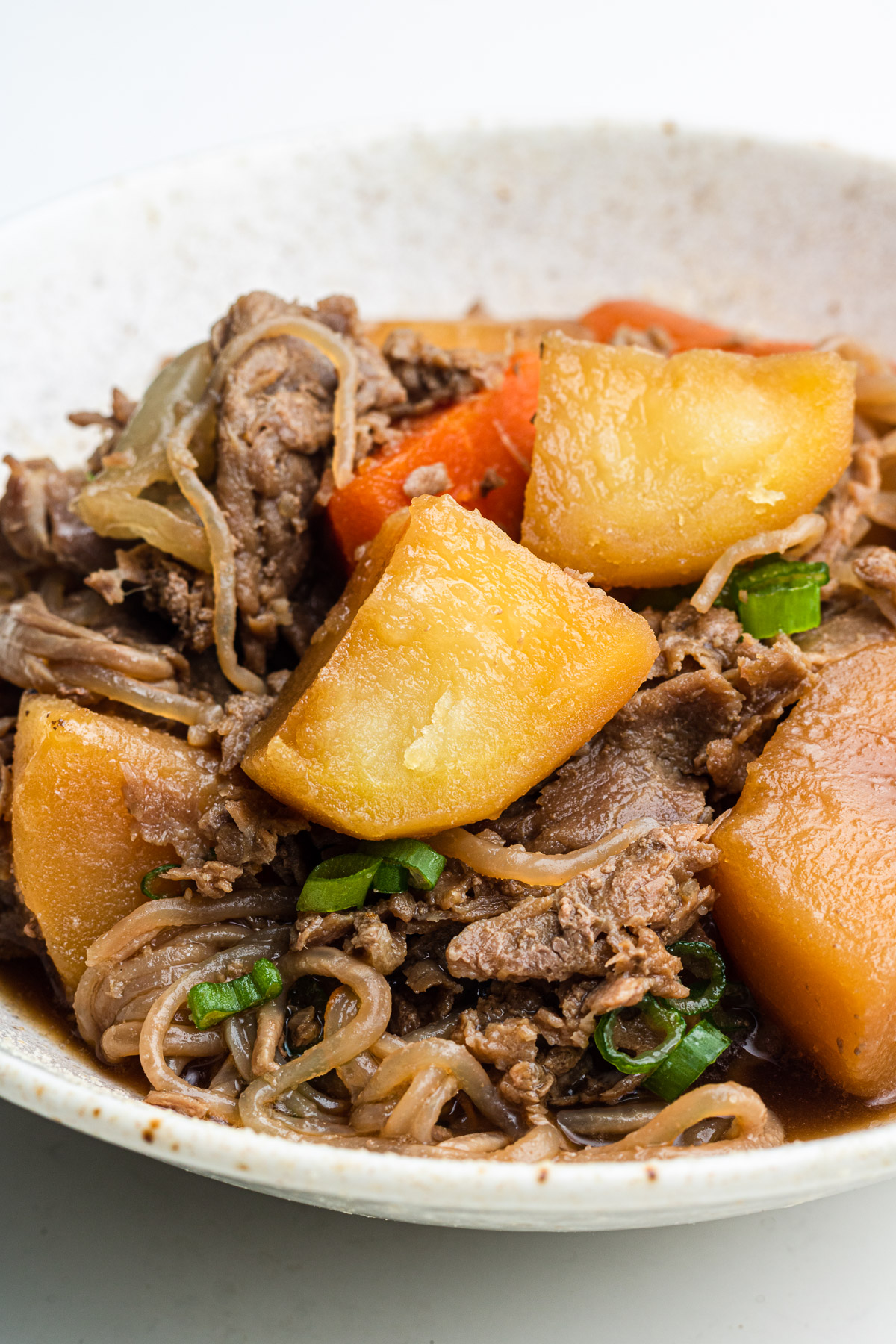
This Rice Cooker Nikujaga is a simple and hearty Japanese dish that’s perfect for busy weeknights. It combines tender potatoes, carrots, and thinly sliced beef in a savory-sweet broth, making it a hands-off way to enjoy this classic stew with minimal effort.

Table of Contents
Rice Cooker Meat and Potatoes
Nikujaga (肉じゃが) translates to “meat and potatoes” and is a traditional Japanese comfort food. It’s a simmered dish with a flavorful balance of sweet and savory notes. While traditionally made on the stovetop, this rice cooker version simplifies the process, allowing you to enjoy all the delicious flavors with less effort. You can read more about the stovetop version in my original Nikujaga Recipe.
Why Make Nikujaga in a Rice Cooker?
One of my favorite dishes to make during cooler seasons is nikujaga. This One Pot Japanese Meat and Potatoes dish is simmered in a light savory-sweet broth, and using a rice cooker makes it incredibly easy and hands-off. I love how soft and melty the potatoes and carrots get, and the beef stays tender while soaking up all the delicious flavors. This rice cooker version tastes just as good as the traditional method, with minimal prep and cleanup!
Ingredients & Substitutions
Each ingredient plays an essential role in building the dish’s savory-sweet flavor and hearty texture. Here are they key ingredients:

- Potatoes: I recommend using Yukon Gold potatoes as they hold their shape best during cooking. You don’t have to peel them, though you can if you prefer.
- Carrots
- Onion
- Shirataki noodles: Make sure to rinse them well before using to remove any excess odor.
- Japanese soy sauce
- Sake
- Mirin
- Sugar
- Dashi granules: If you have dashi stock on hand, substitute it for the water.
- Thinly sliced beef: Ribeye or chuck are both great choices for tender, flavorful beef that cooks quickly. You can also swap the protein for chicken or firm tofu.
- Ginger: Optional, but adds warmth and flavour.
- Snow peas: Optional, but they make for a pretty garnish and add color to the dish.
How to Make Meat and Potatoes in a Rice Cooker
The best thing about rice cooker recipes is that its hands off once everything is in the pot! Here’s a brief overview of the steps:

- Prep the Vegetables: Peel and cut the potatoes into quarters. Slice the carrots diagonally using the rangiri technique. Cut the onion into wedges.
- Prepare the Shirataki Noodles: Rinse and cut them into shorter lengths with scissors.
- Layer the Ingredients: Add the seasoning ingredients and water to the rice cooker pot. Layer the potatoes, carrots, onions, shirataki noodles, and beef in that order.
- Cook: Set the rice cooker to the white rice setting and let it work its magic.
- Optional Garnish: Add snow peas after cooking and let the dish rest on the keep-warm setting for 15-30 minutes to enhance flavors.
- Serve and Enjoy: Mix gently, serve in bowls, and enjoy this comforting Japanese classic.

Lisa’s Recipe Tips
- Layer Ingredients: Always place the beef on top to prevent it from overcooking and ensure the vegetables soak up the seasoning.
- Cut Vegetables Evenly: Uniform pieces ensure everything cooks evenly.
- Don’t Overload the Rice Cooker: Ensure the ingredients fit comfortably without exceeding the maximum fill line to avoid uneven cooking. For this recipe, I’m using a 5 cup rice cooker.
How to Store Leftovers
If you have leftovers, allow the nikujaga to cool completely before storing it in an airtight container:
- Refrigeration: Store in the fridge for up to 3 days. Reheat in the microwave in 20-second intervals until warm.
- Freezing: Avoid freezing shirataki noodles as their texture changes. Remove them before freezing if desired.
Recipe FAQ
Absolutely. Substitute the beef with sliced shiitake mushrooms or fried tofu. Replace the dashi granules with kombu dashi or mushroom broth for a plant-based option.
Yes! For a more traditional method, check out my stovetop nikujaga recipe.
Can I use different kinds of potatoes?
Yes, but choose waxy or all-purpose varieties like Yukon Gold or red potatoes. Starchy potatoes like Russets tend to fall apart during cooking.
More Easy Rice Cooker Recipes to Try
- Rice Cooker Oyakodon
- Rice Cooker Teriyaki Chicken Rice
- Rice Cooker Japanese Sweet Potatoes
- Rice Cooker Bibimbap
- Rice Cooker Chicken and Radish (Toriniku Daikon)
Enjoy!! If you make this Rice Cooker Nikujaga recipe, let me know! Leave a comment, rating and if you decide to share it on socials, tag me on instagram @Okonomikitchen. I’d love to hear from you!
Print
Rice Cooker Nikujaga
- Total Time: 70 minutes
- Yield: 2 servings
Description
This Rice Cooker Nikujaga is a simple and hearty Japanese dish that’s perfect for busy weeknights. It combines tender potatoes, carrots, and thinly sliced beef in a savory-sweet broth, making it a hands-off way to enjoy this classic stew with minimal effort.
Ingredients
- 4 small (450 g) yukon gold potatoes
- 1 large (160 g) carrot
- 1 large (170 g) onion
- 1 package (200 g) shirataki noodles
- 3–4 tbsp Japanese soy sauce*
- 2 tbsp sake
- 2 tbsp mirin
- 2 tbsp sugar
- 1 tsp dashi granules
- 1/4 cup water
- 2–3 slices of ginger, optional
- 1/2 lbs (250 g) thinly sliced beef (ribeye or chuck)
- 8–10 snow peas, optional
Instructions
- Peel the potatoes and cut them into quarters. Place the pieces in a bowl of water to prevent them from browning.
- Peel the carrot and use the rangiri technique to cut it. Hold the carrot diagonally, slice, then rotate slightly before each cut to create irregular bite-sized pieces. This helps the carrot cook evenly and absorb flavor.
- Remove the root and tip of the onion, then slice it in half. Cut each half into four wedges.
- Rinse the shirataki noodles under cold water to remove any odor. Cut them into shorter lengths using kitchen scissors for easier eating.
- In the rice cooker pot, mix the soy sauce, sake, mirin, sugar, dashi granules, and water. Stir to dissolve the sugar, dashi granules and ginger if using.
- Drain the potatoes and add them to the rice cooker pot. Add the carrots, followed by the onion wedges. Spread the shirataki noodles over the vegetables. Lay the thinly sliced beef on top of everything. This layering ensures even cooking and flavor distribution.
- Close the lid and set your rice cooker to the regular white rice setting. Let it cook completely.
- While the rice cooker is working, remove the strings from the snow peas by snapping off the ends and pulling away the tough fibers along the sides. Once the rice cooker timer goes off, open the lid and gently mix the contents 1-2 times to distribute the flavors evenly.
- Place the snow peas on top of the nikujaga, close the lid, and switch the rice cooker to the keep warm function. Let it rest for 15-30 minutes. This softens the snow peas and allows the flavors to meld further.
- Serve hot in bowls. Enjoy!
Notes
- Use 3 tbsp for a lighter flavour and 4 if serving with rice.
- Prep Time: 10 minutes
- Cook Time: 60 minutes
- Category: Main dish
- Method: Rice Cooker
- Cuisine: Japanese
Nutrition
- Serving Size: 1 serving
- Calories: 583
- Sugar: 18.5
- Sodium: 415 mg
- Fat: 21.8 g
- Saturated Fat: 8.8 g
- Unsaturated Fat: 11.9 g
- Trans Fat: 0.2 g
- Carbohydrates: 59 g
- Fiber: 5.6 g
- Protein: 40 g
- Cholesterol: 82 mg