
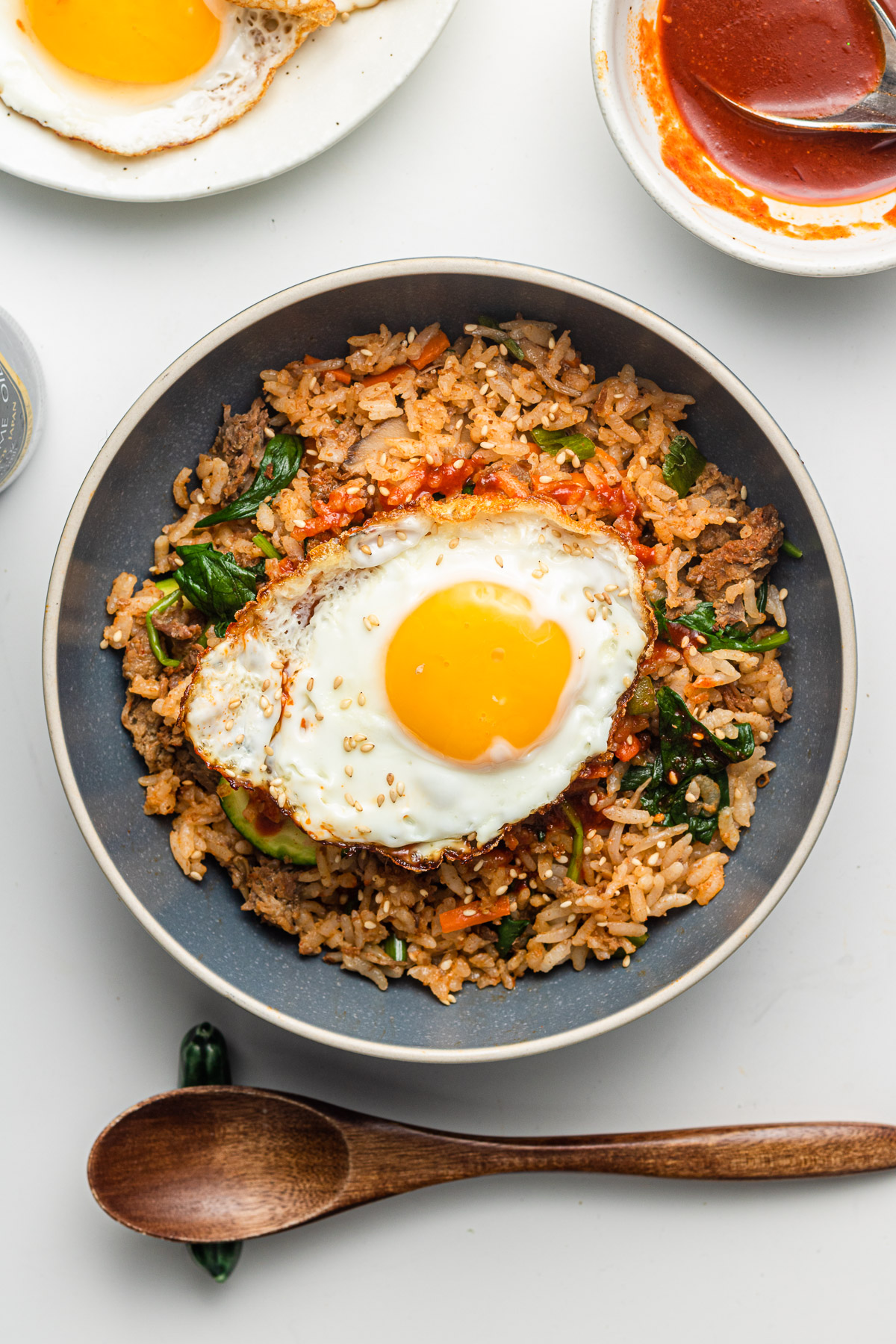
This Rice Cooker Bibimbap is a quick and easy way to enjoy the classic Korean dish with minimal effort. Cook fluffy rice, perfectly steamed veggies, and flavorful protein all in one pot—no stovetop needed! Topped with a fried egg and spicy gochujang sauce, this one-pot bibimbap is perfect for busy weeknights or meal prep.

Table of Contents
Easy Bibimbap Made in One Pot
This one-pot bibimbap is the ultimate low-effort, high-reward meal that combines all the delicious flavors of Korean bibimbap without the hassle of cooking each vegetable side and meat separately. Everything is cooked together with just a click of a button, making it perfect for busy weeknights, meal prep, or dorm-friendly cooking. I used to make a version of this in university, and it’s reminiscent of takikomi gohan (Japanese mixed rice) but with all the savory, satisfying flavors of bibimbap. This recipe is high-protein, hearty, and so versatile—you can easily swap in whatever ingredients you have on hand, making it a go-to dish for a quick and delicious meal!
Ingredients and Substitutions
Here are the key ingredients you’ll need:

- Short-grain rice
- Dashida: or chicken stock powder
- Vegetables: I typically use carrots, bean sprouts, shiitake mushrooms and spinach but feel free to substitute with what you like and have on hand.
- Beef: Any thinly sliced beef of your choice. I like to use beef chuck that isn’t too fatty because it absorbs a lot of that moisture from the other ingredients and sesame oil but if you like a more tender cut, ribeye or strip loin are great options. You can even use ground beef or other types of protein like pork.
- Green onions (or chives)
- Gochujang
- Toasted Sesame oil
- Toasted sesame seeds
- Seasonings: I typically like to use yakiniku sauce or a bulgogi marinade for this recipe. You can easily make your own (recipe below).
How to Make Bibimbap in the Rice Cooker
This recipe is incredibly simple and requires just a few easy steps. The rice cooker does most of the work for you! Here’s how to make this one-pot bibimbap:

- Rinse & Soak the Rice: Thoroughly rinse the rice to remove excess starch. Soak the rice while you prep the other ingredients. This will ensure a soft, fluffy texture.
- Prep the Ingredients: Marinate the meat and slice the vegetables.
- Assemble in the Rice Cooker: Drain the rice and add it to the rice cooker along with water and dashida. Layer the vegetables on top of the rice (except spinach and zucchini). Place the marinated protein on top, then cook using the rice cooker’s regular white rice setting.
- Note: Unlike my Rice Cooker Pepper Lunch, the added vegetables affect how meat cooks. If adding a large amount, it may not fully cook at the end. For more control, you can add beef 3/4th of the way through, but I prefer the convenience of a hands-off process and don’t mind well-cooked beef, so I add it at the start. Feel free to experiment!
- Add Delicate Veggies: Once the rice finishes cooking, quickly add the zucchini and spinach to steam them for about 3 minutes.
- Prepare the Sauce: In a small bowl, combine gochujang, sesame oil, sugar, soy sauce, rice vinegar, and garlic to make the bibimbap sauce.
- Serve: Open the rice cooker, drizzle with sesame oil, add chopped green onions (or chives), and mix everything together.

VIDEO: Watch How to Make It
Lisa’s Recipe Tips
- Soak & Drain Rice Well: Properly rinsing and soaking the rice helps achieve the perfect texture. Draining well and weighing the rice-to-water ratio ensures it doesn’t get too soggy. A 1:1 ratio of rice to water by weight typically works.
- Avoid Excess Water: Vegetables and meat release moisture as they cook, so don’t add too much water (keeping the 1:1 ratio) or the rice may turn out too soft.
- Timing for Veggies: You can add all the vegetables at once, but softer ones (like spinach and zucchini) cook faster and may discolor. This won’t affect the taste, but for the best texture, add them after the rice is done.
- Timing for Meat: Add at the beginning for a hands off cooking approach or add 3/4th of the way of cooking time if concerned about over-cooked beef. This will also vary depending on thickness of thinly sliced beef and how marbled the beef is.
- Don’t Mix Ingredients with the Rice: Keeping the ingredients on top of the rice instead of mixing them will help the rice cook evenly and prevent clumping.
- Check out my ultimate guide for cooking meals in a rice cooker for more helpful info!
Variations
I’ve made this rice cooker bibimbap recipe with a few variations over time. Here are some ideas if you want to switch things up:
- Use different proteins: Swap the sliced beef for ground beef or any protein you prefer. Chicken, pork, or even a plant-based protein will work! If using tofu, I recommend using extra firm tofu or firm tofu with the excess liquid fully pressed out.
- Use different marinades: I’ve provided two of my go-to marinades but you could also use bulgogi or a spicy pork marinade.
- Vegetable options: You can use any vegetables you have on hand! Peppers, onions, cauliflower, daikon, or even kimchi would be great additions.
How to Store Leftovers
Bibimbap is often a meal of leftovers, so it’s practically made to be prepped ahead of time and perfect for meal prepping!
- Cool Before Storing: Allow the bibimbap to cool to room temperature (about 30 minutes) before storing. This helps prevent excess moisture and keeps the rice from becoming too soggy.
- Use Airtight Containers: Store the bibimbap in an airtight container to preserve its flavor and prevent drying out.
- Refrigerate: Keep the bibimbap in the fridge for up to 2-3 days.
- Reheat Gently: When ready to eat, reheat in the microwave for 40-60 seconds or until warmed.
- To Freeze: Tightly wrap individual portions in plastic wrap, then place them in a freezer-safe bag for up to 2 months. Thaw in the refrigerator overnight or microwave until warm.
Recipe FAQ
While white rice works best for bibimbap, you can use brown rice. Just note that it will take longer to cook and may need extra water.
If you don’t have a rice cooker, you can easily make this bibimbap in a regular pot on the stovetop. Simply cook the rice according to the instructions, and follow the same process for adding the veggies and protein. To make more traditional bibimbap where the ingredients are prepared separately, check out my vegan bibimbap recipe for all the vegetable sides.
This could be due to the ratio of vegetables, water and rice. Some vegetables release more water (mushrooms, zucchini, mung bean sprouts, cabbage, lettuce) whereas root vegetables like carrots, fernbrake or burdock release less water. You may have to do some experimentation with the amount of water based on ingredients added.
Yes, I’ve tried to make it in an instant pot but it tends to burn a bit if left for too long. Cook on rice mode for 12 minutes (low pressure) then allow natural release for 10 minutes. Do not let it sit past 10 minutes or it tends to start burning at the bottom.

Enjoy! If you make this Rice Cooker Bibimbap recipe, I’d love to hear what you think! Leave a comment and rating below, and if you share it on social media, tag me on Instagram @Okonomikitchen. I can’t wait to see your creations!
Print
Rice Cooker Bibimbap
- Total Time: 55 minutes
- Yield: 2 servings
- Diet: Low Fat
Description
This Rice Cooker Bibimbap is a quick and easy way to enjoy the classic Korean dish with minimal effort. Cook fluffy rice, perfectly steamed veggies, and flavorful protein all in one pot—no stovetop needed! Topped with a fried egg and spicy gochujang sauce, this one-pot bibimbap is perfect for busy weeknights or meal prep.
Ingredients
Meat Marinade (Choose 1 Marinade Option)
- 250 g thinly sliced beef (ribeye, sirloin or chuck)
Option 1:
- 1 tbsp gochujang
- 3 tbsp yakiniku sauce
- 2 tsp minced garlic
Option 2:
- 1 tbsp gochujang
- 1 1/2 tbsp soy sauce
- 1 tbsp honey or brown sugar
- 1 tbsp mirin
- 1–2 tsp gochugaru (adjust to taste)
- 2 tsp (10 g) minced garlic
- 1 tsp (5 g) minced ginger
Rice and Vegetables (250-350 g)
- 1 cup (150 g) short grain rice (using rice cooker cup)
- 2/3 cup (150 ml) water
- 2–3 tsp dashida or chicken stock powder
- 1/2 (60 g) carrot, peeled and thinly sliced
- 3/4 cup (80 g) bean sprouts
- 3 (80 g) rehydrated dried shiitake mushrooms
- 1/2 (60 g) zucchini
- 2 cups (60 g) spinach
Toppings
- 2 stalks green onions (or 40 g chives), chopped
- 1 tbsp sesame oil
- 1–2 tbsp toasted sesame seeds
- 1 fried egg per serving
Optional Bibimbap Sauce*
- 2 tbsp gochujang
- 2 tsp sesame oil
- 2–3 tsp sugar (to taste)
- 1–2 tsp water
- 1 tsp soy sauce
- 1 tsp rice vinegar
- 1 tsp minced garlic
Instructions
- Rinse and soak the rice: Rinse the rice thoroughly to remove excess starch. Soak in water while preparing the other ingredients.
- Prepare the meat and marinade: In a bowl, mix the beef (or chosen meat) with the ingredients for your selected marinade. Set aside to marinate.
- Prep the vegetables: Peel and thinly slice the carrots. Slice the rehydrated shiitake mushrooms. Slice the zucchini in half and then slice into moon shapes. Thinly slice the green onion or slice the chives about 1 inch in length.
- Assemble in the rice cooker: Drain the rice well and place it in the rice cooker pot. Add 150 ml of water and dasida (beef broth powder). If you have a scale, weigh the rice and residual water and add water until it reaches 300 grams. Scatter the carrots, bean sprouts, and mushrooms evenly over the rice. You may also add the spinach, zucchini and green onion/chives now but they do get very soft and discolour. Place the marinated meat on top. Cook using the regular white rice setting.
- Add zucchini and spinach: Once the rice finishes cooking, quickly add the zucchini, spinach and on top and close the lid for 3 minutes to steam.
- Prepare optional sauce (if using): Mix together the ingredients for the bibimbap sauce in a small bowl. Adjust sugar and spice levels to taste.
- Serve: Open the lid, add the chopped green onions or chives and sesame oil, and gently mix everything together. Scoop into bowls and top with a fried egg, if desired. Drizzle with bibimbap sauce and garnish with toasted sesame seeds. Enjoy!
Notes
- *You can also just simply use gochujang instead of making the sauce.
- Timing of Vegetables: You can add all the ingredients from the start (spinach, zucchini), but note that they will become very soft and may slightly discolor. If you’re not concerned about presentation and prefer a softer texture, this is fine. However, if you have the time, add quick-cooking vegetables at the end and let them steam for 5–8 minutes. For sliced vegetables, make sure to cut them thinly if adding at the end.
- Timing of Meat: I add it right from the start for a more hands-off approach. However, if you’re concerned about overcooked beef and have time, you can add it 3/4th of the way through the cooking process.
- Prep Time: 15 minutes
- Cook Time: 40 minutes
- Category: Main dish
- Method: Rice cooker
- Cuisine: Korean
Nutrition
- Serving Size: 1 serving
- Calories: 714
- Sugar: 12 g
- Sodium: 1450 mg
- Fat: 34 g
- Saturated Fat: 9.4 g
- Unsaturated Fat: 24.7 g
- Trans Fat: 0.1 g
- Carbohydrates: 65 g
- Fiber: 5.8 g
- Protein: 43 g
- Cholesterol: 180 mg
Okonomi Kitchen is a participant in the Amazon Services LLC Associates Program. When you purchase something through my amazon affiliate links, I earn a small commission that helps me produce consistent content at no cost to you. Thank you for your support!


I’ve been making this rice cooker bibimbap regularly over the past year, and it never disappoints! It’s so tasty, incredibly convenient since everything cooks in one pot, and I love how nutritious it is with all the veggies and protein.
I’ve been making this for meal prep and love how easy but flavourful it is! Good amount of protein too.