
Enjoy the comforting flavors of Nikujaga, a classic Japanese meat and potato stew featuring tender beef and fluffy potatoes simmered in a savory-sweet soy sauce broth. This easy-to-make dish embodies Japanese home cooking, with warmth and nostalgia in each bite! Perfect for a cozy weeknight dinner and ideal for meal prepping.

Table of Contents
Japanese meat and potato stew is my ultimate winter comfort food. As soon as the autumn leaves fall and the temperature drops, I crave hearty Japanese stews. From Japanese chicken curry to creamy Japanese cream stew, Tonjiru, and Oden, these recipes always bring me comfort—but Nikujaga has a special place in my heart. I remember eating huge bowls of this for dinner, sneaking leftover potatoes straight from the pot—it’s a classic Japanese comfort food that never fails to warm me up.
What is Nikujaga?
Nikujaga (肉じゃが) is a traditional Japanese comfort food made with thinly sliced beef, potatoes, onions and shirataki noodles, with ingredients varying by household, such as carrots or green beans, simmered in a savory-sweet soy sauce broth. It’s one of those dishes that feels like home—simple, comforting, and packed with flavor. The name nikujaga comes from the Japanese words niku (meat) and jaga (potato), and it’s a staple in many Japanese households, espeically during the colder months.
History of Nikujaga
The origins of nikujaga are often traced back to Admiral Togo Heihachiro, who, after studying in England, requested his crew to recreate the beef stew he had enjoyed there. Faced with limited ingredients like red wine, the cooks substituted soy sauce, leading to the creation of “ama-ni” (sweet stew). This recipe was later included in the “Navy Kitchen Management Textbook.” In the 1960s, the dish was popularized as “nikujaga” in a women’s magazine, becoming a staple of home cooking. Given Admiral Togo’s assignment to Kure in 1890, the “Kure Nikujaga Association” was founded in 1997, promoting Kure as the birthplace of nikujaga, highlighting the version closer to the original naval recipe.
Ingredients for Japanese Meat and Potato Stew
Japanese meat and potato stew requires pantry staples and easy to access produce:

- Beef: Typically thinly sliced beef, often from a cut like chuck or ribeye. The beef adds a savory, umami-rich flavor to the dish.
- Potatoes: Firm potatoes like waxy varieties are preferred, as they hold their shape when simmered and absorb the flavors of the broth. In Japan, we use a variety called May Queen Potatoes but here in North America we use Yukon Gold potatoes.
- Onions: Sweet or yellow onions are commonly used to provide a mild, slightly sweet flavor that balances the savory beef.
- Dashi: Some people don’t use dashi so you could omit it and add more of the other seasonings like ajinomoto (msg) to taste. I often use dashi granules for convenience.
- Soy Sauce
- Sugar
- Mirin
- Sake
- Konnyaku or Shirataki Noodles
- Carrots
- Snow peas, sugar snap peas or green beans
How to Make Nikujaga
Nikujaga is incredibly easy to make, with most of the time spent simply letting the ingredients simmer and soak up the delicious flavors. Here’s a rundown of how to make this Japanese beef stew:


- Prepare the Sauce: Mix soy sauce, sake, mirin, and sugar. Set aside.
- Prepare Ingredients (1-3): Slice onions into wedges, carrots into 1-inch pieces, and potatoes into 1-inch chunks, smoothing edges (mentori). Rinse shirataki noodles and blanch if desired.
- Cook the Beef: (4) Heat oil in a pot, cook beef with ginger juice and a pinch of salt until browned, then remove and set aside.
- Sauté Vegetables (5): In the same pot, heat more oil and sauté onions, carrots, and potatoes for 3 minutes. Season with salt.
- Simmer (6-8): Add dashi and the sauce, ensuring enough liquid covers the vegetables. Bring to a boil, then simmer for 10-15 minutes until tender. Add shirataki noodles and cover with a drop lid (otoshibuta).
- Finish (9-10): Return beef to the pot, add 1 tbsp soy sauce, mix gently, and let rest for 45-60 minutes.
- Blanch Snow Peas (11): Blanch snow peas in salted water for 45-60 seconds, then cool in ice water.
- Serve (12): Reheat niku jaga and serve in bowls, topping with snow peas.
If you’d like to make this in a rice cooker or instant pot, check out my rice cooker nikujaga recipe!
How to Make a Otoshibuta (Drop Lid)
An otoshibuta (drop lid) helps simmer dishes evenly and prevent ingredients from breaking apart. Here’s how to make one using foil or parchment paper:
To make an otoshibuta (drop lid) using aluminum foil or parchment paper, start by cutting a piece slightly smaller than the diameter of your pot. If using foil, gently fold in the edges to create a smooth, rounded shape that won’t tear or damage ingredients. Poke a few small holes with a fork or chopstick to allow steam to escape. For parchment paper, cut it into a circle, ensuring it’s just a bit smaller than the pot. Fold it into quarters, then punch a few small holes through the paper for ventilation. You can also cut a small hole in the center for additional steam release. Finally, place your homemade otoshibuta directly on top of the simmering ingredients, ensuring it sits flat and touches the food. This technique promotes even heat distribution, keeps ingredients submerged, and enhances the dish’s flavor and texture.

Lisa’s Recipe Tips
- Cut the vegetables evenly: To ensure the potatoes cook evenly and don’t fall apart, try to cut them into uniform sizes. If the potatoes are different sizes, some may be undercooked, while others may disintegrate. Carrots, which don’t absorb flavor as easily as potatoes, should be cut smaller to help them absorb more of the seasoning.
- Use the rangiri technique: This technique involves cutting the vegetables at an angle, which not only creates a nice shape perfect for stews, but also provides more surface area to absorb the seasonings quickly.
- Choose the right pot or pan: Using a pot that’s too large will cause the broth to evaporate too quickly, while one that’s too small won’t allow the ingredients to cook evenly. For the best results, use a large, deep pot or pan with high sides to ensure the ingredients don’t overlap too much and cook evenly.
- Cook the meat first: Start by cooking the beef to help it absorb the seasonings without overcooking.
- Sauté the vegetables in oil: Lightly frying the vegetables in a bit of oil helps them hold their shape and adds a savory flavor. However, be careful not to coat the vegetables too heavily with oil, as this can prevent the broth from fully absorbing into them. When you finish cooking, make sure the vegetables are coated with the broth.
- Simmer with an ososhibuta (drop lid): To avoid overcooking or undercooking, especially with delicate ingredients like meat and potatoes, it’s important to use the right amount of broth. A drop lid helps evenly distribute the broth, ensuring that it coats the ingredients properly, even when using a smaller amount.
- Let nikujaga cool before serving: Allowing the nikujaga to cool gives the meat and vegetables time to absorb more flavors, and it actually tastes even better the next day!
Serving Suggestions
Nikujaga can be served as a complete main dish since it contains protein and fats from the beef, carbs from the potatoes and the carrots and onions for vegetables! But it’s often served alongside alongside cooked rice, miso soup and 1-2 sides such as spinach gomaae (sesame spinach salad), natto, tamagoyaki or cold tofu with chili sauce.
How to Store Leftover Nikujaga
To store leftover nikujaga, allow it to cool to room temperature before transferring it to an airtight container. Store the container in the refrigerator, where it will keep for up to 3-4 days. When reheating, you can warm it on the stove over low heat or in the microwave, adding a little water or broth if needed to restore the stew’s original consistency. If you want to store it for a longer period, you can freeze nikujaga for up to 1-2 months. Just be sure to let it cool completely before transferring it to a freezer-safe container. When ready to eat, thaw it in the fridge overnight and reheat thoroughly.
Recipe FAQ
Yes, while beef is the typical choice for nikujaga, you can substitute it with other meats like pork. Keep in mind that the flavor profile will change slightly depending on the meat you use, but the dish will still be delicious.
To prevent the potatoes from falling apart, make sure to cut them into uniform sizes and avoid overcooking. Use a waxy or firm variety of potato that holds its shape better when simmered. It’s also helpful to simmer the potatoes on low heat to ensure they cook evenly without becoming too soft.
Yes, nikujaga actually tastes better the next day as the flavors continue to meld together. You can make it in advance, store it in an airtight container in the fridge for up to 3-4 days, and reheat it gently on the stove or in the microwave before serving.

Enjoy!! If you make this Nikujaga recipe, let me know! Leave a comment, rating and if you decide to share it on socials, tag me on instagram @Okonomikitchen. I’d love to hear from you!
Print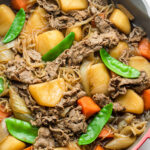
Nikujaga (Japanese Meat and Potato Stew)
- Total Time: 1 hour 20 minutes
- Yield: 4 servings
Description
Enjoy the comforting flavors of nikujaga, a classic Japanese meat and potato stew featuring tender beef and fluffy potatoes simmered in a savory-sweet soy sauce broth. This easy-to-make dish embodies Japanese home cooking, with warmth and nostalgia in each bite! Perfect for a cozy weeknight dinner and ideal for meal prepping.
Ingredients
- 2 medium (250 g) onions
- 1 large (150 g) carrot
- 3–5 (450-550 g) Yukon gold potatoes
- 1 package (200 g) shirataki noodles
- 1/2 lbs (250 g) thinly sliced bef (ribeye or chuck)
- 2 tsp ginger juice, optional
- 1/8 tsp + 1/8 tsp salt, to taste
- 1 + 2/3 cup (400 ml) dashi stock
- 10 snow peas
Seasonings
- 4 tbsp + 1 tbsp soy sauce
- 4 tbsp sake
- 2–4 tbsp mirin
- 2–4 tbsp sugar
Instructions
- Prepare the Seasoning Sauce: In a bowl, combine soy sauce, sake, mirin and sugar. Adjust sweetness by adding more mirin and sugar (up to 4 tbsp each). Whisk well and set aside.
- Cut Vegetables: Slice onions into wedges about 1/4 inch (1.5 cm) thick. Peel the carrot and cut into 1-inch pieces using the rangiri technique (cutting at an angle while rotating for irregular pieces). Peel and quarter the potatoes. If they’re large, cut into 1-inch chunks. Smooth the edges (this is called mentori) to help them hold their shape during cooking.
- Prepare Shirataki Noodles: Rinse the shirataki noodles thoroughly. To remove any unwanted flavor, boil them for 1 minute in salted water, then drain well. If the noodles are long, cut them in half with scissors.
- Cook the Beef: Heat 1/2 tbsp oil in a large pot over medium-high heat. Add the beef, season with ginger juice and about 1/8 tsp of salt. Pour in 1/3 of the seasoning sauce. Cook until the beef is just done. Remove immediately, transfer to a bowl, and set aside.
- Cook the Vegetables: In the same pot, add another 1 tbsp of oil. Add the onions, carrots, and potatoes. Season with a few pinches of salt. Sauté for about 3 minutes to coat the vegetables in oil and bring out their flavor.
- Simmer: Pour in the dashi stock and the remaining seasoning sauce. Ensure the liquid mostly covers the vegetables; if not, add a little water. Bring the mixture to a boil, then reduce the heat to low heat. Skim off any scum that rises to the surface. Add the shirataki noodles. Place a drop lid (otoshibuta) on top to keep everything submerged. Simmer for 15-18 minutes or until the carrots and potatoes are tender when pierced with a toothpick.
- Finish with Beef: Return the cooked beef to the pot. Add the final 1 tbsp of soy sauce. Mix gently, cover, and let it rest off the heat for 45-60 minutes. This resting period allows the flavors to meld and absorb deeply.
- Prepare Snow Peas: While the niku jaga is resting, remove the strings from the snow peas. Blanch in boiling salted water for 45-60 seconds, then transfer to ice-cold water. Drain and set aside.
- Serve: Reheat the niku jaga over medium heat until warmed through. Serve in bowls, garnishing with blanched snow peas. Enjoy!
- Prep Time: 15 minutes
- Resting time: 45 minutes
- Cook Time: 20 minutes
- Category: Main dish
- Method: Stove Top
- Cuisine: Japanese
Nutrition
- Serving Size: 1 serving
- Calories: 385
- Sugar: 15.8 g
- Sodium: 1571 mg
- Fat: 13 g
- Saturated Fat: 4.3 g
- Unsaturated Fat: 7.2 g
- Trans Fat: 0.4 g
- Carbohydrates: 42 g
- Fiber: 6.5 g
- Protein: 21 g
- Cholesterol: 45 mg
Okonomi Kitchen is a participant in the Amazon Services LLC Associates Program. When you purchase something through my amazon affiliate links, I earn a small commission that helps me produce consistent content at no cost to you. Thank you for your support!



I’m adding this to my weekly meal rotation! Super filling and flavourful and easy to make.