
Learn how to make custard cream with this simple recipe that yields a rich, velvety filling perfect for filling desserts like taiyaki, dorayaki, and roll cakes. With basic ingredients like milk, egg yolks, and sugar, this custard cream recipe is an essential staple for any baker looking to add a delicious touch to both Western and Japanese confections.
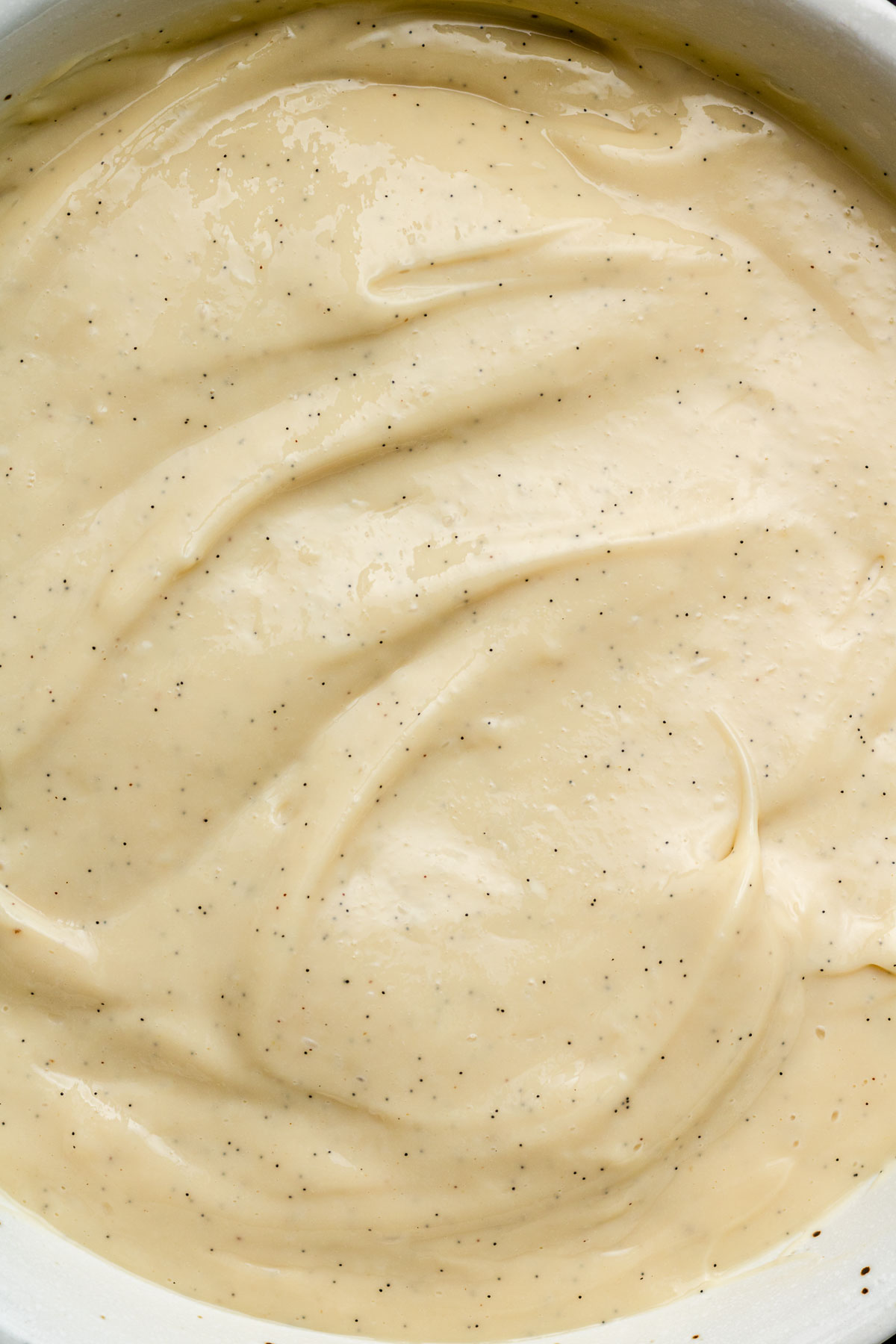
Table of Contents
What is Custard Cream?
Custard cream is a rich and velvety filling made from milk, egg yolks, sugar, and thickening agents like corn starch or flour. While it is a staple in Western desserts, it is particularly popular in Japanese sweets, where it serves as a delicious filling for treats such as taiyaki, custard pan, dorayaki, and nama donuts. Additionally, custard cream is a key component in Harajuku crepes, cakes, and roll cakes, adding a delightful creaminess to these confections.
Whats the difference between pastry cream and custard cream?
Pastry cream and custard cream are often used interchangeably, but there are subtle differences. Both are made from a combination of milk, egg yolks, sugar, and thickening agents, resulting in a rich and smooth texture. However, pastry cream typically has a thicker consistency due to a higher proportion of starch, which makes it ideal for filling pastries and tarts. On the other hand, custard cream can be slightly lighter and is often used as a dessert on its own or as a filling in various sweets. Despite these distinctions, both creams share a similar flavor profile and can be adapted for various culinary applications.
Custard Cream Ingredients
Here is what you’ll need to make custard cream:
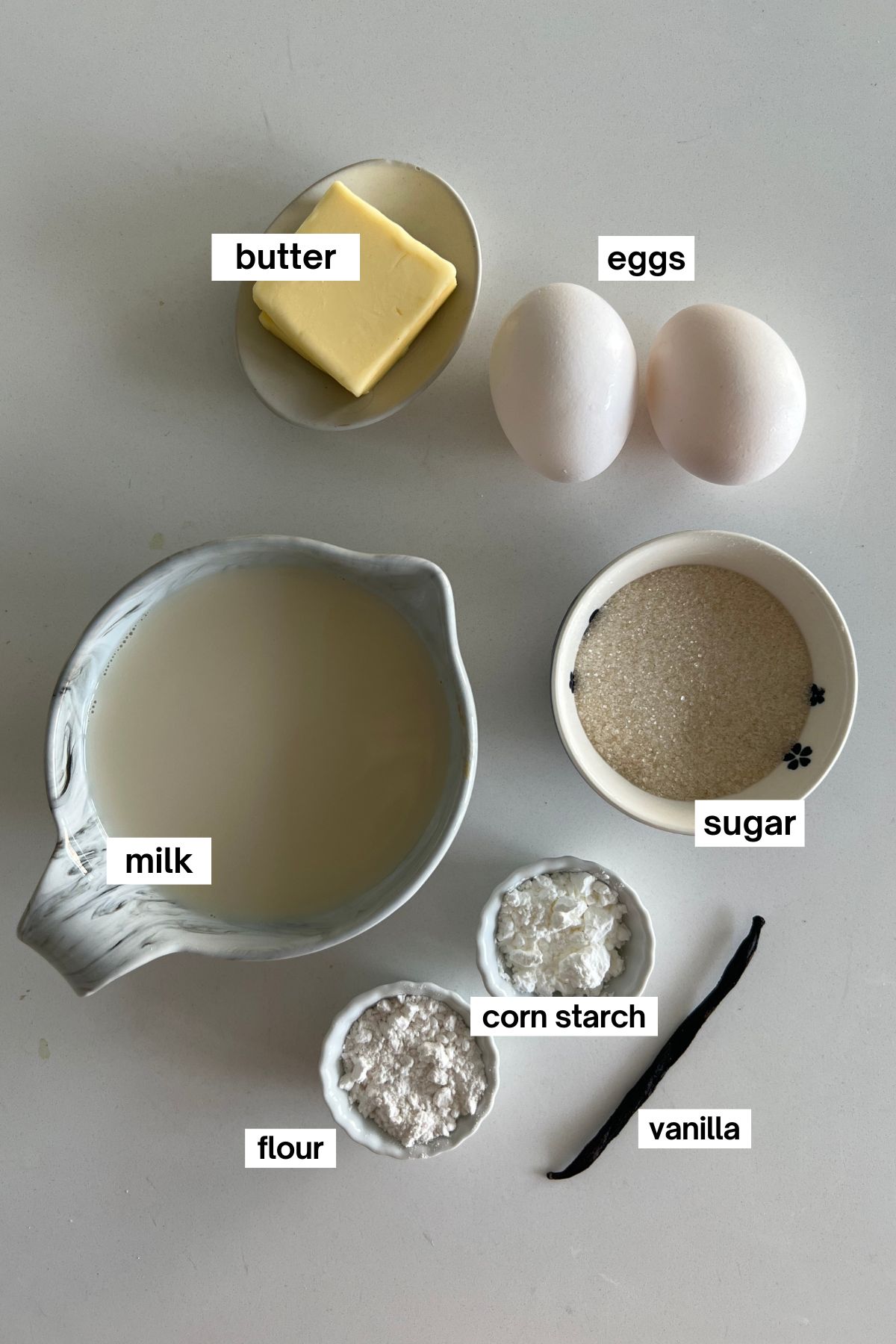
- Vanilla Bean (or Vanilla Extract): Adds a rich, aromatic flavor that enhances sweetness and complexity.
- Milk (Preferably Whole Milk): Provides a creamy texture and rich flavor, contributing to smoothness.
- Egg Yolks: Essential for creating a silky, custardy consistency and enriching the flavor.
- Sugar: Serves as the primary sweetener, balancing flavors and adding sweetness.
- Cake flour and Corn Starch: Cornstarch gives a more ‘pudding’ like consistency whereas flour makes for a more thicker and denser texture. A combination of both makes acts as the perfect textured thickening agent, stabilizing the custard and achieving a smooth texture. You can substitute one for the other if you do not have both in a pinch.
- Unsalted Butter: Imparts richness and creaminess, enhancing flavor and smoothness.
- Pinch of Salt: Balances sweetness and enhances flavors, providing depth to the taste.
How to Make Custard Cream
My mom used to make custard pan (Japanese custard cream bread) and anpan all the time when we were younger as a after school snack. She typically made it over the stove but when she was lazy, she would make it in the microwave. I’ve tried both and generally prefer the stove as it yields more of a desired consistency than microwave, especially for more delicate desserts where you want a super rich and smooth consistency. I think the microwave version is okay to use for when adding to desserts where the custard is heated again.

- Prepare Vanilla Milk: Split a vanilla bean, scrape out the seeds, and add both seeds and pod to warmed milk, heating until it simmers around 180°F (82°C).
- Mix Egg Yolks and Sugar: Whisk egg yolks and sugar together with a pinch of salt until pale and well combined.
- Incorporate Starch and Flour: Sift corn starch and cake flour into the egg yolk mixture and whisk until smooth.
- Temper the Eggs: Gradually pour the warm milk into the egg mixture, whisking constantly to avoid cooking the yolks; add vanilla extract if using.
- Strain and Cook: Strain the mixture back into the pot and cook over medium-high heat, stirring constantly until thickened, loosened and shiny.
- Finish with Butter: Stir in the butter until melted and fully incorporated.
- Blend: This is a step my mom shared with me to create the smoothest, creamiest custard cream. She also says that blending it will help keep it creamy even atfer freezing and thawing.
- Cool Custard: Transfer to a bowl, cover with plastic wrap pressed directly onto the surface, and cool quickly with ice packs before refrigerating.
Stages of Custard Cream
The most difficult part of making custard cream is knowing when it’s done without undercooking or overcooking it. Here are some signs to watch out for during the process:

- Liquid stage: At the beginning, there’s little to no heat, so the mixture will be very liquid.
- Starts to thicken: As the mixture heats up, it will suddenly thicken and start solidifying into a cream-like consistency, starting from the bottom of the pot. Be sure to mix quickly and thoroughly, scraping the bottom to prevent burning and lumps. This is the stage where it’s most likely to burn.
- Thickened: Don’t stop cooking once it thickens—at this point, the flour isn’t fully cooked. Keep cooking, stirring constantly and vigorously, until the mixture becomes looser and shinier. If it becomes hard to stir continuously, briefly remove the pot from the stove, whisk slowly to rest, and then return it to the heat to continue stirring vigorously.
- Shiny and looser: Eventually, the custard will lose its firmness and become lighter and runnier. This indicates that the flour is fully cooked. At this stage, large bubbles will appear both at the edges and in the center of the pot.
Tips to Making Smooth Custard Cream
- Whisk Egg Yolks and Sugar Immediately: As soon as you add the sugar to the egg yolks, whisk immediately. If left untouched, the sugar will absorb moisture from the yolks, creating lumps that are impossible to dissolve later. Mixing right away ensures a smooth texture.
- Milk Temperature Matters: Heat the milk until it just starts to simmer, around 180°F (82°C). This temperature is hot enough to temper the eggs without cooking them too quickly, preventing curdling.
- Strain the Mixture: Strain the mixture before cooking to remove any undissolved flour or egg bits for a smooth custard. If lumps form while cooking, you can strain the custard again afterward to ensure a velvety finish.
- Cook over high heat: Cook over high heat if using an induction or electric stove, and medium to medium-high heat if using a gas stove (ensure the flames don’t surpass the pot’s diameter). The reason for using higher heat is that flour and eggs have different cooking temperatures. High heat allows them to cook at the same time, achieving a smoother consistency. While high heat can increase the risk of lumps, consistent and vigorous stirring will prevent them, resulting in a more creamy and smooth custard cream.
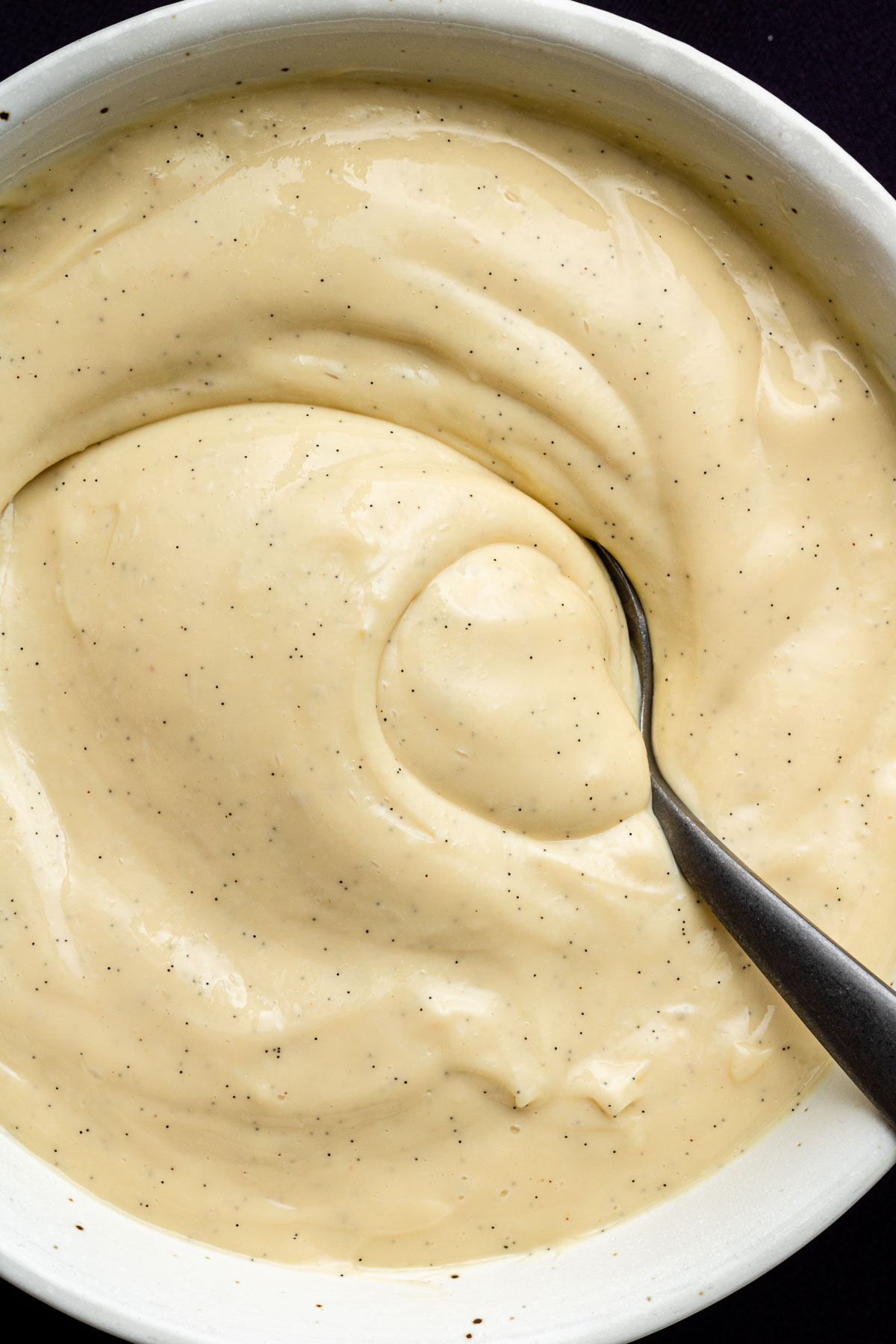
- Hand blend the butter in: Optional, but I recommend after cooking the pastry cream, whisk in the butter and blend with a hand mixer. This deepens the flavor and gives the custard a firmer texture, helping it hold its shape while staying smooth and creamy. Blending ensures the butter is fully incorporated for a velvety finish. It also helps with keeping its smooth texture after freezing and thawing.

How to Store Custard Cream
Custard cream can be made ahead and freezes well.
To store custard cream, first allow it to cool completely to room temperature. For refrigeration, transfer it to an airtight container, cover the surface with plastic wrap to prevent a skin from forming, and refrigerate for up to 3-4 days.
For freezing, cool the custard, portion it if desired, and place it in vacuum-sealed bags (or any bag that directly contacts the custard). Freeze for 2-3 months. To use frozen custard, thaw it in the refrigerator overnight and vigorously stir with a whisk to restore its smooth texture. If it remains lumpy, blend it with a hand blender until smooth.
FAQ
Whisk the pastry cream continuously while heating to prevent it from becoming lumpy or grainy. If you don’t fully incorporate the cornstarch or flour into the egg mixture before adding the milk, it can also result in a grainy texture. To prevent this, ensure constant stirring throughout the cooking process.
Custard cream is typically not gluten-free due to the inclusion of cake flour, which contains gluten. However, you can easily make a gluten-free version by substituting the cake flour with a gluten-free flour blend or using additional corn starch to achieve a similar texture.
Custard cream can become too thin if you don’t cook it long enough for the starches to fully gelatinize or if the ratio of liquid to thickening agents is off. Not properly tempering the eggs or adding too much liquid initially can also prevent the custard from thickening properly.
If you cook custard cream for too long or at too high a temperature, it may become too thick and over-thicken. Additionally, using too much corn starch or flour can also lead to an overly dense texture. For dense custard cream, you can mix it into whipped cream to thin it out or use it in custard cream bread.
It’s also possible to make eggless pastry cream by using cornstarch instead of eggs. However, this will affect the flavor of the custard. Just as with the vegan version, you can enhance the taste with a pinch of kala namak to mimic the flavor of eggs.
To create a dairy-free version of pastry cream, simply replace the milk with a plant-based alternative like dairy free heavy cream or plant based milks. If using plant based milk, increase the amount of butter as they tend to be naturally lower in fat. For the butter, opt for a dairy-free or vegan butter substitute.
You can make vegan pastry cream by omitting the eggs and increasing the amount of cornstarch to achieve your desired thickness. Adding a dash of kala namak can add a subtle egg-like flavor, but keep in mind that the overall taste of the custard will differ without eggs. Substitute both the milk and butter with vegan options.
What to use custard cream for? (Recipes using custard cream)
This custard cream recipe is perfect for using in these recipes that call for a really good custard cream:
Japanese Desserts
- Nama donuts
- Taiyaki
- Dorayaki (coming soon)
- Custard pan (coming soon)
- Roll cake
- Chiffon cakes
- Shortcakes
Western Desserts
- Dairy free donuts (coming soon)
- Diplomat cream
- Used to fill choux pastry, cookie choux and cream puffs (diplomat cream)
- Filling for fruit tarts
- Cake fillings
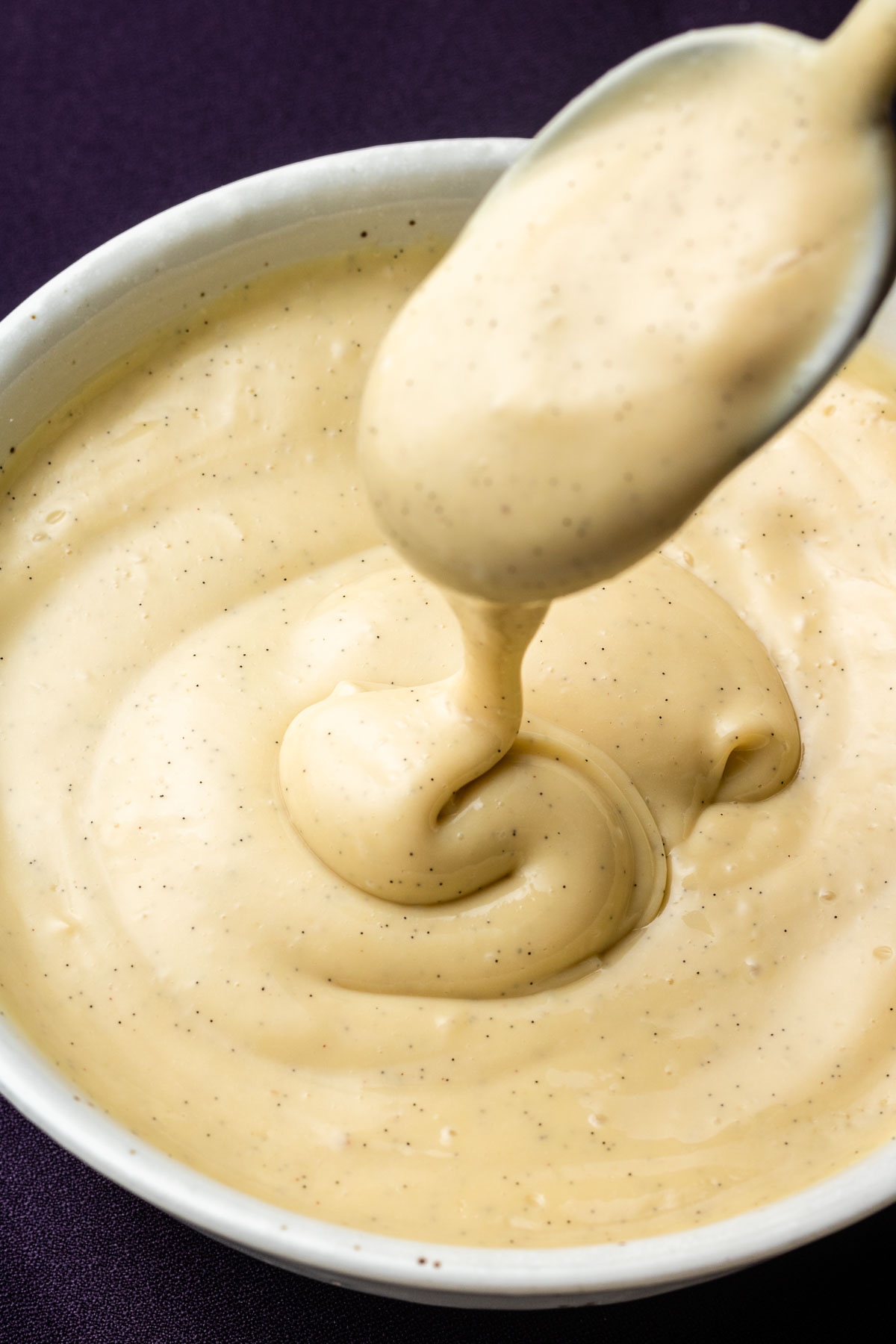
Enjoy!! If you make this Custard Cream recipe, let me know! Leave a comment, rating and if you decide to share it on socials, tag me on instagram @Okonomikitchen. I’d love to hear from you!
Print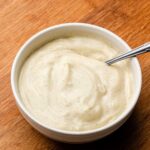
Custard Cream
- Total Time: 30 minutes
- Yield: 1 cup
- Diet: Vegetarian
Description
Learn how to make custard cream with this simple recipe that yields a rich, velvety filling perfect for filling desserts like taiyaki, dorayaki, and roll cakes. With basic ingredients like milk, egg yolks, and sugar, this custard cream recipe is an essential staple for any baker looking to add a delicious touch to both Western and Japanese confections.
Ingredients
- 1 vanilla bean (or 1 tsp vanilla extract)
- 200 ml milk (preferably whole milk)
- 2 large (38 g) egg yolks*
- 4–5 tbsp (50–63 g) sugar (adjust sweetness to taste)
- 1 tbsp (8 g) corn starch
- 1 tbsp (8 g) cake flour
- 1 tbsp + 1 tsp (20 g) unsalted butter
- pinch of salt
Instructions
- Prepare Vanilla Milk: Split the vanilla bean, scrape out the seeds, and add both the seeds and pod to the milk. Heat the milk until it begins to simmer around 180°F (82°C).
- Mix Egg Yolks and Sugar: In a separate bowl, whisk the egg yolks and sugar together immediately after combining to prevent lumps. Add a pinch of salt and whisk until pale in color (this process is called “blanchir,” incorporating air into the mixture).
- Incorporate Starch and Flour: Sift the corn starch and cake flour into the egg yolk mixture and whisk until smooth and fully combined.
- Temper the Eggs: Gradually pour the warmed milk into the egg mixture in two portions, whisking constantly to avoid cooking the yolks. If using vanilla extract, add it now.
- Strain and Cook: Strain the mixture back into the pot to remove the vanilla beans. Cook over medium high to high heat, stirring constantly.
- Monitor Consistency: First, small bubbles will appear and disappear, and the mixture will thicken slightly. Keep stirring to prevent lumps from forming at the bottom. The custard will thicken, then soften and become smooth and shiny—this indicates the flour is cooked.
- Finish with Butter: Whisk in the butter. Then blend it in with an immersion blender (optional), until fully incorperated.
- Cool Custard: Transfer the custard to a metal tray or bowl. Cover it with plastic wrap, pressing the wrap directly onto the surface to prevent a skin from forming. Place ice packs on stop to cool quickly. Place in the refrigerator until ready to use.
- To serve: Place the custard back into a bowl and whisk until smooth.
Notes
- *Depending on what you are using the custard cream for (ie. custard cream bread), for a richer and thicker consistency add an extra yolk. When adding an extra yolk, I also add another 3 tbsp (50 ml) of milk.
- Prep Time: 10 minutes
- Cook Time: 20 minutes
- Category: Dessert
- Method: Stove top
Okonomi Kitchen is a participant in the Amazon Services LLC Associates Program. When you purchase something through my amazon affiliate links, I earn a small commission that helps me produce consistent content at no cost to you. Thank you for your support!



Tried this way of making custard and it was straightforward and quick to make. I used 63gr of sugar and the end result was not very sweet (which I preferred). The immersion blender technique was kinda weird and it took me a couple of tries to find a good combination of a container for the cream that wasn’t too shallow for it to work but the texture was very smooth afterwards so it was worth it! Will be using again 😋
Thank you Eva! So glad you enjoyed 🙂