
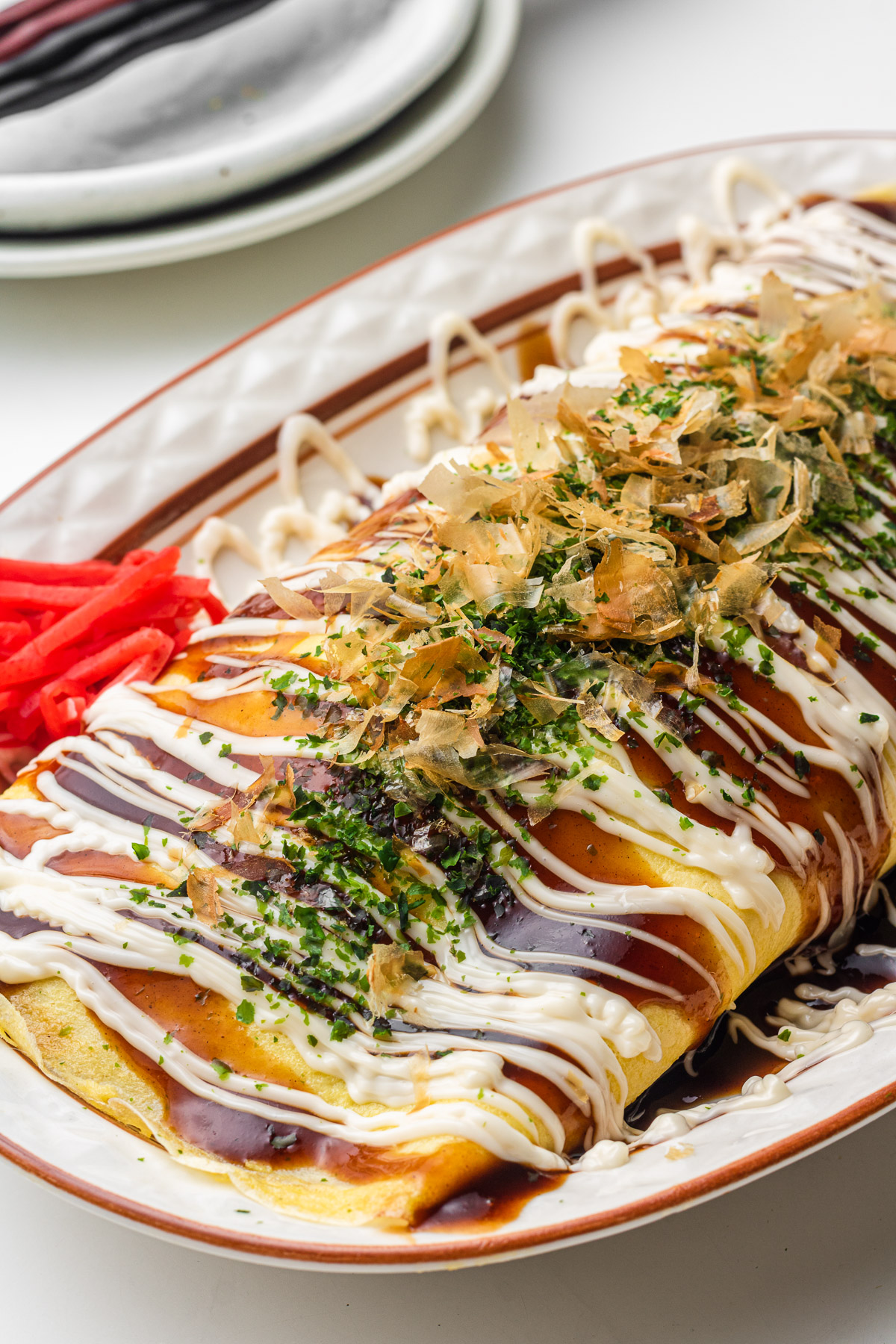
Tonpeiyaki is a Japanese street food made with tender pork, cabbage, and green onions wrapped in a soft omelette. This easy recipe combines savory flavors and simple ingredients, with a drizzle of okonomiyaki sauce and mayo to finish. Perfect for a quick and satisfying meal, it’s a must-try dish that’s ready in just a few minutes.
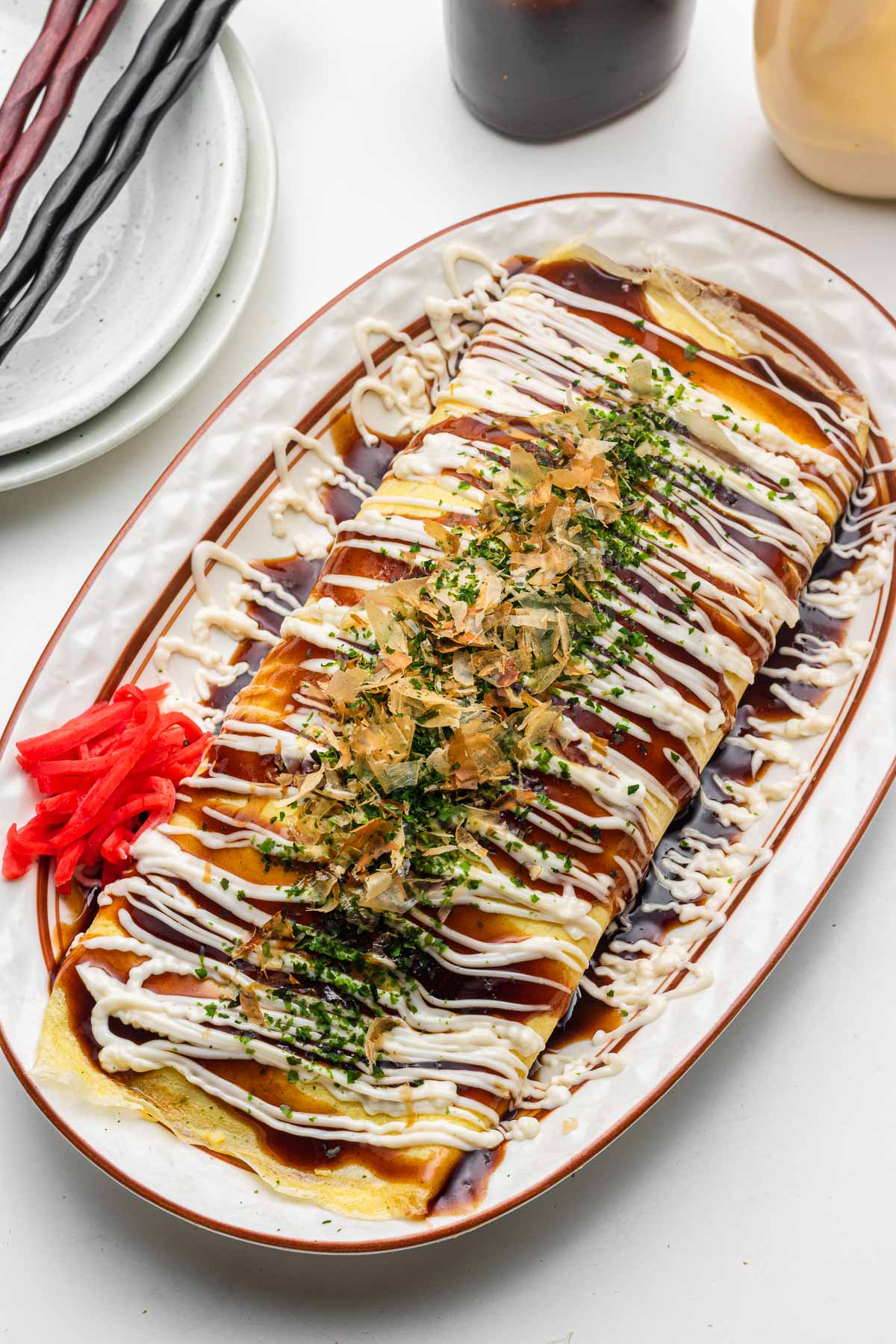
Table of Contents
Japanese Pork and Cabbage Omelette
While tonpeiyaki might be unknown outside of Japan, it’s an underrated dish that’s just as satisfying and easier to make than okonomiyaki. I remember my mom making this for us as a quick snack or side dish after school. Its simplicity and deliciousness make it an ideal go-to recipe when you’re craving something comforting and savory, yet fast!

What is Tonpeiyaki?
Tonpeiyaki (とん平焼き) is a savory Japanese dish made with stir-fried pork, cabbage, and vegetables wrapped in a thin, soft omelette, all seasoned with a delicious sauce. Popular in the Kansai region, especially in Osaka, it’s often served at izakayas, okonomiyaki restaurants, or as street food. The name tonpeiyaki comes from ton (とん), meaning “pork,” and peiyaki (平焼き), derived from hirayaki (平焼き), meaning “flat grill” or “flat frying,” which reflects both the key ingredient (pork) and the cooking method. Tonpeiyaki is a quick, satisfying meal that pairs well with rice or drinks, making it a great choice for any occasion.
History of Tonpeiyaki
Tonpeiyaki was first created in Osaka at the okonomiyaki restaurant “Hontonpei” around 1959. The dish was inspired by Russian wartime food, and it was developed by the restaurant owner after returning from internment in Russia. The combination of pork, cabbage, and eggs, topped with a special sauce, quickly gained popularity and became a regional delicacy. Over time, the recipe evolved into the beloved dish known today, showcasing the flavors of the Kansai region and continuing to be a favorite comfort food in Japan.
Tonpeiyaki vs. Okonomiyaki: What’s the Difference?
While tonpeiyaki and okonomiyaki share some similarities, such as their savory flavors and inclusion of pork and cabbage, they differ significantly in both preparation and composition. Okonomiyaki is made by mixing ingredients with a batter made from flour, yam, and eggs, then cooking the mixture on a hot griddle. In contrast, tonpeiyaki is made by layering stir-fried pork and cabbage in a thin omelette without any batter, resulting in a lighter, less heavy dish. Additionally, tonpeiyaki is often served as a appetizer, side dish or snack, whereas okonomiyaki is more of a hearty, all-in-one meal.
Ingredients for Tonpeiyaki
You only need a few ingredients for this simple tonpeiyaki recipe:
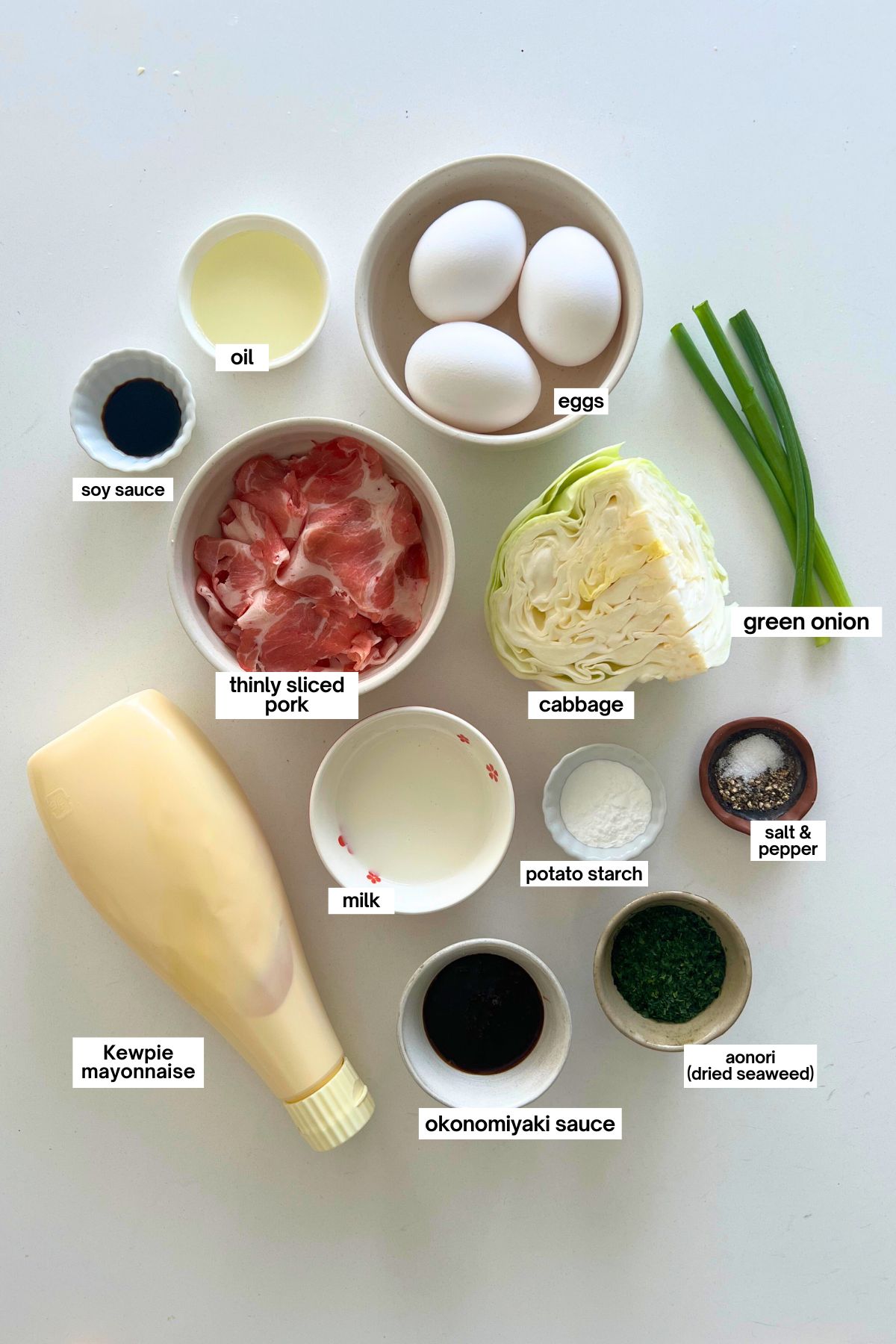
- Cabbage: Any green cabbage can be used. I recommend flat cabbage (also known as Jaroma cabbage or Taiwanese cabbage) that is quick cooking, mild and slightly sweet.
- Pork: Typically thinly sliced pork is used. The most common is pork belly but we really like using pork shoulder! It’s less fatty so it’s not as heavy. You may also use pork chop cut up into bite size pieces, bacon or even ham.
- Green onion
- Eggs
- Milk or water: makes the eggs softer and runnier.
- Potato starch: optional, but it makes the egg easier to roll without it tearing and makes it nice and fluffy.
- Soy sauce: Optional, but for flavour. You can also use mentsuyu, hondashi or add a dash of ajinomoto (msg).
As for toppings, you don’t have to have all of them but ideally you’ll need the sauce and mayo.
- Okonomiyaki sauce: You can make homemade okonmiyaki sauce or you can use takoyaki sauce or tonkatsu sauce.
- Japanese mayonnaise (Kewpie)
- Aonori (green laver)
- Katsuobushi (bonito flakes)
- Beni shoga (pickled red ginger)
How to Make Tonpeiyaki
Tonpeiyaki is easy to make and consists of a few simple steps. Here’s an overview of the process:
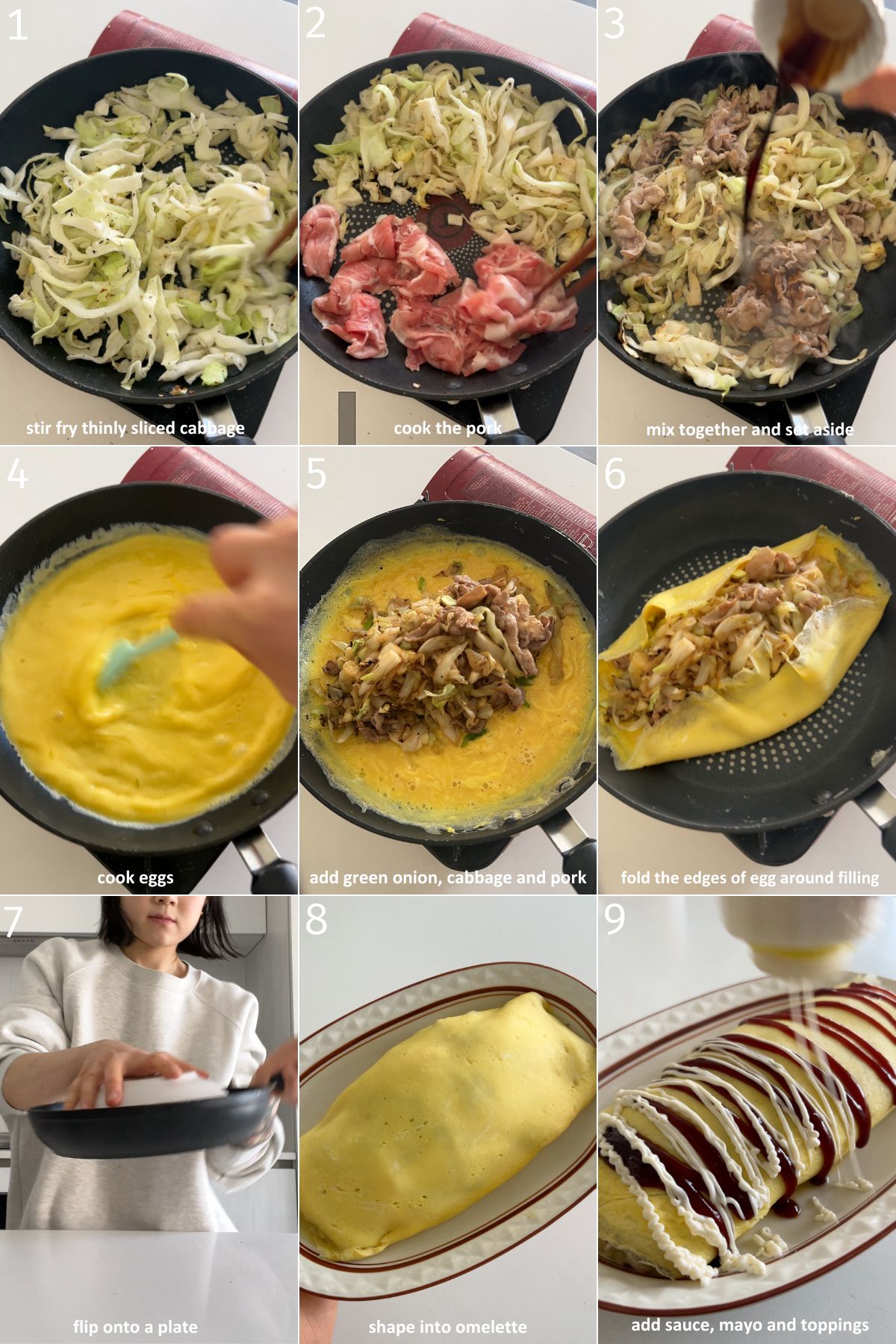
- Prepare the Ingredients: Shred the cabbage. If your pork sliced are large, cut into manageable slices.
- Make the Egg Mixture: In a small bowl, whisk together milk (or water), potato starch (if using), eggs, and a pinch of salt until fully combined. Set aside.
- Cook the Filling (1-3): Heat oil in a pan and stir-fry the cabbage with salt and pepper until it wilts. Once cabbage reduces in volume, move to one side of the pan and add the pork, cooking it until no longer pink. Mix everything together and drizzle in soy sauce. Transfer the pork and cabbage to a bowl.
- Cook the Omelette (4): Clean the pan, then heat more oil. Pour in the egg mixture, swirling the pan until it’s evenly spread. Let the edges cook, then stir the center gently, keeping it slightly runny.
- Assemble the Tonpeiyaki (5-8): Once the omelette starts to set, sprinkle with green onion, then layer the cooked pork and cabbage in the center. Fold the omelette over the filling and transfer to a plate.
- Add Toppings (9): Drizzle with okonomiyaki sauce and mayonnaise, and sprinkle with aonori, katsuobushi, and beni shoga.
- Serve and Enjoy: Serve warm and enjoy!
VIDEO: Watch How to Make It
Lisa’s Recipe Tips
- Dissolve potato starch before adding to eggs: Mix potato starch with water or milk first. Adding it directly to the eggs can cause clumps.
- Don’t overcook the egg: Adjust the heat as needed. Turn it off while the egg is still runny, with the base slightly set. Let the residual heat finish cooking the surface.
- Flipping onto a plate: Slide the omelette to the far edge of the pan. Hold a plate in one hand and the pan in the other, then tilt and flip the omelette onto the plate.
Serving Suggestions
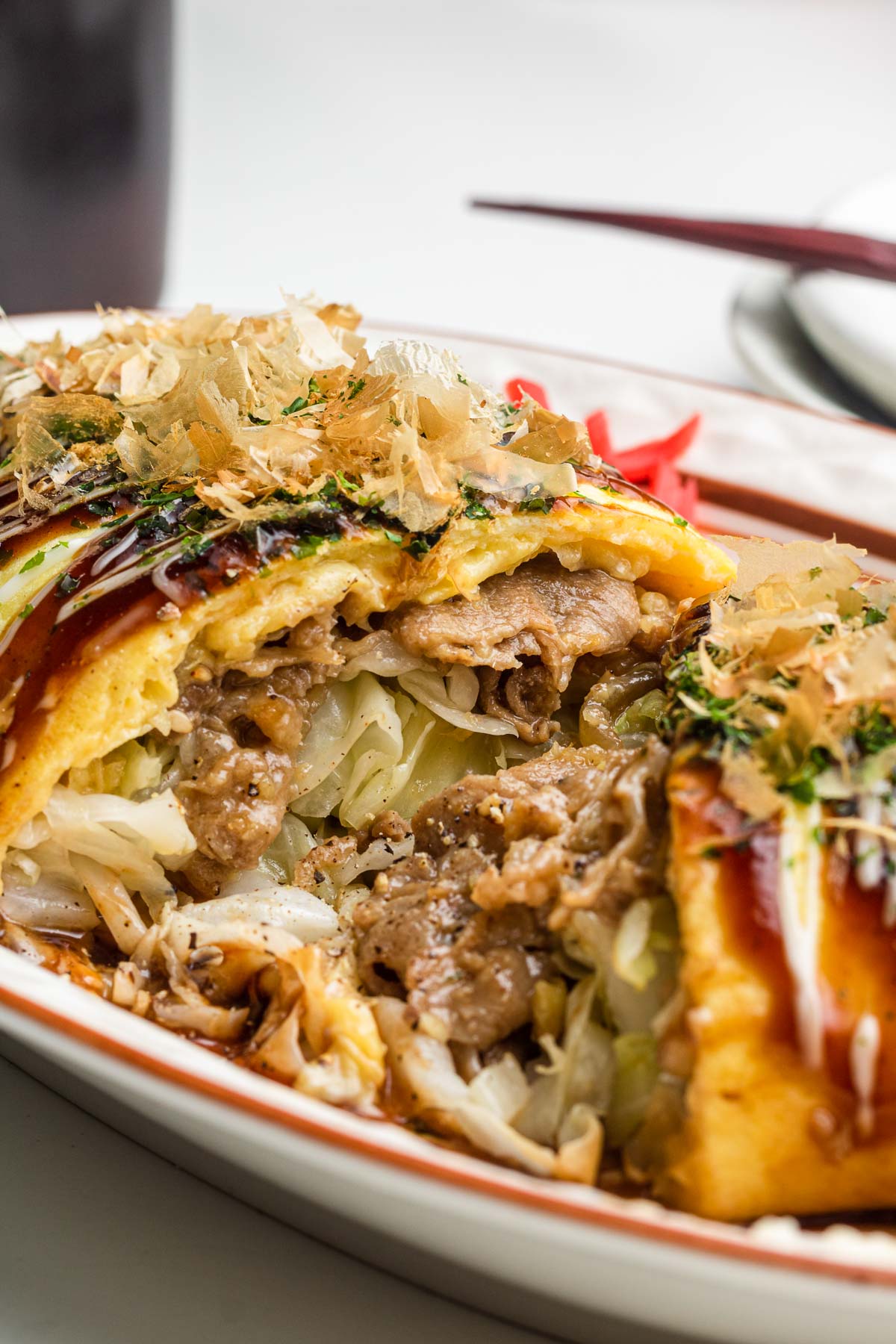
Tonpeiyaki can be served as a side dish or snack, but it also works as an appetizer or light meal. Since tonkepyaki is common at izakayas, it’s also often enjoyed with non alcoholic or alcoholic drinks like beer or sake.
Tonpeiyaki Variations
While the foundation of tonpeiyaki is eggs, pork, and vegetables, there are endless ways to customize it! Here are some variations to try:
- Cheese
- Natto
- Kimchi
- Tuna
- Corn
- Mochi
- Mentaiko (spicy cod roe)
You can even make tonpeiyaki in the microwave or go for a “no-roll” style where scrambled runny egg is layered over the fillings.
If you prefer a pancake version of this dish, try Kyabetsu Yaki (Grilled Cabbage Pancake).
Recipe FAQ
Yes, you can substitute the pork with chicken, beef, or even tofu for a vegetarian-friendly version.
Yes! Replace the pork with plant-based proteins like tempeh, tofu, or seitan. Use plant-based egg like JustEgg, vegan mayo and okonomiyaki sauce to make it fully vegan.
Enjoy!! If you make this Tonpeiyaki recipe, let me know! Leave a comment, rating and if you decide to share it on socials, tag me on instagram @Okonomikitchen. I’d love to hear from you!
Print
Tonpeiyaki
- Total Time: 15 minutes
- Yield: 1 serving
Description
Tonpeiyaki is a Japanese street food made with tender pork, cabbage, and green onions wrapped in a soft omelette. This easy recipe combines savory flavors and simple ingredients, with a drizzle of okonomiyaki sauce and mayo to finish. Perfect for a quick and satisfying meal, it’s a must-try dish that’s ready in just a few minutes.
Ingredients
Filling:
- 1/4 (200-250 g) cabbage, shredded
- 100–120g pork, thinly sliced
- 1 stalk green onion, finely sliced
- salt and pepper, to taste
- 1 tsp oil
Omelette:
- 3 large eggs
- 3 tbsp milk or water
- 2 tsp potato starch, optional
- pinch of salt
- 2 tsp oil
Optional Seasonings (for the filling):
- 1 tsp mentsuyu
- 1 tsp hondashi
- 1 tsp soy sauce
- MSG, to taste
For Topping:
- Okonomiyaki sauce
- Kewpie Mayonnaise
- Aonori (green laver)
- Katsuobushi (bonito flakes)
- Beni shoga (pickled red ginger)
Instructions
- Prepare the Ingredients: Shred the cabbage. Slice the pork in half if the pieces are too large.
- Make the Egg Mixture: In a small bowl, whisk milk (or water) and potato starch (if using) until fully dissolved. Add eggs and a pinch of salt. Whisk until well combined. Set aside.
- Cook the Filling: Heat 1 tsp of oil in a frying pan over medium-high heat. Add the cabbage, and stir-fry. Season with salt and pepper. Continue to cook until amount of cabbage has reduced by 1/3. Scoot the cabbage to the other side and then add in the pork slices. Cook until no longer pink, drizzle in soy sauce and mix it all together. Transfer them to a plate and set aside.
- Cook the Omelette: Wipe the pan clean with a paper towel. Heat 2 tsp of oil in the pan over medium heat. Pour in the beaten egg mixture, swirling the pan to spread it evenly. Once the edges start to cook, use a spatula to gently mix the center while shaking the pan to keep the eggs soft. Stop stirring while the center remains slightly runny.
- Assemble the Tonpeiyaki: Turn off the heat and sprinkle with green onion. Layer on the pork and then place the cooked cabbage in the middle. Fold the edges of the omelette over the filling to enclose it. Gently scoot the omelette to the edge of the pan. Transfer the omelette to a plate. Shape with paper towel if desired.
- Add Toppings: Drizzle with okonomiyaki sauce and mayonnaise. Sprinkle with aonori, katsuobushi, and garnish with beni shoga.
- Serve and Enjoy: Serve warm and enjoy your homemade Tonpeiyaki!
Notes
- I’m using a 20cm skillet for 3 eggs. If your skillet it smaller, you may want to decrease to 2 eggs and 2 tbsp of milk.
- Prep Time: 5 minutes
- Cook Time: 10 minutes
- Category: Main dish
- Method: Stove top
- Cuisine: Japanese
Nutrition
- Serving Size: 1 serving
- Calories: 361
- Sugar: 5 g
- Sodium: 500 mg
- Fat: 22 g
- Saturated Fat: 5 g
- Unsaturated Fat: 10.4 g
- Trans Fat: 0.14 g
- Carbohydrates: 10 g
- Fiber: 3 g
- Protein: 28 g
- Cholesterol: 200 mg
Okonomi Kitchen is a participant in the Amazon Services LLC Associates Program. When you purchase something through my amazon affiliate links, I earn a small commission that helps me produce consistent content at no cost to you. Thank you for your support!






one of my new go to quick meals this is so good
I’ve made this like three times now and I’m about to again rn. Killer.