
Sakana no Nitsuke (魚の煮付け) is a classic Japanese simmered fish dish, gently cooked in a savory-sweet mixture of soy sauce, sake, mirin, and sugar. This comforting home-style recipe highlights the delicate texture of white fish while infusing it with deep umami flavor. Quick to prepare and perfect with a bowl of rice, it’s a staple in Japanese weeknight dinners.

Table of Contents
- What is Sakana no Nitsuke?
- Why This Recipe
- Ingredients and Substitutions
- How to Make Japanese Simmered Fish
- Techniques in the Recipe
- VIDEO: Watch How to Make It
- Lisa’s Recipe Tips
- Serving Suggestions
- How to Store and Reheat Leftovers
- Recipe FAQ
- More Japanese Fish Recipes
- Japanese Simmered Fish (Sakana no Nitsuke) Recipe
What is Sakana no Nitsuke?
Sakana no Nitsuke (魚の煮付け) is a traditional Japanese method of simmering fish in a sweet and savory broth made with soy sauce, sake, mirin, and sugar. The name literally means “simmered fish,” with sakana (魚) meaning fish and nitsuke (煮付け) referring to a style of braising or simmering with seasoning.
This cooking method has roots in preserving freshness before refrigeration, but it remains a staple in home kitchens today because it brings out the natural flavor of the fish while giving it a rich, umami-laced sauce. Ginger is often added not just for aroma, but to mellow out any fishiness. The final sauce is so good you’ll want to spoon it over a bowl of hot rice.
In this version, I use fish fillets to make things easy, but you can also use whole fish (just be sure to clean it well). Once you get the hang of it, it’s a flexible recipe you’ll want to come back to again and again.
Why This Recipe
- Quick & Easy: Ready in about 20 minutes with only a few pantry staples.
- Tastes Even Better Made Ahead: The flavor deepens as it cools and sits.
- Simple & Light: Not oily, making it ideal for weeknight dinners.
- Versatile: Works with various white fish fillets and pairs well with countless side dishes.
Ingredients and Substitutions
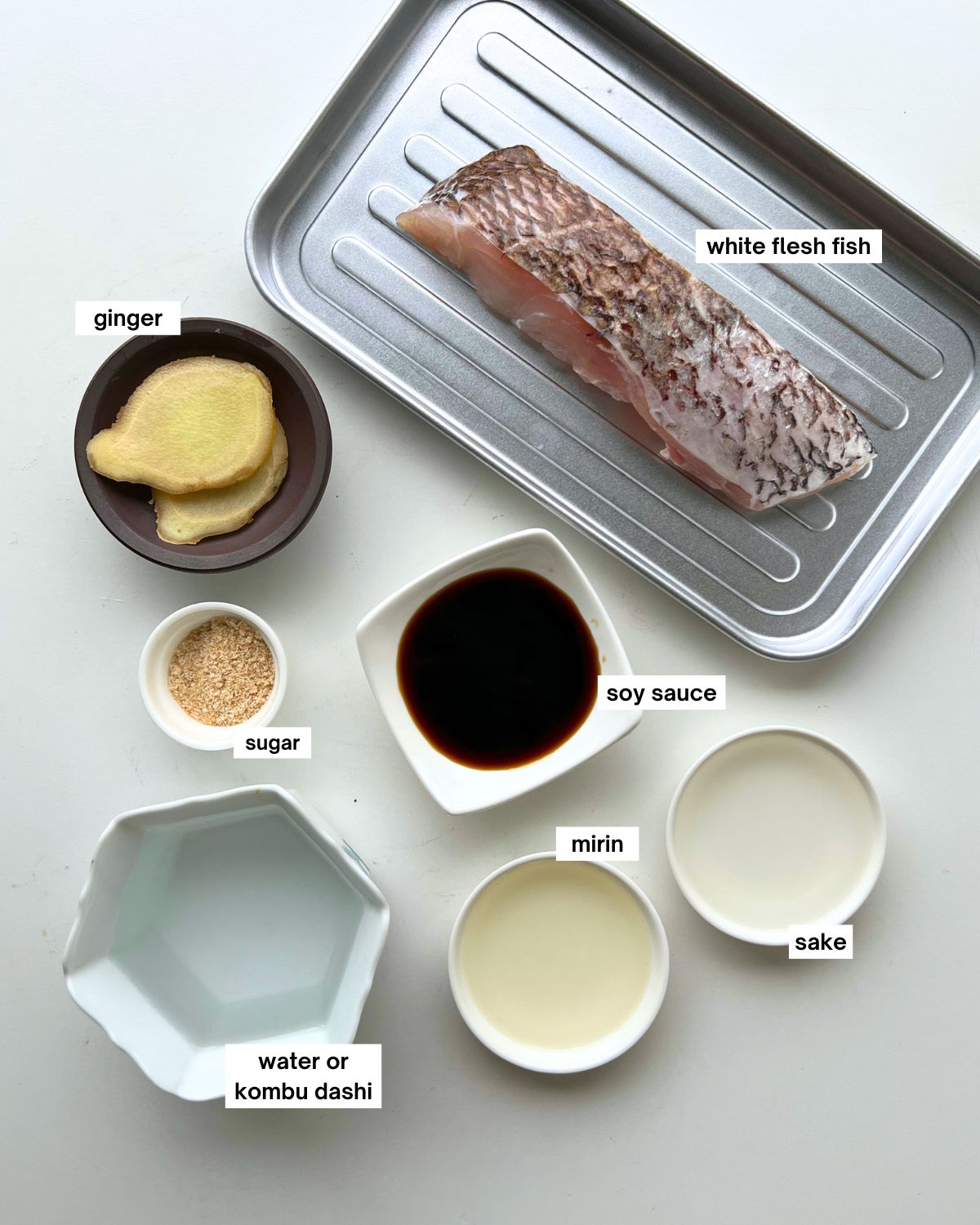
This recipe uses the classic Japanese seasoning combo: sake, mirin, sugar, and soy sauce to make a flavourful sauce for simmering. You can use either kombu dashi or water as a base—dashi adds an extra layer of umami, but water works fine too. Fresh ginger slices are essential here for removing any lingering odor from the fish and to add a subtle aroma. You can also use gobo (burdock root) or negi (Japanese green onion).
What Type of Fish to Use
Usually, sakana no nitsuke is made with white fleshed fish, often bone-in to prevent the fish from falling apart. Some common options include:
- Karei (flounder)
- Mebaru (rockfish)
- Kinmedai (alfonsino)
- Gindara (black cod)
- Sea Bream
- Snapper
You can also try different kinds of fish like ocean perch, cod or whatever white fish is fresh and available in your region. In Japan, I often use kinmedai or tai (red sea bream), but here in Canada, cod is my go-to. While not as common, you can use oily or stronger-flavored fish like salmon, mackerel or sardines. You’ll want to adjust the sauce for a bolder flavor like miso-ni (fish simmered in miso) or my iwashi no umeni (simmered sardines with pickled plum) recipe.
How to Make Japanese Simmered Fish
Over the years, I’ve tried various approaches to sakana no nitsuke in both Japan and Canada. This recipe simplifies things with two versions: a quick home-cook method and a slightly more nuanced version using traditional techniques that can make a noticeable difference in flavor and texture depending on the fish used.
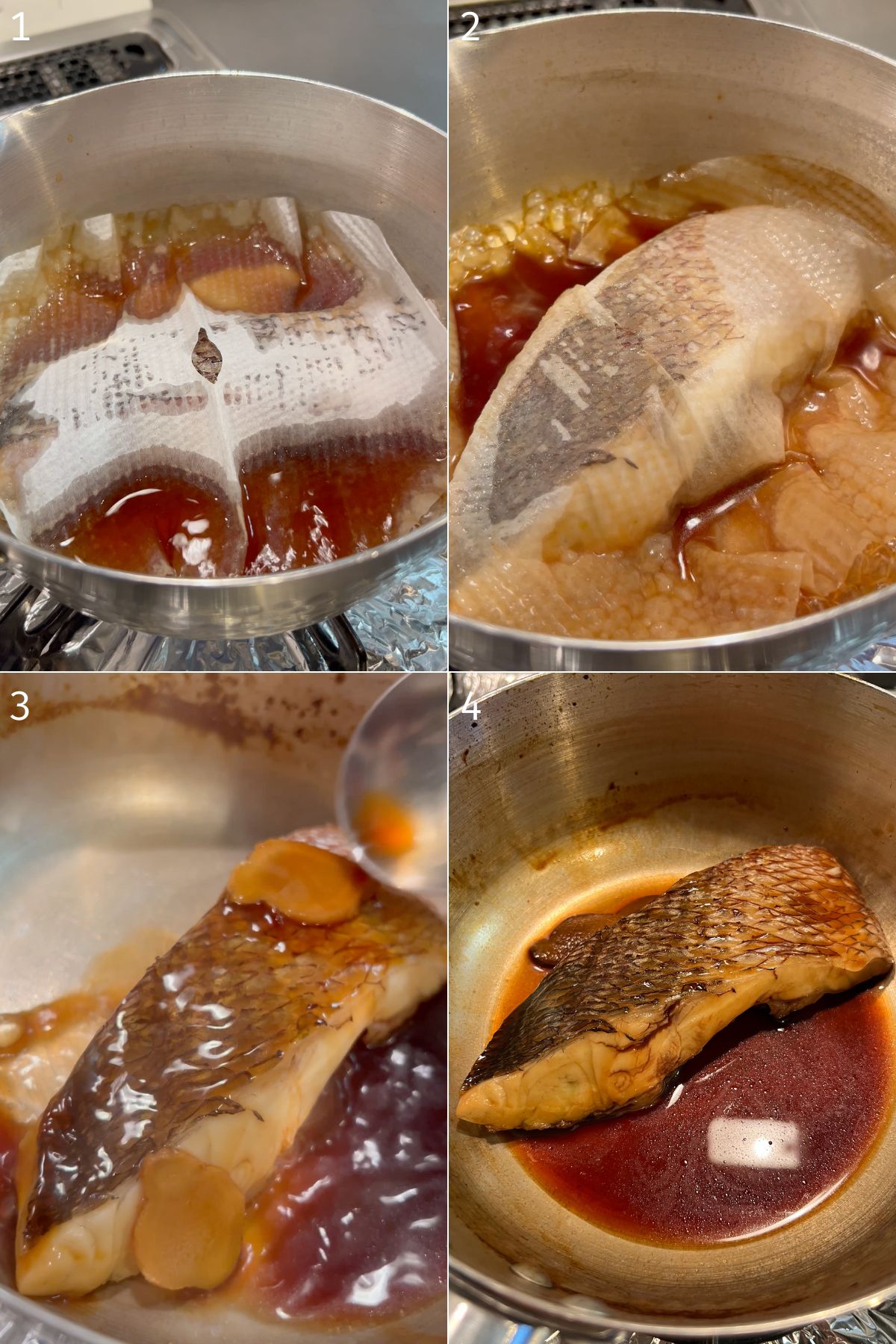
- Shimofuri (optional): Lightly salt and blanch the fish.
- Combine sake, mirin and sugar. Add fish and ginger slices, and bring to a boil.
- Add soy sauce and simmer with a paper towel otoshibuta (drop lid).
- Spoon simmering liquid over the fish to finish.
Techniques in the Recipe
Shimofuri (Marbaling)
Shimofuri is a traditional prep step where fish is salted, briefly blanched with hot water and then placed in cold water. This helps remove excess fishy odors and firms up the surface. You can also simply pour hot water over it (I prefer this method), then place in cold water to remove any scales, dirt or blood. Be sure to use water that is just before boiling (90-95℃). If you use boiling water (100℃) the skin of the fish may tear. I often skip this when cooking with fresh fish in Japan, but I recommend it when using thawed or previously frozen fish here in Canada.
Simmering with Paper Towel Otoshibuta
Instead of a wooden or stainless steel drop lid, I use paper towel. This helps cover the irregular surface of the fish evenly, allowing the simmering liquid to flavor the top of the fish and prevent it from drying out. To make one, cut a paper towel to the size of your pan, fold it, and cut a small square out of the center for ventilation.
Cooking at a High Temperature and Faster
Because we’re working with thinner fillets, it’s better to simmer at a slightly higher heat for a shorter period of time. Overcooking will dry out the fish, while this method keeps it juicy and tender.
VIDEO: Watch How to Make It
Lisa’s Recipe Tips
- Choose bone-in to keep the fish in tact: reword: Tip 1: Choose fish fillets with the bone in so they won’t fall apart when cooked! The most common problem with boiled fish is that the flesh falls apart, but this can be solved by choosing fillets with bones. Since the fillets are bone-in, they can be cooked over high heat.
- Thick Fillet of Fish: If using a thicker fillet of fish, make an incision on the skin side at the thickest part. This will help cook evenly, allow the seasoning to absorb and prevent excessive shrinking of the skin.
- Add Soy Sauce Last: Salty ingredients like soy sauce can block sweetness from absorbing, so adding it at the end ensures the fish takes in the sweet flavors first. For simplicity though, you can still add all the seasonings at once.
- Don’t over cook: The reason boiled fish becomes dry is because it is boiled for too long. By boiling it quickly for 10 minutes over medium heat, the fish will not be overcooked and the flesh will remain plump.
- Cool before serving: Optional, but the flavours really soak in after cooling first (so leftovers are great!)
Serving Suggestions
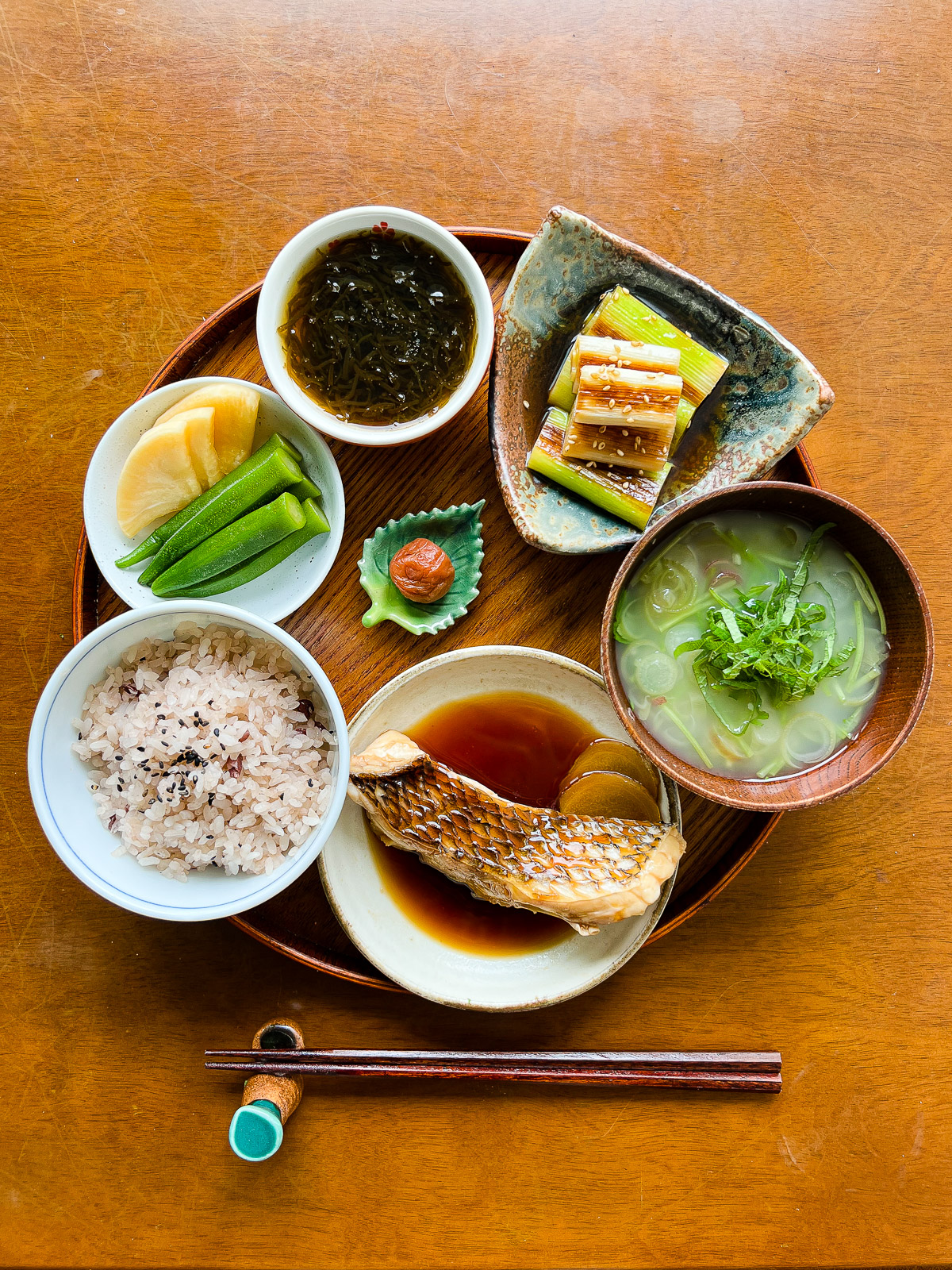
Pair this delicious fish dish with steamed rice, miso soup, and a vegetable side like:
- Kinpira gobo (braised burdock root)
- Spinach goma-ae (sesame dressed greens)
- Kinpira Renkon (braised lotus root)
- Jabara Pickled Cucumbers
How to Store and Reheat Leftovers
- To store: Place leftovers in an airtight container and refrigerate for up to 2 days.
- To reheat: Warm gently in the microwave or on the stovetop over low heat with the sauce. Avoid overcooking.
Recipe FAQ
Yes, just be sure to thaw completely and pat dry. Shimofuri prep is highly recommended for frozen fillets.
Absolutely. In fact, it tastes even better the next day after the flavors have absorbed.
Yes! Make incisions on both side of the fish for even cooking and increase cooking time by a few minutes. Adjust the amount of seasonings based on the weight of the fish.
More Japanese Fish Recipes
- Aji no Hiraki (Grilled Horse Mackerel), coming soon
- Shiozake (Japanese Salted Salmon), coming soon
- Iwashi no Umeshi (Simmered Sardines with Pickled Plums), coming soon
- Saba Shioyaki (Salted Mackerel), coming soon
- Teriyaki Salmon, coming soon
Enjoy! If you make this Japanese Simmered Fish recipe, I’d love to hear what you think! Leave a comment and rating below, and if you share it on social media, tag me on Instagram @Okonomikitchen. I can’t wait to see your creations!
Print
Japanese Simmered Fish (Sakana no Nitsuke)
- Total Time: 20 minutes
- Yield: 2 servings
- Diet: Low Fat
Description
Sakana no Nitsuke (魚の煮付け) is a classic Japanese simmered fish dish, gently cooked in a savory-sweet mixture of soy sauce, sake, mirin, and sugar. This comforting home-style recipe highlights the delicate texture of white fish while infusing it with deep umami flavor. Quick to prepare and perfect with a bowl of rice, it’s a staple in Japanese weeknight dinners.
Ingredients
- 2 fillets (300 g) white fish (flounder, alfonsino, snapper, sea bream, or cod)
- salt
- 4 slices of ginger
- 2/3 cup (150 ml) kombu dashi or water
- 2 tbsp sake
- 2 tbsp mirin
- 2 tbsp sugar*
- 2–3 tbsp Japanese soy sauce*
Instructions
- Marbling (Optional): If your fish isn’t super fresh, salt both sides of the fillets and let sit for 5–10 minutes. Wipe off the excess moisture (which contains odor). Pour boiling water over the skin side and gently pat dry.
- Tip: For thick fillets, make a small incision in the skin at the thickest part to help cook evenly.
- Cook: In a pot just large enough to fit the fish without overlapping, add dashi (or water), sake, mirin, and sugar. Bring to a medium boil over medium-high heat. Cook for 1–2 minutes.
- Season and Simmer: Add soy sauce and place a paper towel otoshibuta* (drop lid) directly over the fish, making sure the entire paper towel is soaked in the liquid. Simmer for 3–6 minutes depending on thickness. Adjust heat to maintain a simmer.
- Tip: If using a deep frying pan, use medium heat as there is more surface area for the broth to evaporate or add 1 tbsp of water at a time if reduced too much.
- Finish: Remove the paper towel. Continue to simmer while spooning the liquid over the fish for 1 more minute to finish.
- Serve: Carefully transfer the fish to a serving bowl with some of the simmering liquid poured over. Enjoy!
- Tip: Let it cool in the simmering liquid before serving to allow the fish to absorb more flavour. Reheat on low heat, covered until warmed through.
Notes
- *The broth is on the sweeter side so you can reduce it if you like it less sweet. Similarly for the soy sauce, if you like a stronger flavour and planning to serve right away use 3 tbsp. Because the flavour will absorb more after cooling, if making ahead use 2 -2.5 tbsp.
- Prep Time: 10 minutes
- Cook Time: 10 minutes
- Category: Main dish
- Method: Stove top
- Cuisine: Japanese
Nutrition
- Serving Size: 1 serving
- Calories: 254
- Sugar: 16 g
- Sodium: 983
- Fat: 4.1 g
- Saturated Fat: 0
- Unsaturated Fat: 4 g
- Trans Fat: 0
- Carbohydrates: 15 g
- Fiber: 0
- Protein: 28.4 g
- Cholesterol: 150 g



I’ve been a plant-based eater for a long time, but am currently trying to add some fish into my diet. I’ve made this recipe twice now because it’s SO good!!! I am using frozen tilapia, but hope to try it again once I have the courage and knowledge to get local fish from the market.
I’m really excited to try your other fish recipes when they come. Your recipes have always inspired me and I appreciate them and you!
So soft and delicious, thank you for the beautiful recipe! I used baking paper as otoshibuta, on youtube there’s a tutorial how to cut it.
Very excited about a fish recipe here, I hope more will come. I love your content!
Absolutely love how delicate yet flavorful Sakana no Nitsuke is! The balance of soy sauce, mirin, and sugar gives the fish a deep umami taste without overpowering its natural flavor. It’s a perfect dish for anyone exploring traditional Japanese home cooking. Thanks for sharing such a well-explained recipe definitely trying this with mackerel next time!
Quick and easy to make! Delicious and family friendly 🤤