
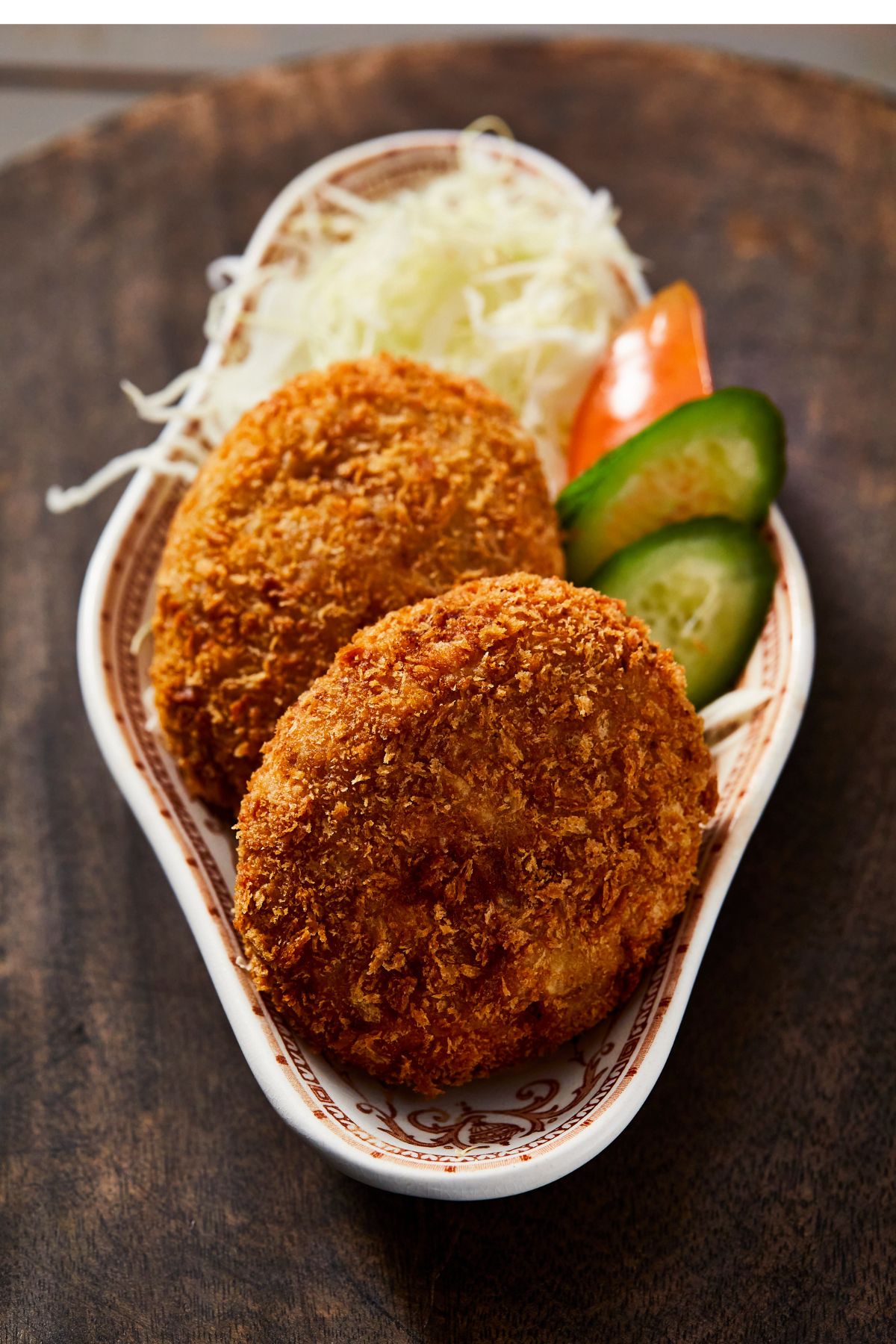
This Korokke recipe brings you classic Japanese croquettes with a fluffy, creamy inside and a perfectly crispy panko coating. Made with mashed potatoes, ground beef, and vegetables, these savory Japanese croquettes are a popular comfort food. Serve them hot with tonkatsu sauce for a deliciously authentic Japanese dish that’s easy to make at home!

Table of Contents
I think I’ve mentioned this every time I post a fried recipe but my mom and grandma loves fried food. My mom was pretty health conscious in that she made sure that we ate relatively healthy most of the time with balanced meals but once or twice a week, she would make something fried and delicious. During the winter time, it would often by katsu curry and korokke because they’re hearty and warming. Something about snacking on a perfectly crispy, steamy and creamy korokke felt so comforting during the cold season.
What is Korokke?
Korokke, or Japanese croquettes, are a popular Japanese comfort food made with a filling of mashed potatoes, ground meat (like beef or pork), and finely chopped vegetables such as onions and carrots. This mixture is seasoned, shaped into patties, coated in flour, dipped in egg, and rolled in crispy panko breadcrumbs before being deep-fried to golden perfection. The result is a croquette that’s crunchy on the outside and soft and fluffy on the inside, often enjoyed as a snack, side dish, or main meal. Korokke can be found in bento boxes, street food stalls, and home-cooked meals, typically served with a drizzle of tonkatsu sauce and a side of shredded cabbage for a delightful blend of flavors and textures.
Difference Between French and Japanese Croquettes
French and Japanese croquettes may look similar but differ in flavor and texture. French croquettes are typically made with a creamy béchamel base, giving them a rich, smooth interior with a delicate, crisp coating, often served as an elegant appetizer. Japanese croquettes, or korokke, were introduced to Japan in the late 19th century during the Meiji era, influenced by Western cuisine. They use mashed potatoes mixed with ground meat and vegetables, creating a fluffier, heartier filling with a light crunch from panko breadcrumbs. While French croquettes are buttery and refined, Japanese korokke are a beloved comfort food, often enjoyed with tonkatsu sauce and shredded cabbage for a satisfying, sweet-savory flavor.
Ingredients
Here are the main ingredients you’ll need to make Japanese potato croquettes:
- Russet potatoes: These starchy potatoes are ideal for creating a fluffy, creamy filling for korokke. They’re also on the drier side so are able to soak up the meats juices and flavour.
- Onion: Finely chopped to add sweetness and depth of flavor to the filling. My mother also often added carrots but thats optional!
- Ground beef: Use lean so it’s not too oily. Provides a savory and hearty element to the korokke.
- Egg: Used as a binding agent to coat the korokke, giving it a golden-brown color when fried.
- Panko breadcrumbs: Japanese breadcrumbs that create a light, crispy, and airy coating, giving korokke its signature crunch.
Most korokke recipes is seasoned simply with salt and pepper but our family’s recipe is unique in that we add seasonings to the ground meat to make it extra flavourful. We use a combination of nutmeg, sake, soy sauce, mirin, sugar and dashi stock (or msg) for umami.
How to Make Korokke
Japanese croquettes are easy to make and can be made in large batches for meal prepping and freezing! Here’s a quick rundown of how to make korokke:
- Cook the potatoes: Boil peeled russet potatoes until tender, then drain and mash with butter, salt, pepper, and nutmeg.
- Cook the filling: Sauté chopped onions, carrots, and ground beef in a pan. Add seasoning (choose original or alcohol-free), and cook until the mixture is well combined and the liquid is absorbed.
- Combine: Mix the mashed potatoes with the cooked filling and adjust seasoning to taste.
- Shape: Divide the mixture into small portions and shape them into oval patties, making a small indentation in the center.
- Chill: Refrigerate the patties for 20-30 minutes to prevent them from breaking apart during frying.
- Coat: Dredge each patty in flour, dip in beaten egg, then coat in panko breadcrumbs.
- Fry: Heat oil to 170-180°C (340-350°F) and fry the patties for 2-3 minutes until golden and crispy.
- Drain: Remove and place on a wire rack to drain excess oil. Serve with tonkatsu sauce and shredded cabbage.
Tips for Perfect Korokke
- Boil potatoes in salted water: Start by boiling the potatoes in cold, salted water. The salt helps bring out their natural sweetness, and the slow cooking at low heat ensures the potatoes cook evenly, turning starchy to sweet. Avoid boiling them in hot water, as this can cook the surface too quickly, leaving the inside raw and watery.
- Remove moisture from the meat: When cooking the meat filling, make sure to remove as much moisture as possible. If you’re using peeled and chopped potatoes, drain them thoroughly or pat them dry to avoid excess moisture, which can make the korokke soggy.
- Mash potatoes while hot: Mash the potatoes while they’re still hot and let the steam escape. To add texture, leave a few chunks intact. Season the potatoes while they’re still warm and gently combine the mashed potatoes and meat mixture together so they absorb all the flavors. Avoid kneading the mixture to prevent it from becoming sticky.
- Shape and pack tightly: When shaping the korokke, ensure they are tightly packed to prevent air pockets. Air pockets can cause the croquettes to break apart and burst when frying.
- Cool the patties before breading: Let the patties cool completely before breading. Croquettes tend to burst when deep-fried because the temperature of the filling rises and expands before the batter crisps up. Cooling the filling in the refrigerator helps prevent this by allowing the filling to firm up and become stable. When the cold filling hits the hot oil, it traps the steam inside, ensuring the korokke stay intact while frying and do not explode.
- Fry at the right temperature: Make sure the oil is at a stable 180°C (350°F) for even frying. If the oil is too cool, the batter will tear and become mushy. It’s recommended to use a generous amount of oil to fully submerge the korokke. This will maintain a consistent temperature. If using less oil, heat it to 190-200°C (375-400°F) and lower the heat after the surface has hardened to prevent the filling from expanding too quickly.
Serving Suggestions
Korokke is typically served as a popular comfort food in Japan, often enjoyed as a casual meal or snack. Traditionally, korokke is served with a side of shredded cabbage and a sesame dressing for added colour, freshness and crunch. It is commonly accompanied by tonkatsu sauce, a sweet and tangy sauce that complements the savory croquettes. You may also find it served with a small bowl of rice or a light salad for a well-rounded meal. In some variations, korokke is added to a bento box or used in a sandwich (korokke sando), making it a versatile dish enjoyed in various settings.
How to Store Korokke
- Short-Term Storage: If you plan to eat your korokke within a day or two, store them in an airtight container at room temperature. Place a paper towel inside the container to absorb any excess moisture and prevent the coating from becoming soggy.
- Freezing Korokke: For longer storage, freeze your korokke before frying them. After breading the patties, place them in a single layer on a baking sheet and freeze for about 1-2 hours until firm. Once frozen, transfer the korokke to a freezer-safe bag or container. When you’re ready to cook, fry the korokke directly from frozen, adding a few extra minutes to the frying time.
- Reheating: To reheat fried korokke, place them in an oven or air fryer at 180°C (350°F) for about 5-10 minutes, until they’re heated through and crispy again. Avoid microwaving, as it can make the breading soggy.
Korokke Variations
There are many variations of korokke as well! The standard potato and meat version vary depending on the household, restaurant, food stall or butcher shop but there are also other kinds like cream corn korokke, kabocha korokke, creamy crab korokke and cheese korokke.
Recipe FAQ
You can easily make these vegan by substituting the ground beef for plant based grounds of your choice! I’ve made them with beyond meat and they turn out delicious.
You can peel and chop the potatoes into quarters and then boil them or microwave them if you’re in a hurry. When I was growing up, my mother would microwave the potatoes to save time. Peel and chop the potatoes, and add them to a large bowl with a few tablespoons of water. Cover and microwave for 4 minutes. Shake the bowl and microwave for another 2-4 minutes until cooked through. Be sure to drain the potatoes well.
You can! I’ll have a recipe for that in the future but what I suggest is to spray the panko coated korokke with oil and air fry at 350 F (180 C) for 5-8 minutes, flipping half way until golden brown.

A big thank you to my friend Danielle Matar for taking these beautiful korokke photos!
Enjoy!! If you make this Korokke recipe, let me know! Leave a comment, rating and if you decide to share it on socials, tag me on instagram @Okonomikitchen. I’d love to hear from you!
Print
Korokke (Japanese Potato Croquettes)
- Total Time: 1 hour 5 minutes
- Yield: 8 servings
Description
This Korokke recipe brings you classic Japanese croquettes with a fluffy, creamy inside and a perfectly crispy panko coating. Made with mashed potatoes, ground beef, and vegetables, these savory Japanese croquettes are a popular comfort food. Serve them hot with tonkatsu sauce for a deliciously authentic Japanese dish that’s easy to make at home!
Ingredients
- 3–4 small russet potatoes (~about 550 grams)
- 1 small (100 g) onion, finely chopped
- 1/3 lbs lean ground beef (about 150-175 grams)
- 1 small (50 g) carrot, finely chopped
- 1/4 tsp salt
- 1/8 tsp pepper
- 1/4 tsp nutmeg
- 1 tbsp butter
Seasonings (Choose 1)
Original Seasoning
- 2 tablespoons of sake
- 2 tablespoon of soy sauce
- 1 tablespoon of mirin
- 1 tbsp of sugar
- 1/2 tsp dashi stock powder or 1 tsp msg
- 1/8 tsp pepper
- 1/4 tsp nutmeg
Alcohol Free Seasoning
- 2 tbsp soy sauce
- 1 1/2 tbsp sugar
- 1/4 tsp salt
- 1/8 tsp pepper
- 1/4 tsp nutmeg
Coating
- 2–3 tbsp (30g) all purpose flour
- 1 egg
- 1/2 cup (60 g) panko (Japanese breadcrumbs)
Instructions
- Prepare the Potatoes: Start by rinsing the potatoes well to remove any dirt. Place them in a pot and cover with enough cool water to submerge them completely. Add a pinch of salt, around 3% of the weight of the water, which helps to season the potatoes as they cook. Bring the water to a boil over high heat, then reduce the heat to low. Let the potatoes simmer for 40-50 minutes, or until a skewer can easily pierce through them. This long boil will make them soft and easy to mash.
- Cook the Filling: While the potatoes are boiling, prepare the filling. Heat a pan over medium heat and add 1/2 tablespoon of oil along with a pinch of salt. Add the chopped onion to the pan and cook for 3-4 minutes or until it becomes tender and slightly golden. Stir occasionally to prevent burning.
- Next, add the ground beef and another pinch of salt to the pan. Allow the beef to sear without stirring too much at first—this helps retain its juices.
- Once both sides of the beef are nicely browned, use a spatula to break it up into smaller pieces. Add the chopped carrot and another pinch of salt, stirring to combine.
- Choose one of the seasoning options (either Original or Alcohol-Free) and add it to the pan. Stir everything together, and cook until the liquid has evaporated and the seasoning is well absorbed into the mixture. Once cooked, turn off the heat and set the pan aside.
- Mash the Potatoes: Once the potatoes are fully cooked, drain them and allow them to cool slightly so they can be handled safely. Peel the potatoes, discarding the skins, and place the peeled potatoes in a large mixing bowl. While they are still warm, mash them thoroughly, leaving a few small chunks for texture if desired. Add the butter, along with 1/4 teaspoon of salt and a dash of pepper to taste. Mix well to combine. Be careful not to overmix the potatoes, as this can make them sticky.
- Once seasoned, add the cooked meat and vegetable mixture to the potatoes. Stir to combine, taste, and adjust the seasoning if needed, adding more salt, pepper, or a touch of sugar based on your preference.
- Shape the Korokke: Spread the mashed potato mixture onto a baking tray, patting it down evenly. Divide the mixture into 8-10 portions, depending on your desired size. Using your hands, shape each portion into an oval. Gently press a small indentation in the middle of each korokke to help it cook evenly when fried. Cover the tray and refrigerate the korokke for 20-30 minutes. This step helps them firm up and prevents them from falling apart while deep-frying.
- Coat the Korokke: Set up a coating station with three shallow dishes: one for flour, one for the beaten egg, and one for the panko breadcrumbs. Take each chilled korokke and coat it lightly in the flour, ensuring all sides are covered. Next, dip it into the beaten egg, letting any excess egg drip off before coating it in the panko breadcrumbs. Press gently to ensure the panko adheres evenly.
- Deep-Fry the Korokke: In a deep pot or fryer, heat oil to 170-180°C (340-350°F) over medium to medium-high heat. This temperature will allow the korokke to become golden brown without overcooking the interior.
- Carefully add a few korokke at a time to the hot oil, making sure not to overcrowd the pot. Fry for 2-3 minutes on one side, then gently turn to fry the other side until both sides are golden brown and crispy. Use a slotted spoon to remove each korokke from the oil and place them on a wire rack set over a baking sheet to drain excess oil. Letting them stand vertically on the rack will help keep their coating crisp.
- Serve: Serve the korokke hot, accompanied by tonkatsu sauce for dipping and a side of shredded cabbage with sesame dressing or onion dressing!
- Prep Time: 15 minutes
- Cook Time: 50 minutes
- Method: Deep frying
- Cuisine: Japanese
Nutrition
- Serving Size: 1 serving
- Calories: 206
- Sugar: 5.5 g
- Sodium: 461
- Fat: 9 g
- Saturated Fat: 2.7 g
- Unsaturated Fat: 4.8 g
- Trans Fat: 0.1 g
- Carbohydrates: 21.8 g
- Fiber: 2.1 g
- Protein: 8 g
- Cholesterol: 43 mg
Okonomi Kitchen is a participant in the Amazon Services LLC Associates Program. When you purchase something through my amazon affiliate links, I earn a small commission that helps me produce consistent content at no cost to you. Thank you for your support!



My favourite recipe! Perfect ratio of potato to meat and so crispy. We make a bunch and freeze them.