This Mapo Tomato recipe is inspired by Sichuan’s classic mapo tofu, swapping in end-of-summer tomatoes for a seasonal variation. Less fiery than the original and closer to Japanese-style mabo dofu, it combines ground pork, doubanjiang, and a savory sauce for a balanced mix of spicy, tangy, and umami—ready in under 20 minutes for an easy weeknight meal!
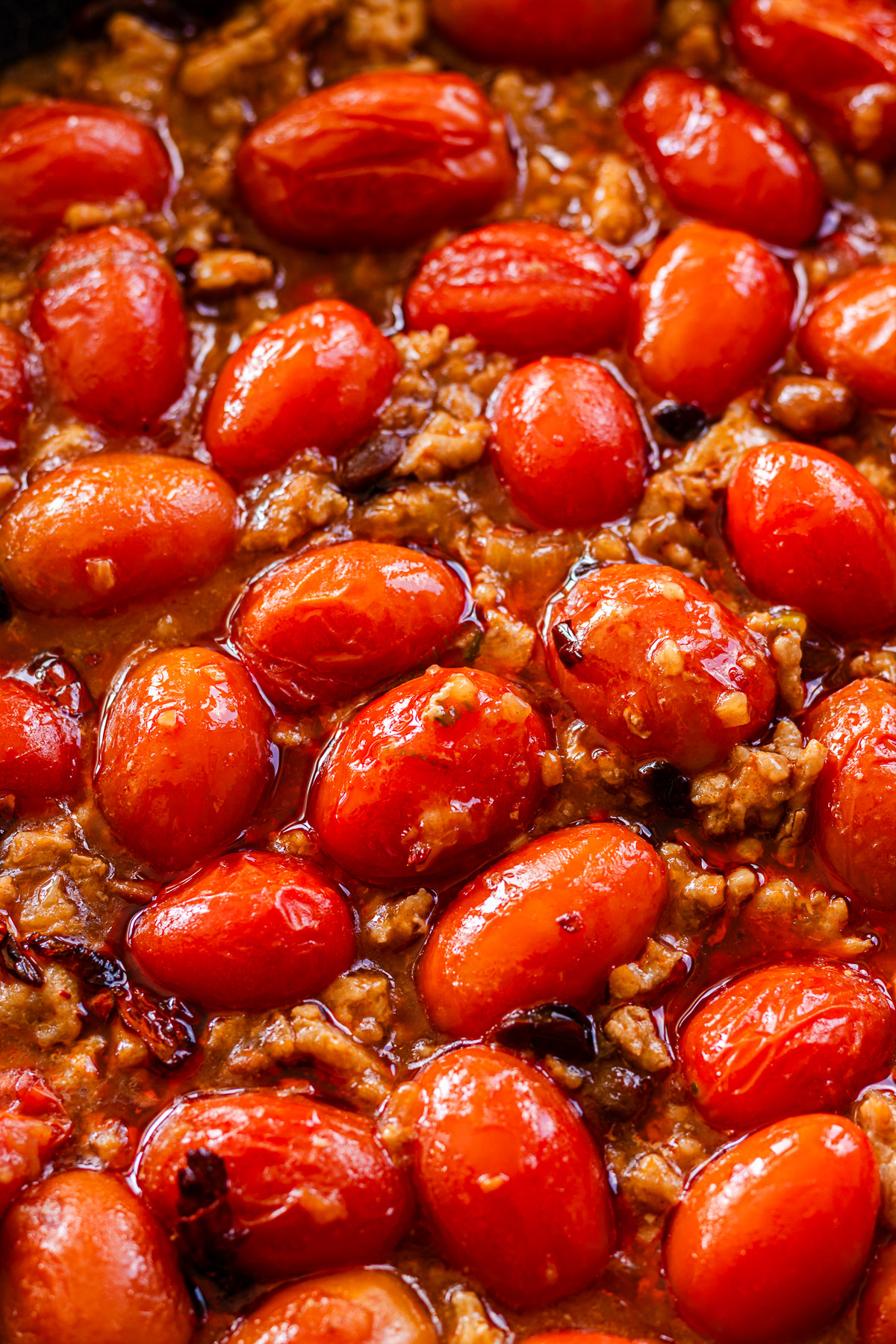
Table of Contents
End of Summer Tomatoes
If you have a garden and heaps of tomatoes to get through, bought a ton on sale, or just happen to have a lot on hand—whether under-ripe or over-ripe—this is the recipe for you. A friend gifted us 4 lbs of grape tomatoes at the end of the season, and they were either underripe (not juicy) or super ripe. I love eating ripe tomatoes—they’re so juicy! But the underripe ones… what to do? I had a small block of frozen pork in the freezer and an untouched jar of doubanjiang in the fridge that needed to be used. What do you get when you mix the three? A mapo tofu-inspired Mapo Tomato.
My mom often made “mapo something” dishes using leftover vegetables at the end of the week, but she never tried tomatoes. Tomatoes are perfect for saucy dishes—they’re juicy, slightly sweet, and pair so well with heat—so I felt they would work beautifully with the pork and doubanjiang.
By the way, this Mapo Tomato isn’t as intense as the original Sichuan mapo tofu—it’s closer to Japanese-style mapo tofu, which typically doesn’t include Sichuan peppercorns. Of course, you can add them if you like it more fiery—I’ve made a note on how to do that below.
I’ve made this once a week through late August and early September, and I’m still not tired of it! This is one of those recipes that came together on a random weeknight and became one of my favourites. I did not expect to fall in love with it this much. It’s really, really worth making, I promise!
Ingredients and Substitutions
Here’s what you’ll need:
- Ground pork:
- Tomatoes: Cherry or whole! If using whole, slice them into wedges.
- Green onion
- Garlic
- Ginger
- Doubanjiang: Key ingredient for mapo dishes. A spicy, salty, and umami-rich Chinese chili bean paste made from fermented broad beans, soybeans, and chilies.
- Chicken broth
- Sake
- Soy sauce
- Tianmianjiang or miso: A sweet wheat-based Chinese paste used to add depth and mild sweetness to sauces. Miso is similar and makes a good substitute.
- Sugar
- Potato starch or cornstarch
How to Make Mapo Tomato
This Mapo Tomato stir-fry comes together quickly with just a few steps. Here’s an overview:
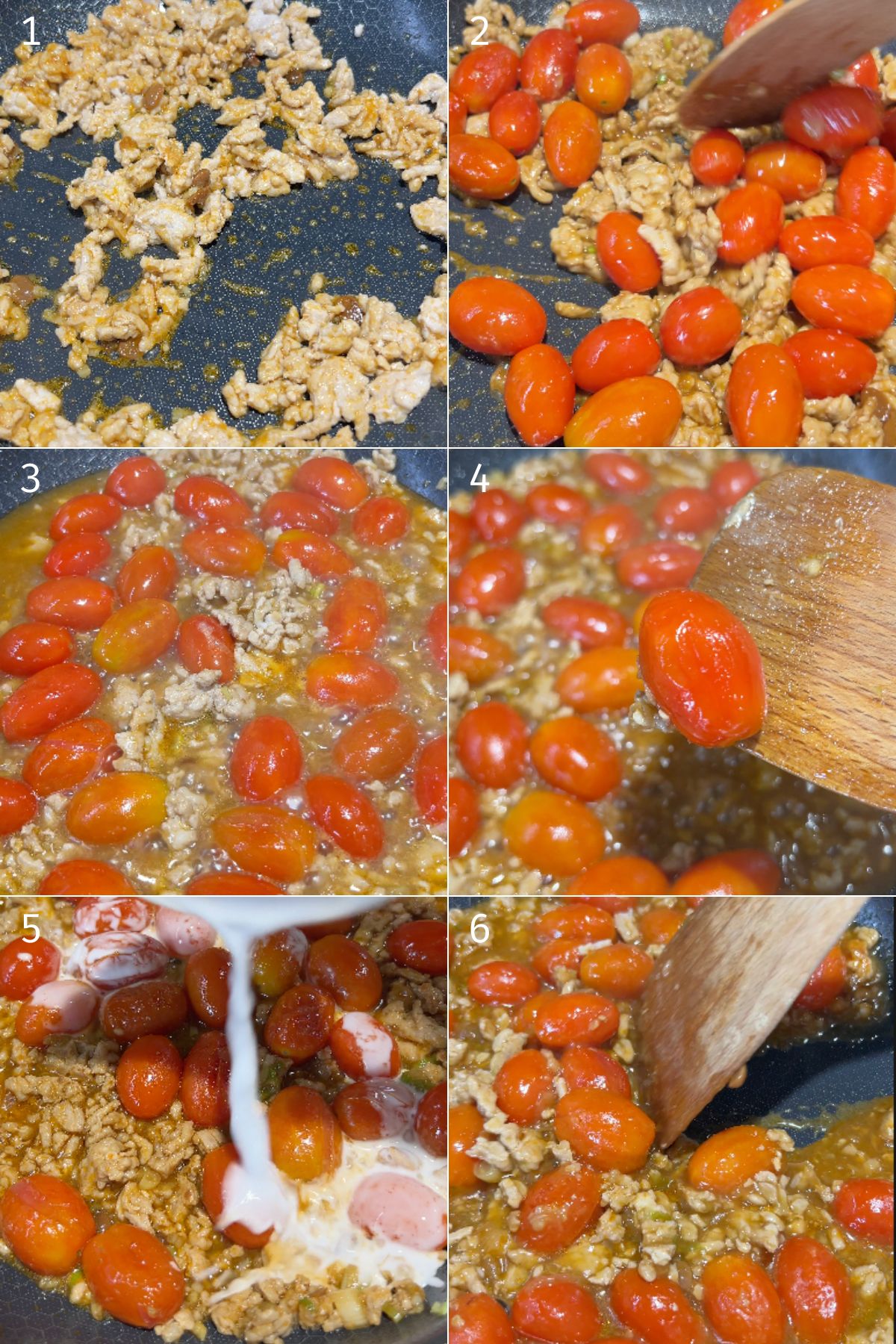
- Mix your sauce and slurry: Combine sake, soy sauce, tianmianjiang, and sugar in one bowl. In another, whisk potato starch and water.
- Cook the pork: Heat oil, cook the ground pork until browned, then add garlic, ginger, and doubanjiang until fragrant.
- Add tomatoes and sauce: Toss in tomatoes, pour in the sauce base, then stir in chopped green onions.
- Simmer and thicken: Add chicken broth, let the tomatoes soften, then drizzle in the slurry and let the sauce bubble until thickened.
- Finish: Drizzle with chili oil and black pepper, serve hot.
Adding Sichuan Peppercorns
If you do love that spicy numbing taste that comes from Sichuan peppercorns you can easily add it to this recipe! Here’s how:
- Toast first (optional): Dry-toast whole Sichuan peppercorns in a pan for 1–2 minutes until fragrant, then grind them. This enhances the aroma.
- Add during final simmer: Once your sauce is mostly done and the tofu is added, sprinkle the ground peppercorns into the sauce and stir.
- Adjust to taste: Start with 1/2–1 teaspoons for the amount in the recipe card below, then taste and add more if desired.
You can also infuse oil with Sichuan peppercorns at the beginning (making a “mala oil”) and drizzle it over the finished dish for extra depth without overcooking the spice.
VIDEO: Watch How to Make It
Lisa’s Recipe Tips
- Ripe-ness of tomatoes: If using super ripe tomatoes, add them after the broth so they don’t burst too early on. If using under-ripe or perfectly ripe tomatoes add them as instructed and cook just until soft.
- Adjust the thickness of the sauce: slightly thicker works well since the tomatoes will continue releasing juices while resting.
Serving Suggestions
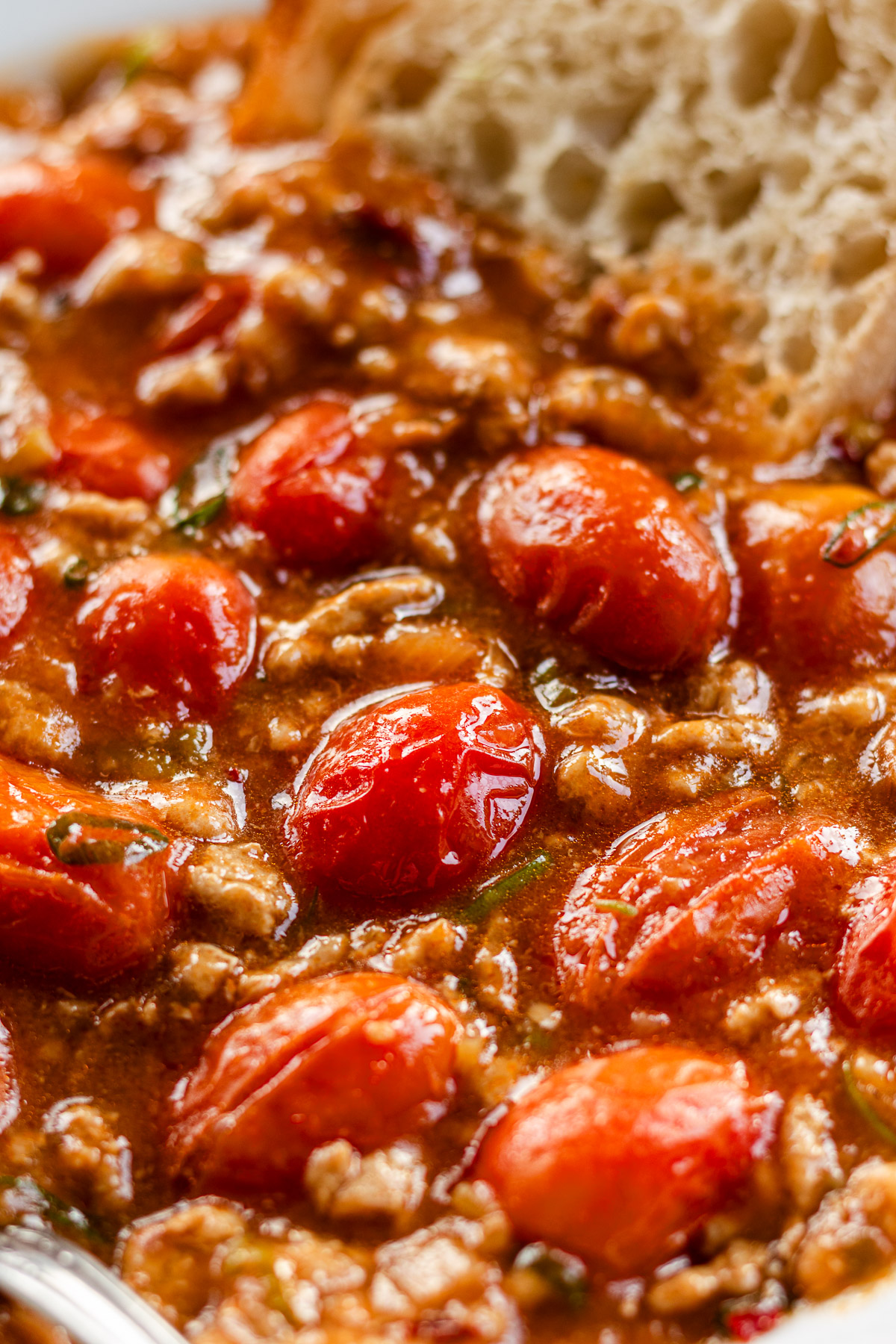
- crusty bread! it’s like bread and chili or soup
- cheese! any melty cheese, it’s SO good.
- rice, a classic
- make it slightly thicker and top it on some baked potatoes
- macaroni, like chili mac? (okay, I haven’t tried this version but I feel like I should now)
How to Store and Reheat Leftovers
- Refrigerator: Store in an airtight container for up to 3 days.
- Freezer: Not recommended, as tomatoes lose texture.
- Reheat: Warm gently on the stove or in the microwave, adding a splash of broth or water if it thickens too much.
Recipe FAQ
Yes! Simply swap the ground beef for a plant based alternative.
I haven’t tried, but I think whole tomatoes would work best! Add them at the very end as they’re already cooked.
More Tomato Recipes
- Miso Whole Tomato Rice
- Umami Tomato Sauce
- Vegan Spicy Tuna Crispy Rice
- Rice Cooker Japanese Tomato Beef Curry
Enjoy! If you make this Mapo Tomato recipe, I’d love to hear what you think! Leave a comment and rating below, and if you share it on social media, tag me on Instagram @Okonomikitchen. I can’t wait to see your creations!
Print
Mapo Tomato
- Total Time: 20 minutes
- Yield: 2 servings
Description
This Mapo Tomato recipe is inspired by Sichuan’s classic mapo tofu, swapping in end-of-summer tomatoes for a seasonal variation. Less fiery than the original and closer to Japanese-style mabo dofu, it combines ground pork, doubanjiang, and a savory sauce for a balanced mix of spicy, tangy, and umami—ready in under 20 minutes for an easy weeknight meal!
Ingredients
Main
- 1 tbsp neutral oil
- 4.5 oz (126 g) ground pork
- 2 cups (250-300 g) cherry tomatoes or 2 large tomatoes, quartered
- 1 green onion, finely chopped
- 1 tbsp (8 g) minced garlic
- 1 tbsp (8 g) minced ginger
- 1 tbsp doubanjiang
- 1/3–1/2 cup (80-120 ml) chicken broth
- Freshly cracked black pepper, to taste
Sauce Base
- 1 tbsp sake
- 2 tsp soy sauce
- 1 tbsp tianmianjiang or miso
- 1 tsp sugar
Slurry
- 2 tsp potato starch or cornstarch
- 1 tbsp water
Finish
-
Chili oil, to taste
-
Extra green onion, for garnish
Instructions
- Mix sauces: In a small bowl, combine sake, soy sauce, tianmianjiang (or miso), and sugar. Set aside.
- Prepare slurry: In another bowl, whisk together potato starch (or cornstarch) and water. Set aside.
- Cook pork: Heat neutral oil in a medium pan over medium heat. Add ground pork and cook, breaking it up with a wooden spatula, until no longer pink.
- Aromatics: Add garlic, ginger, and doubanjiang. Cook until fragrant (about 30 seconds).
- Add tomatoes, sauce and green onion: Stir in the tomatoes and cook for 1 minute. Pour in the sauce base and mix well. Add in the chopped green onion and cook for another 30 seconds.
- Simmer: Add chicken broth and let it simmer for about 1 minute, or until the tomatoes begin to soften.
- Thicken: Re-whisk the slurry, then turn off the heat and drizzle it in. Stir to combine, then turn the heat back on and let it bubble until the sauce thickens. If it gets too thick, add a splash of chicken broth or water. The tomatoes will continue to release juices, so aim for a slightly thicker consistency at this stage.
- Finish: Drizzle with chili oil and freshly cracked black pepper. Garnish with green onion. Enjoy hot with rice or bread!
Notes
- Store in an airtight container for up to 3 days.
- Prep Time: 10 minutes
- Cook Time: 10 minutes
- Category: Entree
- Method: Stove Top
- Cuisine: Chinese-inspired
Nutrition
- Serving Size: 1 serving
- Calories: 340
- Sugar: 8.4 g
- Sodium: 1075 mg
- Fat: 22.5 g
- Saturated Fat: 5.6 g
- Unsaturated Fat: 16.8 g
- Trans Fat: 0.2 g
- Carbohydrates: 18.8 g
- Fiber: 2.5 g
- Protein: 14.5 g
- Cholesterol: 43 mg