
Chikuzenni is a comforting Japanese simmered dish with tender chicken, root vegetables, and a savory broth. While it’s traditionally part of osechi ryori for New Year’s, it’s just as perfect for an everyday meal. This simple yet flavorful dish is ideal for cozy dinners any time of the year.

Table of Contents
Chikuzenni, like other simmered dishes such as nikujaga, oden, and buri daikon, was a regular feature on winter menus in Japan. These comforting dishes, made with chicken and seasonal vegetables, provided warmth and nourishment during the cold months. The slow simmering process enhances the flavors, making them the perfect satisfying meals for chilly weather.
What is Chikuzenni?
Chikuzenni (筑前煮) is a hearty Japanese dish made with chicken and a variety of root vegetables like lotus root, bamboo shoots, and burdock. The ingredients are first stir fried in oil and then simmered in a rich, umami-packed broth, often using the soaking water from dried shiitake mushrooms. It’s a comforting dish with a perfect balance of savory, sweet, and earthy flavors. While it’s often eaten during New Year’s celebrations as part of Osechi Ryori, a traditional Japanese New Year’s feast, it’s a great everyday dish too—easy to make and full of flavor.
Dishes Similar to Chikuzenni
If you’re familiar with Chikuzenni, you might also come across a few other similar dishes that feature simmered ingredients:
- Nishime: This dish is a bit like Chikuzenni, but with a key difference: the vegetables are simmered separately to get each one just right. Nishime usually uses a dashi base for seasoning, although some versions go for a sweeter flavor with soy sauce and sugar. It’s a comforting, homey dish, often considered a “mother’s taste.”
- Gameni: A dish from Fukuoka, Gameni shares many similarities with Chikuzenni, especially with its chicken and vegetable combo. The main difference is that Gameni often uses chicken on the bone and is simmered in a sweet, spicy sauce. Some say the name comes from a regional dialect, and it was originally made with turtle meat.
- Umani: Umani refers to dishes that bring out the deep umami flavor through simmering. It’s pretty similar to Chikuzenni, but often includes pork or chicken along with vegetables. Some regions mix it up with different seasonings, but all versions highlight that savory, sweet taste.
Ingredients for Chikuzenni
Here is everything you’ll need to make this simmered chicken and vegetables dish:

- Chicken thighs
- Dried shiitake mushrooms
- Carrot
- Bamboo shoots
- Burdock root (gobo)
- Lotus root (renkon)
- Satoimo (small taro)
- Konnyaku
- Snow peas
- Seasonings: Sugar, sake, soy sauce, mirin
How to Make Simmered Chicken and Vegetables
Here’s step-by-step rundown on how to make chikuzenni:
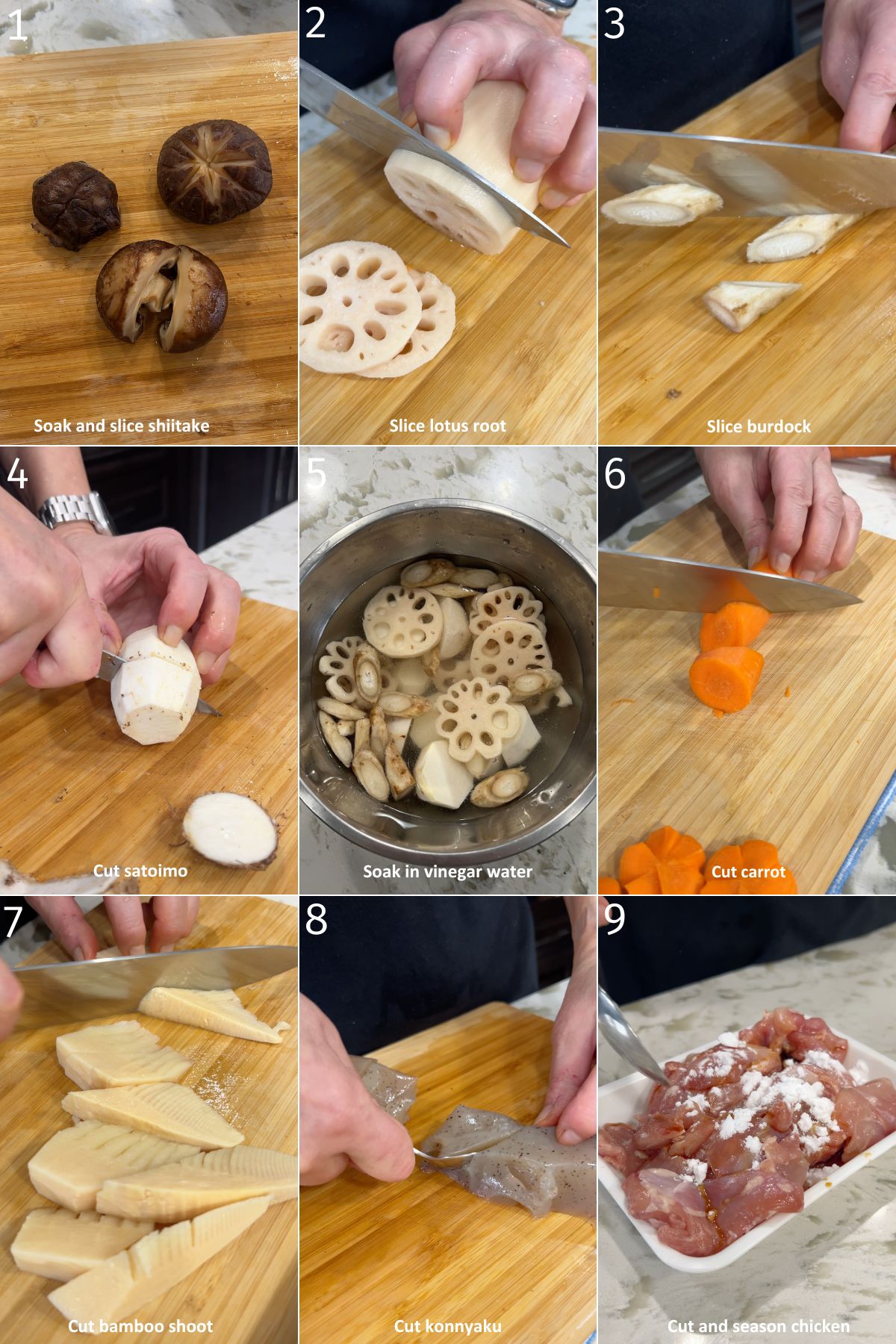
- Prepare vegetables (1-8): Cut and slice vegetables. Use the rangiri technique, which increases the surface area for better flavor absorption. For osechi ryori, try decorative cuts (see below). Soak lotus root, burdock root and satoimo in vinegar water to prevent discolouration.
- Cut konnyaku (9): Use a spoon to scoop bite size pieces or turn them into twisted knots or ribbons (see below).
- For the Chicken (9-10): Slice into larger bite size pieces and season with sake and soy sauce. Toss in potato starch and then cook in a pan with oil until the outside is no longer pink. Transfer to a plate.
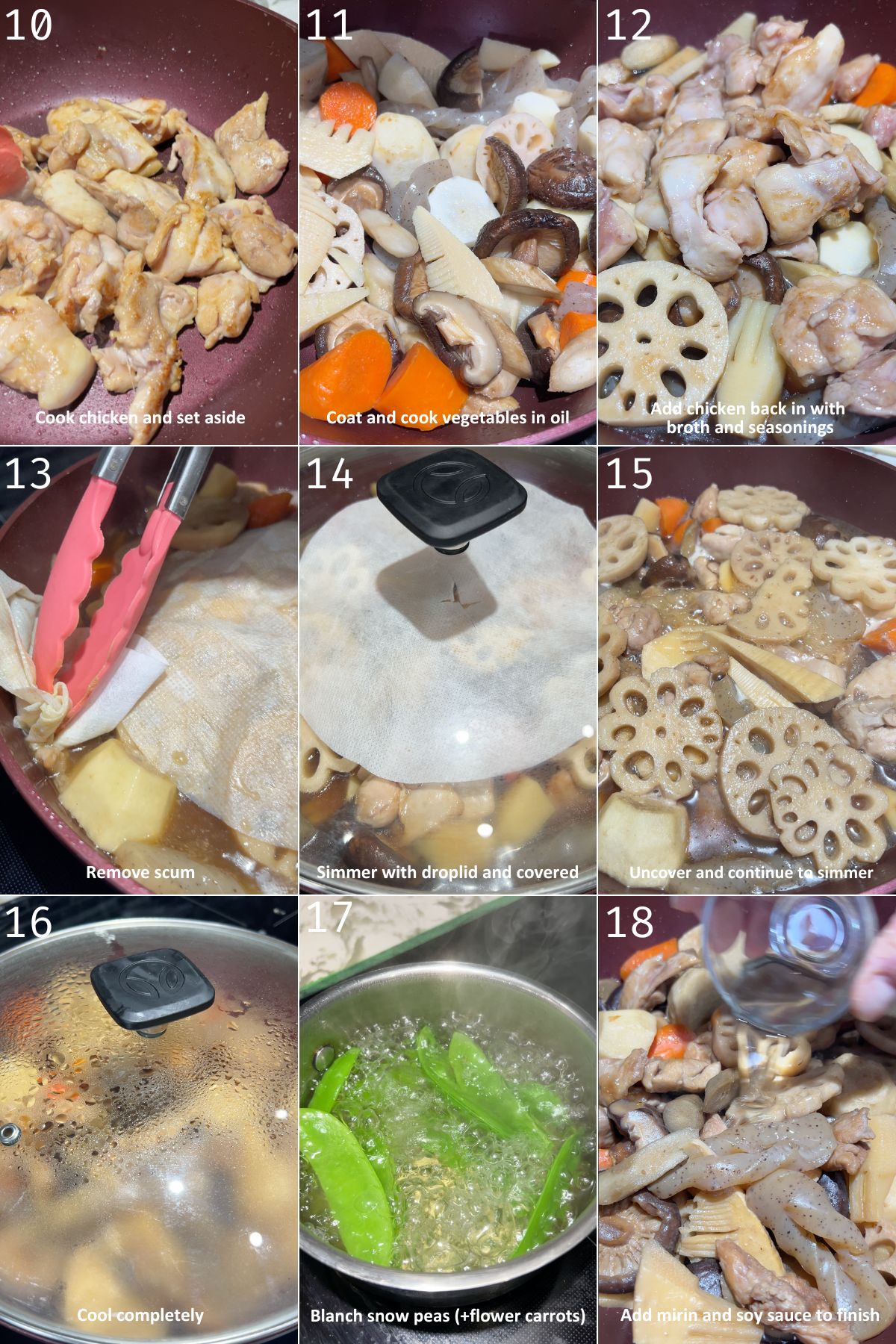
- Cook vegetables (11): Add your root vegetables and stir-fry to coat them in the oil.
- Simmer (12-15): Add the soaking water from dried shiitake mushrooms, soy sauce, and mirin. Add the chicken back and bring to a simmer. Remove any scum. Cover with a otoshibuta (drop lid) and cover with a lid. Uncover and continue to simmer until reduced.
- Chill (16-17): completely to allow the flavours to meld. In the meantime, blanch snow peas and flower carrots if using.
- Finish cookig (18): Reheat and add mirin and soy sauce to make it glossy.
How to Cut Decorative Ingredients for Chikuzenni
Adding decorative ingredients like carrot flowers, lotus root slices, and konnyaku ribbons can elevate your Chikuzenni, making it perfect for festive occasions like Japanese New Year’s. Here’s how to prepare each:
- Carrot Flowers: Slice carrots into even rounds, about 1.5 cm thick. Use a flower-shaped cookie cutter to press out flower-shaped slices. You can keep it as is but to take it further to make it popout. To give the flowers a 3D appearance, make a deeper cut (about 0.5 cm) around the edges of each flower and a shallower cut toward the center by keeping the knife angled. Angle the knife and diagonally cut toward each incision. The key is to start with a thin cut and then cut a little thicker ad you get closer to the incision. This video is a great visual on how to make carrot flowers.
- Lotus Root: Cut the lotus root into 1 cm even rounds to showcase its natural floral pattern. Make a shallow vertical groove between the holes, cutting a triangle vertically, and then trim the corners of the groove to make a flower shape. Here’s a video visual on how to make lotus root flowers.
- Konnyaku Ribbons: Slice the konnyaku into strips, about 0.75 cm wide. Place the konnyaku flat and then make an incision slightly larger than 1/3 of the length. Take the bottom of the konnyaku and loop it through the hole and pull it through the other side. Here is a visual video on how to make konnyaku ribbons.

Lisa’s Recipe Tips
- Pre-cooking Vegetables: Pre-microwaving or par boiling harder vegetables before frying can help them cook evenly.
- Add Seasonings in Two Stages: For a glossy, visually appealing dish, add seasonings in two stages. First, when simmering the ingredients to season them, then again when finishing the dish for a shiny, flavorful glaze. Adding soy sauce in two stages prevents the dish from becoming too dark, and mirin in the second stage gives a beautiful shine.
- Let it Cool for Better Flavor: Don’t cook ingredients for too long to allow the flavor to soak in. The real flavor infusion happens when the dish cools. After cooking, turn off the heat and let the ingredients cool in ice water. This helps the dish achieve a richer taste, similar to one that’s been sitting overnight.
- Use a Frying Pan, Not a Pot: Since Chikuzenni involves stir-frying ingredients before simmering, it’s easier to use a deep frying pan instead of a pot. A frying pan with a non-stick coating is recommended, as it prevents sticking and makes the cooking process smoother.
- Soak Dried Shiitake Mushrooms for Maximum Umami: Soak dried shiitake mushrooms the day before to bring out their rich umami flavor. Chikuzenni doesn’t use dashi stock, so the soaking water from the shiitake mushrooms is key to the dish’s flavor.
- Prepare Bamboo Shoots Correctly: Bamboo shoots have varying hardness depending on the part. The base is firmer, so it should be cut into smaller pieces, while the tip is softer and can be cut into slightly larger pieces. Boiling the bamboo shoots briefly before using them helps remove excess water and bitterness, allowing the flavor to penetrate better.
- Tear Konnyaku for Better Texture: When preparing konnyaku, tearing it into bite-sized pieces with a spoon, rather than cutting it, allows for better flavor absorption. The torn edges also help the konnyaku absorb seasonings more effectively.
- Don’t Over Season: Taste and adjust the seasonings to your liking. Depending on how much vegetables you use, you may want to decrease or increase the seasonings. If making ahead of time or large batches to have leftovers, I recommend under seasoning it just a bit because it will get more flavourful as it rests.
Serving Suggestions
Chikuzenni is not only a great everyday dish but also a traditional part of Osechi Ryori, the elaborate Japanese New Year’s feast. Serve it alongside other Osechi dishes, or enjoy it as a flavorful and comforting side with rice and miso soup. It’s perfect for any time you’re craving something hearty and satisfying!
How to Store Leftover Chikuzenni
Chikuzenni keeps well in the fridge for 3 to 4 days, making it a great make-ahead dish. After you’ve completed cooking and allowed the flavors to come together, store it in an airtight container in the fridge. Be sure to keep snow peas separate if you’re adding them, as they can lose their vibrant color.
Recipe FAQ
While fresh mushrooms are fine, dried shiitake mushrooms bring a deeper umami flavor to the broth, making them the better choice for Chikuzenni. Additionally, I recommend to substitute the shiitake soaking liquid for dashi broth.
Yes! While traditional Chikuzenni includes specific vegetables like lotus root and burdock, feel free to experiment with other root vegetables or greens like daikon radish, potatoes or Japanese sweet potatoes.
Yes! Chikuzenni actually tastes even better the next day, once the flavors have had time to meld together. Just make sure to cool it down properly before storing.
Yes, simply omit the chicken. You can substitute with plant based chicken or tofu as well.

Enjoy!! If you make this Chikuzenni recipe, let me know! Leave a comment, rating and if you decide to share it on socials, tag me on instagram @Okonomikitchen. I’d love to hear from you!
Print
Chikuzenni (Simmered Chicken and Vegetables)
- Total Time: 1 hour 40 minutes
- Yield: 4-6 servings
- Diet: Low Fat
Description
Chikuzenni is a comforting Japanese simmered dish with tender chicken, root vegetables, and a savory broth. While it’s traditionally part of osechi ryori for New Year’s, it’s just as perfect for an everyday meal. This simple yet flavorful dish is ideal for cozy dinners any time of the year.
Ingredients
Chicken:
- 3–4 chicken thighs (350 g)
- 2 tsp soy sauce
- 2 tsp sake
- 1 tbsp potato starch
- 1/2 tbsp sesame oil (or neutral oil of choice)
Vegetables:
- 5–6 pieces (30 g) dried shiitake mushrooms (160 g rehydrated), soaked in 1 cup water overnight (reserve soaking water)
- 1 medium (150-200 g) renkon (lotus root)
- 1 (100 g) gobo (burdock root)
- 3–5 satoimo (taro) (200–250 g)
- 1 large (150 g) carrot
- 1/4 piece (100 g) boiled bamboo shoot
- 1/2 block (125 g) konnyaku
- 8–10 snap peas, ends removed and blanched in salted water
- 1 tbsp sesame oil (or neutral oil of choice)
Seasoning A:
- 250 ml shiitake soaking water
- 250 ml water
- 2–4 tbsp (22.5–50 g) sugar (to taste)
- 6 tbsp (90 ml) sake
- 3 tbsp (45 ml) soy sauce
Seasoning B:
- 2 tbsp (30 ml) soy sauce
- 2 tbsp (30 ml) mirin
Instructions
For the Vegetables:
- Shiitake Mushrooms: Soak dried shiitake overnight in 1 cup of water. Remove stems. For osechi ryori, slice into hexagon shape or decorative flower. For everyday meals, slice into halves.
- Renkon (Lotus Root): Peel and slice into 1 cm rounds or rangiri pieces. For osechi ryori, trim into floral shapes (read section above for How to Cut Decorative Ingredients for Chikuzenni for more details. Soak in rice vinegar water.
- Gobo (Burdock Root): Lightly scrape the skin with the back of a knife. Trim edges and slice into thin slices diagonally. Immidetly place into a bowl of water with 1 tbsp of vinegar.
- Taro: Peel and shape into octagons by trimming the edges. Slice into half.
- Carrot: Peel and slice into rangiri pieces (diagonal rolling cuts). For decorative use, cut into 1.5 cm thick rounds and shape into flowers (see section above for How to Cut Decorative Ingredients for Chikuzenni for more details). Blanch flower slices in salted water for 2 minutes (this can be done while waiting for chikuzenni to cool).
- Bamboo Shoots: Slice the quartered bamboo into 3-4 slices lengthwise. Then slice into bite size pieces, with smaller pieces towards the base.
- Konnyaku: Use a spoon to cut out bite size pieces. For osechi ryori, slice into 0.75 cm width pieces and then form them into ribbons (see section in above for How to Cut Decorative Ingredients for Chikuzenni for more details). To remove any odor from the konnyaki, massage it with salt and rinse or blanch in water for 2 minutes.
- Snow Peas: Trim ends and blanch in salted water for 1 minute. Drain and place into ice cold water to cool. Diagonally slice in the middle and set aside. This can be done while waiting for the chikuzenni to cool.
To cook:
- Prepare Chicken: Massage chicken with sake and soy sauce, then coat with potato starch.
- Microwave Vegetables (Optional for faster cooking): Depending on the size of the vegetables, microwave for 1 minute each until slightly soft. I typically do this for taro.
- Stir-Fry Ingredients: Heat 1/2 tbsp of sesame oil in a frying pan. Add chicken, cooking until the chicken’s surface is no longer pink. Remove and set aside.
- Cook Vegetables: In the same pan without cleaning, add 1 tbsp sesame oil. Stir-fry shiitake, taro, bamboo shoots, gobo, lotus root, carrots and konnyaku until coated with oil.
- Simmer: Add Seasoning A and reserved mushroom soaking water. Bring to a simmer. Return the chicken to the pan. Skim off any skum. Cover with an otoshibuta (drop lid) and simmer for 10-12 minutes. Remove the lid and continue to cook for another 10-15 minutes or until liquid reduces by at least half.
- Cool Completely: Remove from heat and let the dish cool completely to allow the flavors to soak in better. If in a rush, transfer the Chikuzenni to a stainless steel bowl and place it over ice water to cool.
- Reheat and Finish Seasoning: Return the cooled Chikuzenni to the pot and reheat over medium-high heat. Once it begins to simmer, add Seasoning B and stir quickly. Cook until most of the liquid has evaporated, allowing the dish to become slightly glazed.
- Serve: Transfer to a serving dish and garnish with carrot flowers and snow peas
- Prep Time: 60 minutes
- Cook Time: 40 minutes
- Category: Main dish
- Method: Stove Top
- Cuisine: Japanese
Nutrition
- Serving Size: 1 serving (out of 6)
- Calories: 241
- Sugar: 9.7 g
- Sodium: 562 mg
- Fat: 5 g
- Saturated Fat: 0.9 g
- Unsaturated Fat: 3.3 g
- Trans Fat: 0
- Carbohydrates: 32 g
- Fiber: 5.1 g
- Protein: 15 g
- Cholesterol: 50.8 mg
Okonomi Kitchen is a participant in the Amazon Services LLC Associates Program. When you purchase something through my amazon affiliate links, I earn a small commission that helps me produce consistent content at no cost to you. Thank you for your support!



I made this dish without the designs and it was delicious