Egg Katsu is a crispy, panko-coated fried egg with a golden, crunchy exterior and a soft, runny yolk. It’s an easy recipe that’s delicious served over rice, tucked into sandwiches, or with shredded cabbage and tonkatsu sauce.
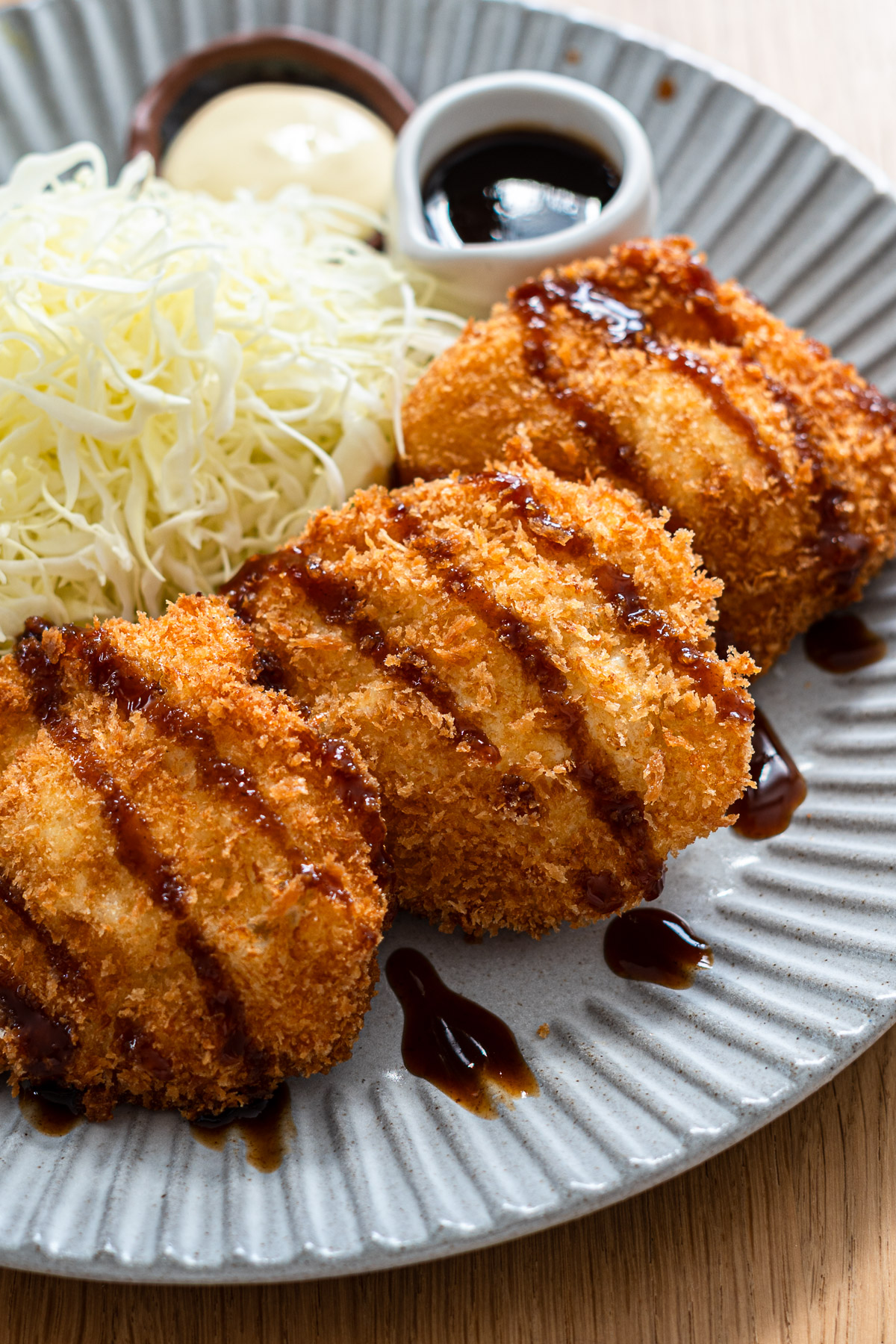
Table of Contents
Deep Fried Eggs
If there’s one thing I never get tired of, it’s eggs. I honestly love them in every form, but anything crispy has my heart and this egg katsu (tamago katsu) might be one of my favorite ways to eat them. It’s a panko-coated fried egg with a crispy, golden crust and a soft, runny yolk in the middle. I love it just as it is, but lately I’ve been adding it to sandwiches!! Of course, you also can’t go wrong serving it the classic way with shredded cabbage and tonkatsu sauce.
Why I Love This Recipe
- Crispy on the outside with a runny or jammy yolk.
- Made with just 2 ingredients.
- They cook in under 5 minutes.
- Great for breakfast, lunch, dinner and bentos.
- Delicious over rice, in sandwiches, or with cabbage and tonkatsu sauce.
Ingredients and Substitutions
You only need 3 ingredients to make egg katsu, and you probably already have most of them at home!
- Eggs: Large eggs work best. Slightly older eggs are a little easier to handle.
- Panko breadcrumbs: Japanese panko gives the lightest, crispiest coating.
- Neutral oil: Canola, vegetable, avocado, or any neutral frying oil.
How to Make Egg Katsu
Making egg katsu is really easy! Here’s an overview on how to make it:
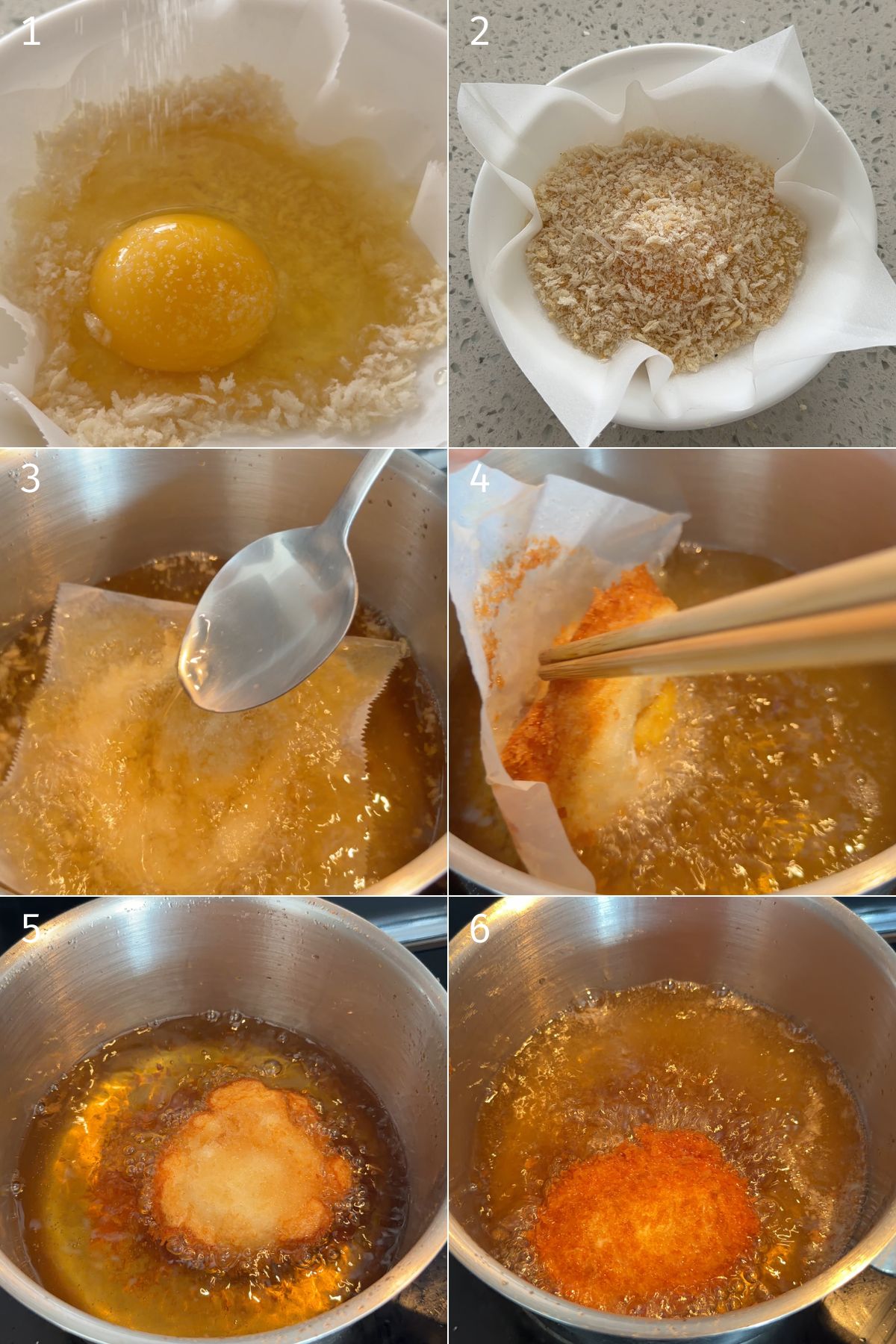
- Place a piece of parchment paper in a small bowl and sprinkle on a layer of panko.Crack an egg onto the panko, season lightly with salt, then cover with more panko.
- Lower the parchment into the hot oil and fry until the coating begins to set, basting the top with hot oil.
- Remove the parchment, flip the egg, and continue frying until both sides are golden and crispy.
- Drain on a wire rack and serve immediately.
VIDEO: Watch How to Make It
Lisa’s Recipe Tips
- Coat as much of the egg as possible: Spread the panko into about a 10 cm (4-inch) circle before cracking the egg on top. This will ensure the egg naturally peels away from the parchment paper.
- Use a thermometer: Keeping the oil at 170-180°C (338-350°F) is the key to good egg katsu. If the oil is too hot, the yolk will overcook before the coating is golden. Too low of a temp and the panko will absorb more oil instead of crisping up.
- Set a timer: Eggs cook quickly. Depending on the size of your egg and how runny you like the yolk, the cooking time can vary by 15-30 seconds. A large egg usually takes 2-2.5 minutes for a golden coating with a runny to soft, jammy yolk.
- Skim out the loose panko: Before frying the next egg, use a skimmer or fine mesh strainer to remove any panko crumbs from the oil. This keeps the oil clean and prevents the loose crumbs from sticking to the next Egg Katsu.
Serving Suggestions
I could honestly eat egg katsu straight out of the fryer with a tonkatsu sauce, but here are some other ways I love having it:
- With a pile of finely shredded cabbage and plenty of tonkatsu sauce (the classic).
- Over a bowl of steamed Japanese rice with a drizzle of tonkatsu sauce or soy sauce.
- In a sandwich! Simple with Kewpie mayonnaise, shredded cabbage, and tonkatsu sauce.
- On top of Japanese curry for a fun twist on katsu curry.
- Alongside toast and a simple salad for an easy breakfast or brunch.
How to Store and Reheat Leftovers
Egg Katsu is best eaten fresh while the coating is still crispy and the yolk is runny. If you have leftovers, store them in an airtight container in the refrigerator for up to 1 day.
Reheat in an air fryer or toaster oven at 180°C (350°F) for a few minutes until warmed through and crispy again. You could microwave them but the coating gets soggy… but honestly, still tasty.
Recipe FAQ
Make sure the oil is fully heated before frying and baste the top with hot oil so the coating sets before flipping.
I don’t recommend it. Deep frying helps the panko set almost instantly while keeping the yolk soft and runny. In an air fryer, the coating is more likely to fall off and the yolk will usually cook through before the outside becomes crispy.
More Easy Egg Recipes
- Ham & Egg Katsu
- Marinated Fried Eggs
- Ajitsuke Tamago (Ramen Eggs)
- Soy Marinated Egg Yolks
- Tamagoyaki (Japanese Rolled Omelette)
Enjoy! If you make this Egg Katsu recipe, I’d love to hear what you think! Leave a comment and rating below, and if you share it on social media, tag me on Instagram @Okonomikitchen. I can’t wait to see your creations!
Print
Egg Katsu (Tamago Katsu)
- Total Time: 10 minutes
- Yield: 2 servings
- Diet: Vegetarian
Description
Egg Katsu is a crispy, panko-coated fried egg with a golden, crunchy exterior and a soft, runny yolk. It’s an easy recipe that’s delicious served over rice, tucked into sandwiches, or with shredded cabbage and tonkatsu sauce.
Ingredients
- 2 large eggs (60 g with shell)*
- 4–6 tbsp panko breadcrumbs
- pinch of kosher salt
- neutral oil, for frying
Instructions
- Fill a small pot with enough oil for deep frying and heat to 180°C (350°F).
- Cut a 14× 14 cm (5.5 × 5.5-inch) piece of parchment paper and place it inside a shallow bowl or small dish (about 13 cm/5 inches in diameter). Sprinkle a layer of panko over the parchment (about 1-1.5 tbsp).
- Crack an egg onto the panko, season with a small pinch of kosher salt, then sprinkle more panko over the top until the entire egg is coated. Let it rest for 2-3 minutes.
- Lift the parchment paper and gently lower it into the hot oil. Fry for about 1 minute, occasionally spooning hot oil over the top to help the panko set.
- Once the egg begins to release from the parchment paper, lift it from the oil. If the parchment doesn’t come off completely, gently peel it away with chopsticks. You can also use the parchment paper to help flip the egg before removing it completely.
- Using a spatula and chopsticks, gently flip the egg and fry for 45–60 seconds, or until the panko is golden brown and crispy. If the side that was against the parchment paper is still pale, flip again and fry for another 20-30 seconds, or until evenly golden.
- *Maintain a temp of 170-180°C (338-350°F) while frying
- Very runny “lava” yolk: stay closer to 180°C.
- Jammy yolk: stay closer to 170°C, or fry an extra 10-15 seconds.
- Transfer to a wire rack to drain any excess oil. Repeat with the remaining egg and serve immediately. Enjoy!!
Notes
- Frying time will vary depending on the size of the egg. The times in the instructions are based on large eggs that are 60 g with shell and 50 g without shell.
- Prep Time: 5 minutes
- Cook Time: 5 minutes
- Category: Breakfast, Main course, Side Dish
- Method: Deep frying
- Cuisine: Japanese
Nutrition
- Serving Size: 1 serving
- Calories: 133
- Sugar: 0.2 g
- Sodium: 90 mg
- Fat: 8.4 g
- Saturated Fat: 2 g
- Unsaturated Fat: 6.1 g
- Trans Fat: 0
- Carbohydrates: 4.5 g
- Fiber: 0.3 g
- Protein: 7.8 g
- Cholesterol: 185 mg