
Coated in smooth chocolate and crunchy caramelized almonds, Candied Chocolate Covered Almonds are a festive holiday favorite. This simple recipe offers the perfect blend of sweet, nutty flavors and rich chocolate, making it an ideal treat for seasonal gatherings or a thoughtful homemade gift.

Table of Contents
- Crunchy Candied Chocolate Covered Almonds
- Ingredients for Candied Almond Chocolate
- How to Make Candied Chocolate Covered Almonds
- How Pan Types and Sugar Choices Affect Your Candied Almonds
- Tips for Making Chocolate Covered Almonds
- Variations & Different Flavour Options
- How to Store Chocolate Covered Almonds
- Recipe FAQ
- Candied Chocolate Covered Almonds Recipe
Crunchy Candied Chocolate Covered Almonds
I think most people know what chocolate covered almonds are but I was surprised to find out that not a lot of people know about this style of chocolate coated almonds, where they’re first candied for a crunchy layer between the almonds and chocolate. I make these almond chocolates once a year for Christmas and my friends and family go crazy for them! They do require a bit of work but these are the best chocolate covered almonds that are crispy, crunchy, nutty and perfectly sweet. Its totally worth it and you get a good arm workout in too.
This style of chocolate-covered almonds has gained significant popularity in Japan and is often found in stores that sell yakigashi (焼き菓子) which translates to baked goods. They’re also found at high-end chocolate shops and specialty stores, and it’s a favorite in gift boxes, especially during holidays or special occasions.
Ingredients for Candied Almond Chocolate
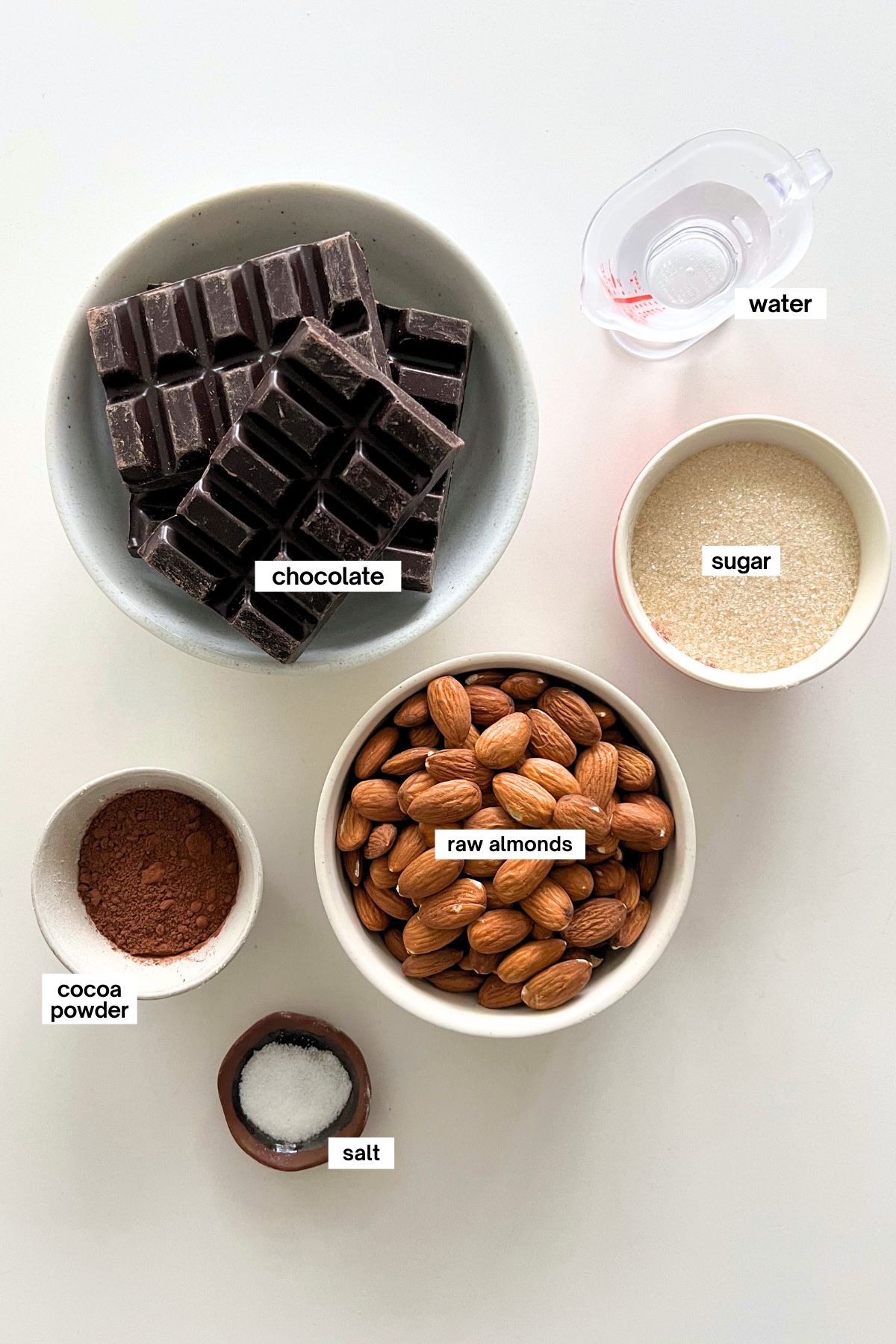
Here is everything you’ll need to make these almond chocolates:
- Almonds: Raw or roasted. I find raw almonds and roasting them myself taste a lot more fresh.
- Sugar: Cane sugar or granulated white sugar. Please see tips below for success.
- Chocolate: Use any high quality chocolate bar. Do not use chips as they contain stabilizers. If you like a thin coating of chocolate, use a 1:1 ratio of almonds to chocolate. If you prefer a thick layer of chocolate, use 1.5-2 times the amount.
- Coating powder: Used to lightly coat the finished almonds, adding a subtle flavor and preventing the chocolate from sticking. Cocoa powder gives a slight bitterness, while non-melting powdered sugar adds extra sweetness.
- Salt
You’ll only need some butter if you decide to make the more caramelized version where the sugar melts after being caramelized. The butter will help prevent them from excessively sticking together.
How to Make Candied Chocolate Covered Almonds
Making homemade chocolate almonds is easy but quite labor intensive. They take a lot of muscle to continuously mix the sugar and then the chocolate but I promise, it’s so worth it. If you make them for gifts, everyone will love you. Heres a run down of how to coat almonds with chocolate and sugar.
How to Make Candied Nuts
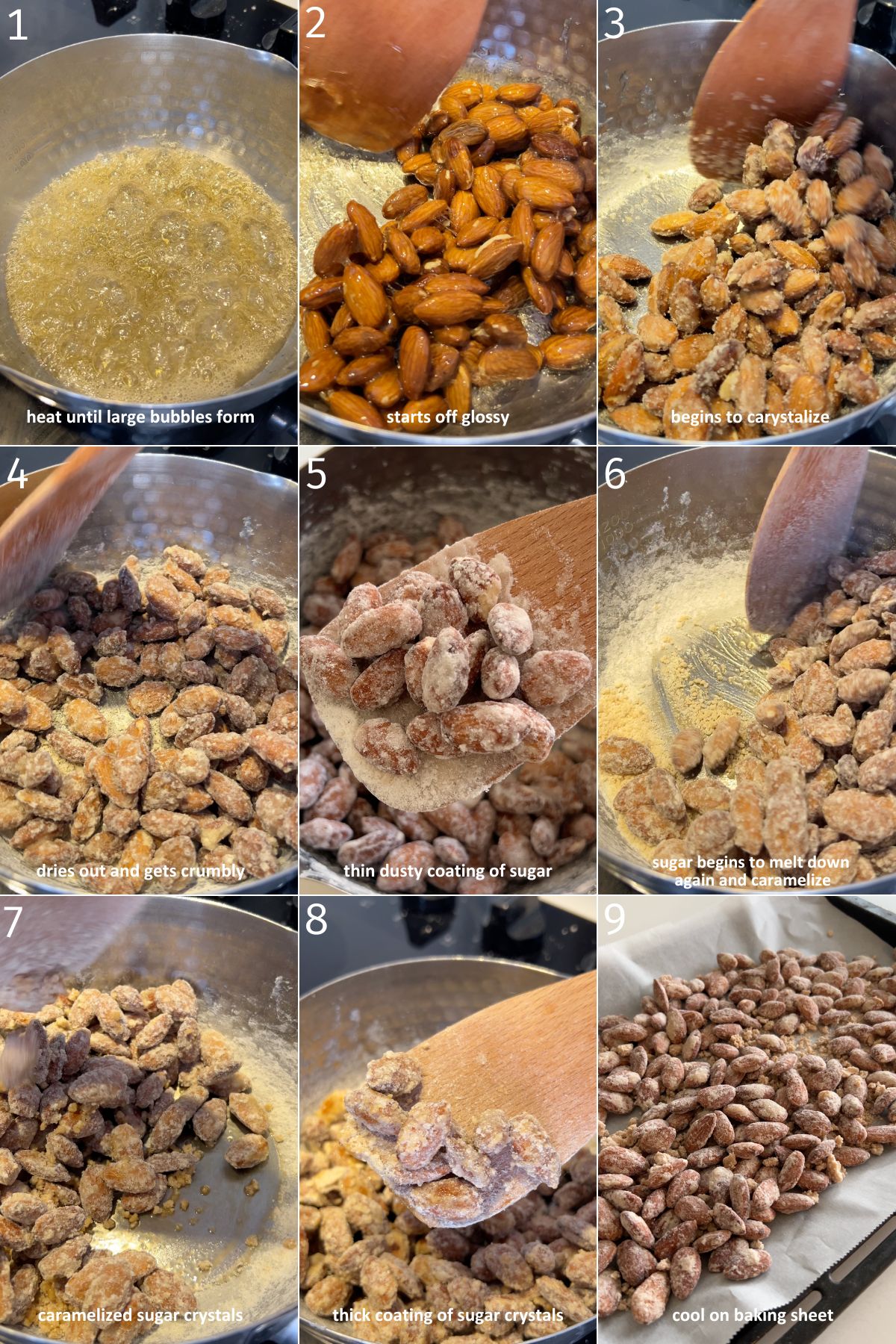
- Preheat your oven and roast the almonds until golden and fragrant, about 15-20 minutes at 325°F (160°C).
- In a stainless steel pan over medium heat add the cane sugar, salt and water. Allow it to heat up undisturbed until it reached 120°C (248°F) or large bubbles start forming (1).
- Add the almonds and stir (2).
- Reduce the heat to low and keep mixing until the sugar turns white and coats the almonds. You can stop here if you prefer a crisp light coating of sugar (3-4).
- To make them more crunchy, keep stirring until the sugar slightly melts down again, starts browning and thickly coats the almond (6-8). If you prefer to make the semi-caramelized or caramelized version, please see my candied white chocolate almonds recipe.
- Transfer the candied almonds onto a baking tray and cool completely (9)
How to Coat Nuts in Chocolate

- Temper the chocolate (milk, dark, white, or ruby). Melt the chocolate over a double boiler or in the microwave (10-13). You can also just melt the chocolate but tempering makes them much tastier!
- To coat the almonds in chocolate, add 1/6th – 1/5th of the chocolate and stir it with a spatula. It’ll slowly cool down, dry and get crumbly. Add another 1/6th – 1/5th of the chocolate and repeat until all the chocolate is used up (14-17).
- Optional step: Transfer the almonds to another bowl and microwave the bowl with the excess chocolate around it for 20-30 seconds or until you can scrape it off with the spatula. Place the almonds back in and coat it in the leftover chocolate or reserve for other use(18).
- Finish with Coating: Once fully coated and almonds are dry, sprinkle with cocoa powder or non-melting powdered sugar.
PS. If you’re not a fan of chocolate, skip coating them and they’re the perfect easy holiday candied almond treats.
How Pan Types and Sugar Choices Affect Your Candied Almonds
After making these candied almonds multiple times over the years, here are some observations I’ve noticed based on the type of sugar and pan used:
- Cane Sugar in a Non-Stick Pan: Dusty crisp candy-coated or crunchy sugar-coated almonds.
- Cane Sugar in a Stainless Steel Pan: Dusty crisp candy-coated or crunchy sugar-coated almonds.
- White Sugar in a Non-Stick Pan: Dusty crisp candy-coated or crunchy sugar-coated almonds.
- White Sugar in a Stainless Steel Pan: Semi-candied and caramelized sugar-coated or fully caramelized sugar-coated almonds.

Types of Sugar Coated Almonds
- Dusty Crisp Sugar-Coated (1): A dusty appearance with a lightly crisp exterior. Less sugar adheres to the almonds, making them less sweet but the easiest and quickest to prepare.
- Crunchy Sugar-Coated (2): Achieved by cooking for longer over low heat without letting the sugar melt entirely into caramel. The sugar crystals caramelize slightly, creating a crunchy, deeply flavored coating.
- Semi-Candied and Caramelized Sugar-Coated (3): Somewhere between crunchy sugar-coated and caramelized. The almonds are shiny, with small sugar crystal chunks on the coating. This creates a balance of texture and flavor—my personal favorite!
- Caramelized Sugar-Coated (4): Shiny and glossy in appearance. The sugar fully melts and caramelizes, creating a smooth, glassy exterior. This takes the longest to achieve.
Why Do These Differences Happen?
- Pan Material (Non-Stick vs. Stainless Steel):
- Non-Stick Pan: Non-stick pans retain heat more evenly and slowly compared to stainless steel. This prevents sugar from heating up too quickly, resulting in outcomes like “dusty” or “crunchy” coatings because the sugar doesn’t fully melt into caramel as easily.
- Stainless Steel Pan: Stainless steel heats up faster and retains heat more effectively. This encourages sugar to reach higher temperatures more easily, facilitating caramelization. White sugar in stainless steel pans achieves a glossy, semi-candied or caramelized result more reliably than cane sugar because it has smaller crystals and a lower moisture content.
- Type of Sugar (Cane vs. White):
- Cane Sugar: Cane sugar typically has larger, less refined crystals and retains a small amount of molasses. This makes it less prone to melting evenly into a glossy caramel. It often results in a “dusty” or “crunchy” coating since the sugar retains its crystalline structure for longer during cooking.
- White Sugar: White sugar is more refined, with smaller crystals that melt more readily. This allows it to transition into caramel more smoothly and creates a shinier, more cohesive coating, especially in pans that conduct heat efficiently (like stainless steel).

Tips for Making Chocolate Covered Almonds
- Heat the sugar enough: Do not stir the sugar and water mixture while heating. Add the almonds once it reaches 120°C (248°F) or when the bubbles are large and slow.
- Temper the Chocolate: While you can make chocolate covered almonds just by melting down chocolate, tempering it will make it much more delicious and keeps it from melting at room temperature. It’s really easy to do as long as you have a candy thermometer so I highly recommend it!
- Melt down excess chocolate from the bowl: There is a lot of excess chocolate that sticks around the bowl after coating the almonds. Place the bowl over a double boiler or microwave in 10 second intervals until the chocolate melts. Use a rubber spatula to scrape the chocolate. You can either use the excess chocolate for one final coating or pour it on a baking sheet to let it harden and reserve for other use.
Variations & Different Flavour Options
- Dark Chocolate: For those who prefer less sweetness, dark chocolate provides a rich, slightly bitter contrast to the sweet almonds. Simply substitute the sweet chocolate with dark chocolate.
- White Chocolate: Check out my candied almonds with white chocolate recipe for this version!
- Espresso or Coffee: Add a hint of ground espresso or coffee to the chocolate to create a deep, robust flavor that pairs beautifully with the caramelized almonds.
- Citrus Zest: Lemon or orange zest can be added to the chocolate for a refreshing, tangy flavor that brightens the rich, nutty almond and chocolate combination.
- Chili or Spice: For those who love a little heat, a pinch of chili powder or cayenne pepper in the chocolate adds an unexpected, spicy kick that contrasts with the sweet caramelized almonds.
- Kinako: Dust with kinako for a nutty flavour!
- Matcha: You can either use white chocolate or matcha flavoured chocolate and then coat it in matcha powder.
- Ruby Chocolate: This naturally pink, slightly tangy chocolate provides a fruity flavor that complements the almonds in a fresh and vibrant way. Use ruby chocolate and strawberry powder to make this version.
How to Store Chocolate Covered Almonds
To keep your chocolate covered almonds fresh and delicious, follow these simple storage tips:
- Room Temperature: Store your almond chocolate in an airtight container at room temperature, away from direct sunlight and heat. A cool, dry spot (around 60-70°F or 15-21°C) is ideal to maintain the chocolate’s smooth texture.
- Avoid Humidity: Chocolate is sensitive to moisture, which can cause it to bloom (develop white streaks). Keep your almond chocolate in a dry area to prevent this from happening.
- Refrigeration: If you need to store it in a warm climate, refrigeration is an option. Just be sure to place the almond chocolate in an airtight container to protect it from moisture. Let it come to room temperature before eating for the best flavor and texture.
- Freezing: For long-term storage, you can freeze almond chocolate. Wrap it tightly in plastic wrap or aluminum foil, then place it in an airtight container or freezer bag. Be sure it’s sealed well to avoid absorbing any odors. Let it thaw at room temperature before enjoying.
Recipe FAQ
Yes, absolutely. You can use a dairy free chocolate of your choice.

Enjoy!! If you make this Candied Chocolate Covered Almonds recipe, let me know! Leave a comment, rating and if you decide to share it on socials, tag me on instagram @Okonomikitchen. I’d love to hear from you!
Print
Candied Chocolate Covered Almonds
- Total Time: 1 hour 20 minutes
- Yield: 10 servings
- Diet: Vegetarian
Description
Ingredients
- 1 1/3 cup (200 g) raw almonds
- 6 tbsp (80 g) cane sugar or granulated white sugar
- 2 tbsp (30 ml) water
- 1/4 tsp salt
- 2–4 (200-400 g) sweet or semi-sweet milk chocolate bars
- cocoa powder or powdered sugar (for coating)
Instructions
- Roast the Almonds: Preheat your oven to 300°F (150°C). Spread the almonds on a baking sheet and roast for 20 minutes. Let it cool.
- Candy the Almonds: In a large saucepan over medium heat, combine the sugar, salt and water. Bring the mixture to a boil, swirling the pan occasionally (don’t stir with a spoon to avoid crystallization). Heat until the sugar syrup reaches 120°C (about 250°F).
- Crispy Sugar Coating (Easiest): Add the roasted almonds to the syrup. Mix with a spatula. Turn off the heat and continue stirring until the almonds are coated with a white, sugary crust. Shake off excess sugar using a mesh strainer. Let cool completely.
- Crunchy Sugar Coating: Add the roasted almonds to the melted sugar. Mix with a spatula. Reduce heat to low and continue stirring until the almonds are coated with a white, sugary crust. Keep stirring with a spatula until the sugar browns a little bit and forms larger sugar crystals. Transfer to a lined baking sheet and cool completely.
- Caramelized Crystallization (In-between): This version is in between crunchy sugar coating and crunchy caramelized coating (my personal favourite). After the sugar has crystalized, continue mixing over medium heat until half caramelized. Remove from heat and mix in 2 tsp of butter. Spread the almonds on baking paper, stirring to separate while hot. See more details in my candied white chocolate almonds recipe.
- Crunchy Smooth Caramelized Coating: If you prefer to caramelize the sugar coating do not turn off the heat and continue heating after the sugar turns whiteish. Once sugars crystallize, reduce the heat to low and mix continuously. If the heat is too high, it’ll caramelize before the sugar has completely melted. Once all the sugar crystals are melted, increase the heat and finish caramelizing. Once auburn in colour, add 2 tsp of butter to prevent sticking. Spread the almonds on baking paper, stirring to separate while hot. See more details in my white chocolate caramelized almonds recipe.
- Temper/Melt the Chocolate:
- Dark or Semi-Sweet Chocolate: Finely chop the chocolate and divide it into two portions: 2/3 and 1/3. Melt the larger portion (2/3) in a heatproof bowl over simmering water (double boiler), ensuring the bowl does not touch the water. Stir continuously until it reaches 115°F (46°C). Remove from heat and add the remaining 1/3 of the chocolate. Stir until it cools to 82°F (28°C). Reheat gently over the double boiler until it reaches 88–90°F (31–32°C). The chocolate is now tempered and ready to use.
- Milk Chocolate: Follow the same steps as above, but melt the chocolate to 110°F (43°C), cool it to 80°F (27°C), and reheat to 86–88°F (30–31°C).
- For regular melted chocolate, heating to 40°C is sufficient.
- Coat with Chocolate: Place the cooled caramelized almonds in a large bowl. Pour about 1/6 of the chocolate over the almonds. Stir with a spatula until the chocolate hardens. Repeat this process 5 more times, ensuring the almonds are evenly coated.
- Optional step: Transfer the almonds to another bowl and microwave the bowl with the excess chocolate around it for 20-30 seconds or until you can scrape it off with the spatula. Place the almonds back in and coat it in the leftover chocolate.
- Final Coating Once the final chocolate layer hardens, dust the almonds with cocoa powder or non-melting powdered sugar until fully coated. Let them cool completely and store in an airtight container.
- Prep Time: 60 minutes
- Cook Time: 20 minutes
- Category: Dessert
- Method: Stove Top
- Cuisine: French
Nutrition
- Serving Size: 1 serving
- Calories: 270
- Sugar: 13.7 g
- Sodium: 93 mg
- Fat: 19 g
- Saturated Fat: 5.7 g
- Unsaturated Fat: 12 g
- Trans Fat: 0
- Carbohydrates: 21 g
- Fiber: 4.3 g
- Protein: 6 g
- Cholesterol: 0.6 mg
Okonomi Kitchen is a participant in the Amazon Services LLC Associates Program. When you purchase something through my amazon affiliate links, I earn a small commission that helps me produce consistent content at no cost to you. Thank you for your support!



I tried this recipe after seeing it on Lisa’s Instagram and it works like a charm! I used matcha flavored white chocolate instead regular milk chocolate. The only thing I did different from the recipe is that I was a bit impatient and popped the almonds in the fridge after each chocolate coating. 🙂 Lisa also has an actual matcha chocolate candied almond recipe, which I’ll definitely also try to upgrade the almonds I made.
I made these during the holidays and they’re too good we couldn’t stop eating them