
Keiran Udon (鶏卵うどん), also known as Ankake Tamago Udon, is a delicious Kyoto-style noodle dish that features thick udon noodles in a rich, savory broth enhanced with silky whisked eggs. This hearty meal is both comforting and quick to prepare, making it ideal for chilly days or when you need a nourishing boost. With its smooth texture and subtle hints of ginger, Keiran Udon is the perfect dish to enjoy any time you crave a warm, satisfying bowl of noodles.

When we were growing up, udon noodles were a staple during the cooler seasons. From curry udon to kitsune udon and, of course, keiran udon, these noodles are quick and easy to prepare and pair well with a variety of broths, flavors, and ingredients. Keiran udon was something my mom would make for us when we were sick because it’s extremely comforting and hearty, thanks to the thickened sauce and ginger.
Table of Contents
What is Keiran Udon?
Keiran Udon (鶏卵うどん) is a traditional Kyoto-style dish that features thick udon noodles served in a light, savory broth with a whisked egg, creating a smooth and velvety texture. The name “keiran” (鶏卵) translates to “chicken egg” in Japanese, highlighting the dish’s key ingredient. Also known as Kaki Tama Udon (かき玉うどん) or Ankake Tamago Udon (あんかけ玉子うどん), this comforting meal is perfect for colder months when you’re craving something warm and soothing.
The magic of Keiran Udon lies in its simplicity. The egg is gently stirred into the hot broth, slightly cooking it to create a creamy consistency, reminiscent of egg drop soup. The texture mirrors the thick, silky quality of ankake sauce, making each bite smooth and satisfying. Often topped with green onions or a hint of grated ginger for added warmth, the star of the dish remains the luscious broth and chewy udon noodles. This dish beautifully balances being both light and satisfying, making it a beloved choice in Kyoto, especially when seeking a cozy meal to warm up with.
Ingredients
Here is everything you need to make Keiran Udon:
- Udon Noodles: I recommend using fresh homemade or frozen udon noodles for best texture.
- Dashi Stock: A light, umami-rich broth made from kombu and bonito flakes, providing the flavorful base for the dish. Use homemade dashi or dashi stock bags for best flavour! Instant or dashi granules (powder) will work in a pinch.
- Soy Sauce: A savory seasoning that adds depth and enhances the umami of the broth.
- Mirin: A sweet Japanese rice wine that balances the savory flavors with a hint of sweetness.
- Ginger: Adds warmth to the dish.
- Eggs: Beaten and slowly drizzled into the broth to form soft, delicate egg ribbons that enrich the texture.
- Potato Starch: Used to thicken the sauce, giving it a glossy, velvety texture that coats the noodles.
How to Make Keiran Udon
This dish is incredibly easy to make and comes together in just 10 minutes:
- Cook the Udon: Heat udon in a bowl using the microwave for 1-2 minutes or cook on the stove as per package directions. Set aside.
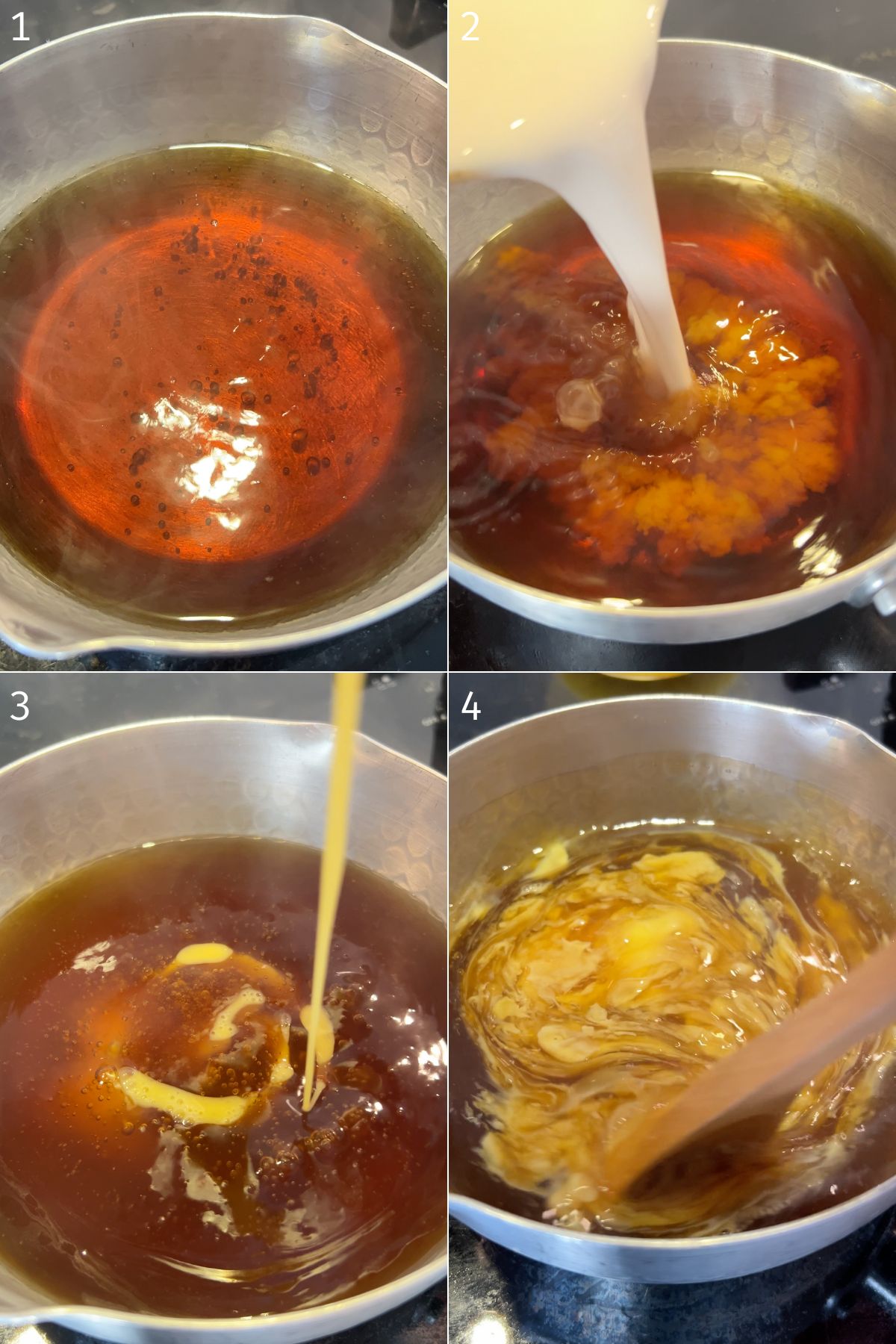
- Prepare the Broth: In a pot, bring dashi, soy sauce, mirin, and salt to a boil. Turn off the heat and whisk together equal parts potato starch and water until smooth. Stir the mixture into the broth, then heat on medium-low until it simmers and thickens.
- Add the Eggs: Slowly drizzle in half the beaten eggs, allowing the broth to simmer. Add the remaining eggs and immediately turn off the heat, stirring gently.
- Assemble: Pour the broth over the cooked udon. Garnish with grated ginger, scallions, and shichimi. Enjoy!

Recipe Tips
- Use Quality Ingredients: Because this dish is so simple, use homemade or good quality dashi broth and fresh or frozen udon noodles. Fresh or frozen udon noodles will yield the best texture, while a well-made dashi will elevate the broth’s richness.
- Control Temperature and Egg Consistency: For the perfect silky texture, whisk the eggs well before slowly drizzling them into the hot ankake sauce. This method ensures the eggs cook gently and create smooth ribbons throughout the broth.
- Adjust Thickness to Preference: If you prefer a thicker sauce, adjust the amount of potato starch in your ankake. Mix equal parts potato starch and water to create a slurry, and add it gradually until you achieve your desired consistency.
How to Store Leftovers
To store Keiran Udon, keep the udon noodles and egg sauce separate. Cook the udon noodles, then drain and cool them before placing them in an airtight container in the refrigerator for up to 2 days. Store the egg sauce in another airtight container in the fridge for the same duration. When ready to serve, reheat the noodles in boiling water and warm the egg sauce in a pot before combining them in a bowl.
Recipe FAQ
Yes, you can use vegetable dashi or broth instead of fish-based dashi to create a vegetarian version of Keiran Udon.

Enjoy!! If you make this Keiran Udon recipe, let me know! Leave a comment, rating and if you decide to share it on socials, tag me on instagram @Okonomikitchen. I’d love to hear from you!
Print
Keiran Udon
- Total Time: 10 minutes
- Yield: 2 servings
- Diet: Vegetarian
Description
Keiran Udon, also known as Ankake Tamago Udon, is a delicious Kyoto-style noodle dish that features thick udon noodles in a rich, savory broth enhanced with silky whisked eggs. This hearty meal is both comforting and quick to prepare, making it ideal for chilly days or when you need a nourishing boost. With its smooth texture and subtle hints of ginger, Keiran Udon is the perfect dish to enjoy any time you crave a warm, satisfying bowl of noodles.
Ingredients
- 2 servings of udon (preferably frozen udon)
- 2 1/3 cup + 1 tbsp (600 ml) dashi stock*
- 2 tbsp soy sauce**
- 3–4 tbsp mirin
- 1 tsp ginger
- 2–3 eggs
- 1 1/2 – 2 tbsp potato starch***
- 1 1/2 tbsp – 2 tbsp water
Instructions
- Cook the udon: Place the udon in a bowl, cover, and microwave for 1-2 minutes until heated through. Alternatively, cook the udon noodles on the stove following the package directions. Set aside.
- Prepare the broth: In a medium pot, combine the dashi stock, soy sauce, mirin, and salt. Bring to a boil, then turn off the heat. Whisk together the potato starch and water (equal amounts potato starch to water) until smooth, and while stirring, slowly pour it into the broth. Turn the heat back on to medium-low, and once it starts simmering and thickens, slowly drizzle in half of the beaten eggs in a steady stream. Let the mixture come to a low simmer again, then drizzle in the remaining eggs. Immediately turn off the heat and stir gently.
- Assemble the dish: Pour the broth over the cooked udon. Top with grated ginger, scallions, and shichimi (Japanese chili pepper) as desired. Enjoy!
Notes
- *Dashi stock can be substituted with 600 ml water + 1 tsp dashi granules
- **If using mentsuyu, substitute the dashi, mirin and soy sauce for 600 ml water + 4 tbsp of 3x concentrated mentsuyu.
- ***If you prefer a slightly thicker sauce use 2 tbsp of potato starch.
- Prep Time: 5 minutes
- Cook Time: 5 minutes
- Category: Main dish
- Method: Stove top
- Cuisine: Japanese
Okonomi Kitchen is a participant in the Amazon Services LLC Associates Program. When you purchase something through my amazon affiliate links, I earn a small commission that helps me produce consistent content at no cost to you. Thank you for your support!







A super simple and delicious recipe that instantly transported me back to Japan! So comforting and great especially for cold days~